

Maddy summaryThis bill creates a legal defense for property owners who use a legally carried firearm to disable or destroy drones entering their property without permission. To qualify, the person must be on their own property, not prohibited from discharging a firearm there, and the drone must not have been authorized to be on the property. It applies to criminal charges under Texas Penal Code Sections 28.03-28.04 and civil liability claims for drone-related property damage. The law takes effect September 1, 2025, and only covers incidents occurring after that date.
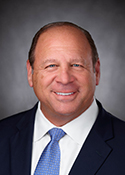
Rep. Mano DeAyala
Sponsored bills
Maddy summaryHB 2816 protects healthcare providers and facilities from being required to participate in or provide certain health care services that conflict with their sincerely held religious or philosophical beliefs. It defines key terms like "conscience," "health care provider" (including students and non-licensed staff), and "health care service" (covering family planning, abortion-related counseling, and treatment). The bill creates a civil remedy for violations and authorizes disciplinary action against entities that force non-participation in services due to conscience objections. It directly affects hospitals, clinics, pharmacists, and all healthcare workers who may decline services like abortion care or contraception-related counseling. The law aims to prevent adverse actions against providers who refuse such services based on personal beliefs.
Maddy summaryHB 76 prohibits local governments (like cities, counties, and school districts) from using public funds to pay nonprofit organizations that accept public donations to post bail bonds for defendants. It directly affects political subdivisions that might fund such bail programs through public money. The bill bans this spending and allows taxpayers or residents to sue to stop it, with successful plaintiffs able to recover legal fees. The law would take effect September 1, 2025, if passed.
Maddy summaryHJR 15 proposes a constitutional amendment allowing judges to deny bail to individuals accused of specific serious crimes - including first-degree sexual offenses, violent offenses, or continuous human trafficking - pending trial. Judges may deny bail only after a hearing where they find, by clear and convincing evidence, that bail would not ensure the defendant’s court appearance or community safety. The amendment requires judges to issue a written order detailing their findings and reasoning. It does not restrict defendants’ rights to challenge bail denials under existing law and specifies that judges must consider standard bail factors when making decisions. The amendment must be approved by Texas voters in the 2025 election.
Maddy summaryHJR 16 proposes a constitutional amendment requiring Texas courts to deny bail to non-citizens (defined as "illegal aliens" under the bill) charged with felony offenses if a judge finds probable cause they committed the crime. The amendment specifies that bail denial applies only after a hearing where probable cause is established, not automatically. This change would require voter approval in November 2025 before taking effect, as it seeks to amend the Texas Constitution. The bill directly affects non-citizens facing felony charges in Texas courts who meet the defined "illegal alien" criteria.
Maddy summaryHB 2696 requires Texas public elementary and secondary schools to display a durable poster or framed copy of the Ten Commandments in every classroom, starting with the 2025-2026 school year. The display must be at least 16 inches wide by 20 inches tall, contain only the specific text listed in the bill (including the full biblical wording), and be legible from any point in the classroom. Schools may accept privately donated displays meeting these requirements or use district funds to purchase compliant displays if needed. This law applies to all public schools and explicitly states they cannot claim exemption from this requirement.
Maddy summaryThis resolution designates February 26, 2025, as "Green Light Houston Day" at the Texas State Capitol to honor the Transportation Advocacy Group-Houston Region (TAG Houston). It recognizes TAG Houston's work since 2011 in advancing transportation policy, mobility initiatives, and infrastructure projects across Houston, including its role in advocating for major highways, rail systems, and the Port of Houston. The resolution is ceremonial and does not create new laws or policies.
Maddy summaryHB 1806 prohibits Texas governmental entities (like cities, counties, or state agencies) from using public funds to support abortion-related services. It specifically bans taxpayer money from covering costs for travel, lodging, childcare, food, or counseling that helps individuals obtain an abortion or access abortion providers. The bill defines "abortion assistance entities" broadly to include groups providing financial aid, travel planning, or abortion-inducing drugs, and "abortion providers" as facilities performing over 50 abortions annually. This law directly affects government agencies and any organization receiving public funds that facilitates abortion access. The bill does not apply to federal programs conflicting with its provisions.
Maddy summaryHB 3 establishes an education savings account program in Texas, allowing families to use state funds for approved educational expenses for children enrolled in public schools. The program, administered by the state comptroller, provides funding for costs like tuition at private schools, curriculum materials, or tutoring, with funds drawn from general revenue appropriations. Eligibility includes any child attending a public school who is not enrolled in a participating private school, with priority given to children with disabilities. The bill defines key terms and sets funding limits based on the previous biennium's allocation or the cost per participating child, creating a new option for families seeking alternatives to traditional public schooling.
Maddy summaryHB 1419 would cap noneconomic damages in personal injury and wrongful death cases. It sets a limit of three times medical expenses for pain and suffering, and $1 million for emotional distress if emotional injury is primary, or $250,000 if bodily injury is primary. These caps would automatically increase by 1.75% annually starting January 1, 2027. The bill applies only to claims accruing after its effective date. It affects claimants seeking compensation for non-monetary harms like pain, suffering, or emotional distress, while leaving medical costs and lost wages unaffected.