

Maddy summaryHB 2777 would prohibit the death penalty for defendants found to have had "severe mental illness" (defined as schizophrenia or schizoaffective disorder with active psychotic symptoms impairing judgment or understanding of wrongfulness) at the time of a capital offense. The bill requires defendants to file a 30-day notice before trial to present evidence of this condition, which they must prove by "clear and convincing evidence." If notice is not filed, such evidence becomes inadmissible unless the court finds "good cause" for the delay. The law would directly affect defendants in Texas capital cases who qualify under this mental health definition, altering sentencing eligibility.
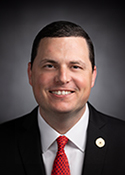
Rep. Jared Patterson
Sponsored bills
Maddy summaryHB 2363 amends Texas law to allow certain licensed peace officers (specifically those under Chapter 1701 of the Occupations Code) to make warrantless arrests outside their regular jurisdiction if they witness an offense. The bill specifically permits arrests for traffic violations under Texas Transportation Code (Subtitle C, Title 7) only when the violation occurs in counties where the officer’s employing city or district is located. This change applies to officers like municipal police or transit authority personnel working beyond their home jurisdiction. The law takes effect September 1, 2025, and does not alter arrest authority for most other offenses.
Maddy summaryThis bill amends Texas Election Code to require county election offices to create detailed operational plans for central counting stations. The plans must include specific procedures for reconciling votes with voter lists, scheduling logic and accuracy tests for voting machines, staffing details (including party affiliations of judges), ballot security protocols, and public livestream availability. Counties must post these plans online five days before elections and update them if revised, with contact information for key staff remaining confidential. The bill directly affects county election operations and ensures standardized transparency in election processing.
Maddy summaryHB 1482 changes eligibility for community supervision (probation) for certain repeat offenders convicted of intoxication-related offenses. It removes community supervision options for individuals convicted of 19 specific offenses, including repeat DWI-related crimes, sexual assault, trafficking offenses, and drug offenses involving children or drug-free zones. The bill applies only to offenses committed on or after its effective date. This policy change directly affects repeat offenders who would previously have qualified for probation under community supervision rules. The law does not alter sentencing levels but restricts probation eligibility for these specific repeat intoxication offenses.
Maddy summarySB 2 establishes a state-funded education savings account program in Texas, allowing eligible families to use public funds for approved educational expenses. The program directly affects Texas families with children who have disabilities or who live in low-income households (at or below 500% of the federal poverty level). The comptroller administers the program, funding accounts with state money that can cover approved education costs like tuition, books, or tutoring. The bill becomes effective September 1, 2025, after being signed by the governor on May 3, 2025. This creates a new state-funded option alongside public schools for participating families.
Maddy summaryHB 3859 requires motor vehicle manufacturers and distributors to fairly reimburse franchised dealers for warranty repairs, recalls, over-the-air software updates, and vehicle preparation/delivery work. It directly affects dealers who perform these services for customers. The bill mandates that compensation must not be less than what dealers charge retail customers for similar non-warranty work, using a specific formula based on the dealer's average labor rate for the prior six months (excluding routine maintenance, tire services, discounts, and goodwill repairs). This ensures dealers are compensated at market rates for these required services.
Maddy summaryHB 5483 would change the membership of Grayson County's juvenile board by specifying that it must include the county judge and all district judges in the county. The bill also allows the county judge to add a county court at law judge to the board. This is a procedural change affecting only Grayson County's juvenile board composition, with no broader policy implications. The bill was introduced in 2025 but failed to pass in committee.
Maddy summaryHB 2989 renames the "Chambers County Improvement District No. 1" to the "Cedar Port Navigation and Improvement District" in Texas law. The bill updates all references to the district's name in the Special District Local Laws Code, including its chapter heading, definition, and legal description. It does not alter the district's existing powers, responsibilities, or operational authority - only changing its official name. The district, serving Chambers County, continues to function under the same legal framework and governance structure. This is a purely administrative name change with no new policy provisions or financial impacts.
Maddy summaryHB 267 amends Texas Penal Code sections 43.24 and 43.25 to add specific affirmative defenses for defendants accused of distributing obscene or harmful material involving children. It allows defenses if the conduct was for judicial, law enforcement, or legislative purposes (Section 43.24(c)), or if the defendant was a spouse, acting for educational/medical purposes, or within two years of the child’s age (Section 43.25(f)). The bill applies only to offenses committed on or after September 1, 2025, and does not change existing criminal penalties. As of May 2025, the bill remains pending in the legislature after being postponed and laid on the table.
Maddy summaryHB 54, titled "Relating to the display of and allowance for non-human behaviors in Texas schools," is a procedural bill that amends school discipline requirements. It mandates that Texas public school districts include specific factors in their student conduct codes, such as self-defense, intent, disability considerations, and homelessness status, when making disciplinary decisions like suspensions or expulsions. The bill requires schools to post these codes prominently and consider these factors in all disciplinary actions. It does not ban specific activities but standardizes how schools evaluate student behavior. The bill is currently pending in the Education Committee.