

Maddy summaryHB 1151 requires professional sports franchises to include a price-matching provision in contracts for upgraded seats when long-term personal seat license (PSL) holders (with 10+ years of ownership) purchase a subsequent PSL in stadiums located in specific large counties (metro areas with >500,000 population). The bill applies only to contracts for seats in stadiums with at least 65,000 capacity, entered into on or after the bill’s effective date. It directly affects PSL holders seeking upgraded seating at major sports venues in those counties, ensuring they pay the same price as their original seat. The law amends Tennessee statutes governing PSL contracts but does not alter existing seat prices or franchise obligations beyond this specific requirement.
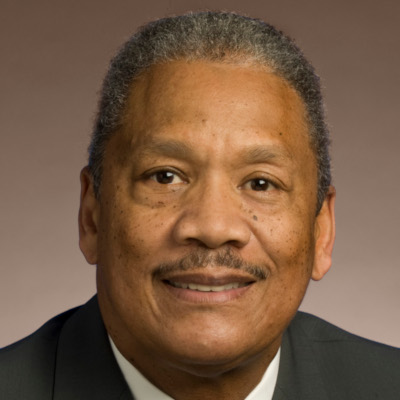
Rep. Larry Miller
Sponsored bills
Maddy summaryHB 1919 would allow Tennessee state employees to take up to 48 hours annually for school-related activities of their dependents, such as parent-teacher conferences, sports events, or performances. Employees could choose between paid leave (using vacation or other accrued time) or unpaid leave, with a requirement to provide at least 10 days' advance written notice unless the event was unforeseeable. Employers must post the policy in the workplace and face $100 daily fines for failing to do so, while the Department of Labor enforces compliance. The bill specifically covers parents or legal guardians, including extended family members like aunts, uncles, or grandparents.
Maddy summaryHB 2324 requires Tennessee's state comptroller to conduct an annual financial audit of all franchise tax refunds issued in the prior fiscal year. It also mandates that all franchise tax refunds become public records, allowing anyone to inspect the taxpayer's name and refund amount upon request. The bill amends Tennessee tax and public records laws to implement these transparency measures, making audit results available on the comptroller's website by December 31 each year. This directly affects all businesses or individuals receiving franchise tax refunds in Tennessee. The law aims to increase accountability for how franchise tax refunds are processed and distributed.
Maddy summaryHB 1651 would limit the biennial increase in office expense allowances for Tennessee General Assembly members to no more than 50% of their current allowance amount. Currently, allowances adjust every two years based on the Consumer Price Index (cost of living), but this bill adds a hard cap preventing increases exceeding half of the existing allowance. The adjustment would still use the Consumer Price Index and round to the nearest $100, but the 50% cap would override higher inflation-driven increases. This change would take effect for adjustments beginning with the 2026 statewide election cycle.
Maddy summaryHB 1150 provides eligible education employees in Tennessee with paid leave during the adoption process for a newly placed minor child. It specifically covers the period starting when a prospective adoptive parent files an adoption petition and the child is initially placed in their home under a court-ordered parental power of attorney, guardianship, or custodial order, until the court issues a final adoption order. The bill amends Tennessee Code Sections 8-50-814(a), 36, and 37 to define "adoption" for this purpose and authorize the paid leave. This policy directly affects public education employees pursuing adoption, ensuring they can take time off without losing pay during critical legal stages.
Maddy summaryHJR 685 is a Tennessee legislative resolution commending Osie B. Lewis, Jr. for his decades of community service, particularly his 38+ years as a coach and recreational director with the Memphis Park Commission and his leadership at the Ed Rice Community Center. The resolution formally recognizes his volunteer work with St. Jude Children's Hospital, the Mid-South Peace and Justice Center, and other community initiatives. Passed by the Tennessee General Assembly and signed by the Governor in May 2025, it serves as a ceremonial tribute without creating any new laws or policy changes.
Maddy summaryHB 813 exempts feminine hygiene products like tampons, pads, and menstrual cups from sales tax during Tennessee's annual sales tax holiday. The bill adds these products to the state's list of tax-exempt items under Title 67, Chapter 6 of the Tennessee Code. It defines "feminine hygiene products" to include all items used for menstruation or genital-tract secretions, covering common products shoppers use. The change takes effect July 1, 2025, directly benefiting Tennessee residents who purchase these items during the tax holiday.
Maddy summaryThis is a ceremonial resolution (not a bill with policy changes) honoring the Tennessee legislative interns' victory over elected officials in a basketball game. It specifically recognizes the Intern team's 69-42 win against the "Member" team (elected representatives) on March 25, 2025, and lists the participating interns and coaches. The resolution has no legislative effect - it serves only as a symbolic tribute to the interns' athletic achievement and the tradition of this annual rivalry game.
Maddy summaryHouse Resolution 106 commends Jadyn Cochrane, a Tennessee State University political science student and legislative intern for Representative Larry Miller, for her service during the 2025 legislative session. The resolution formally recognizes her contributions to the General Assembly and her academic achievements. It was unanimously adopted by the Tennessee House of Representatives on April 10, 2025, with no opposing votes. This is a ceremonial resolution with no policy impact or financial provisions.
Maddy summaryHB 1231 would allow the largest municipality in Shelby, Davidson, Knox, or Hamilton County (based on 2020 census population thresholds) to create local rules about how firearms, ammunition, and firearm accessories must be stored. Specifically, it amends Tennessee law to permit these cities to regulate storage through ordinances or other local policies. The bill directly affects only the most populous cities in those four counties (requiring city populations ≥181,000 and county populations ≥366,200). It does not change state-level firearm laws but gives specific local governments new authority over storage requirements. The bill takes effect July 1, 2025, pending legislative approval.