Issue · Immigration

Immigration

Every immigration bill, vote, and legislator stance in Tennessee, automatically classified by Maddy, our AI policy reader.

Total bills
170
119th Congress
Top supporter
Steve Cohen
81% support rate
Top opponent
Charles J. "Chuck" Fleischmann
19% support rate
Ranked legislators
8
3 support · 5 oppose
Key legislators

Who's moving immigration in Tennessee

Legislators moving immigration in Tennessee
Legislator Party Stance Support rate Votes
Steve Cohen
Steve Cohen House · District 9
D
Strong +
81% 147
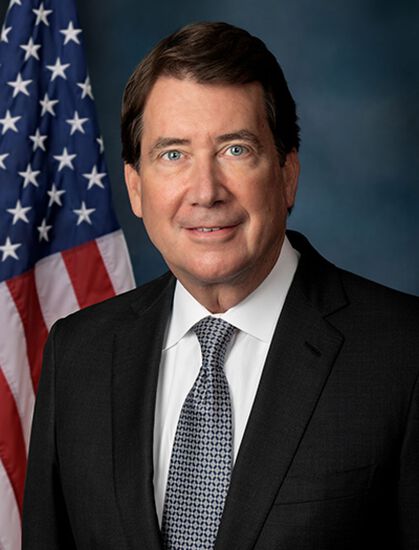
Bill Hagerty
Bill Hagerty Senate
R
Support
71% 177
Marsha Blackburn
Marsha Blackburn Senate
R
Support
70% 172
Charles J. "Chuck" Fleischmann
Charles J. "Chuck" Fleischmann House · District 3
R
Strong −
19% 149
Tim Burchett
Tim Burchett House · District 2
R
Strong −
19% 150
Diana Harshbarger
Diana Harshbarger House · District 1
R
Strong −
19% 150
John W. Rose
John W. Rose House · District 6
R
Strong −
19% 144
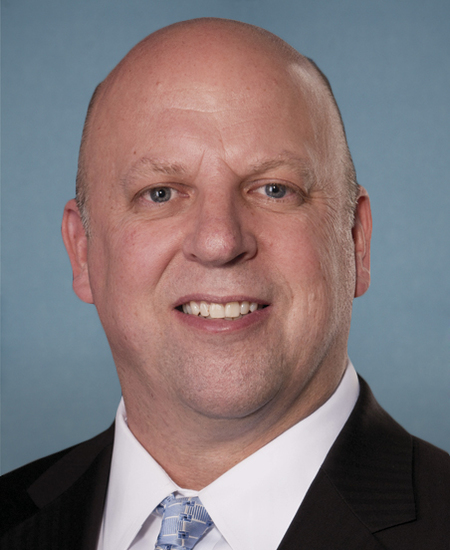
Scott DesJarlais
Scott DesJarlais House · District 4
R
Strong −
19% 139
Showing 1–10 of 170 bills

All immigration bills

passed · United States · House Sep 1, 2026

HRES 1490: Providing for the condemnation and denouncement of socialism in all its forms, and for other purposes.

This resolution states that the House of Representatives condemns and denounces socialism in all its forms, including the Democratic Socialists of America, and opposes the implementation of socialist policies in the United States; reaffirms its support for free, fair, and secure elections and calls for enactment of the SAVE America Act; reiterates that American elections are for American citizens only; and recommits itself to upholding the U.S. Constitution.
in committee · United States · House Sep 2, 2026

HR 10225: No Federal Taxpayer-Funded Housing for Illegal Aliens Act of 2026

The No Federal Taxpayer-Funded Housing for Illegal Aliens Act of 2026 prohibits the use of federal funds to provide housing assistance to individuals who are unlawfully present in the United States. The bill defines covered housing assistance broadly to include rental help, vouchers, mortgage support, utility bills, hotel stays, and various stabilization services aimed at securing or maintaining a home. Federal agency heads must enforce this ban by requiring fund recipients to certify compliance, monitoring their activities, and imposing civil penalties or periods of ineligibility for any violations. The prohibition does not apply to funds used specifically for enforcing immigration or criminal laws.
in committee · United States · Senate Aug 5, 2026

S 5259: End Housing Welfare for Illegal Aliens Act

The End Housing Welfare for Illegal Aliens Act would prohibit states and local governments designated as "sanctuary jurisdictions" from receiving Community Development Block Grants, defining such jurisdictions as those that restrict information sharing or compliance with federal immigration detainers. The bill also codifies a "mixed-status" rule that prevents housing assistance programs from providing prorated benefits to households where some members are ineligible, requiring full eligibility verification for all family members before any funds are distributed. Additionally, it mandates that public housing agencies affirmatively verify the citizenship status of applicants and expands the scope of these restrictions to include specific federal housing programs like Section 811 and Section 202.
in committee · United States · House Jul 22, 2026

HR 9876: BAN Act

This bill, known as the BAN Act, aims to stop the practice of "birth tourism," which it defines as entering the United States primarily to give birth to a child who would otherwise not be eligible for citizenship. The legislation makes it illegal for pregnant individuals to enter the country for this purpose and extends bans to their family members and any businesses or facilitators who help arrange these trips. Additionally, the bill introduces criminal penalties, including up to ten years in prison, for anyone who lies about a pregnancy or runs a commercial operation that assists in birth tourism. By adding birth tourism as a specific ground of inadmissibility, the law seeks to prevent unauthorized entry while maintaining that legitimate medical travel for necessary treatment remains allowed.
in committee · United States · Senate Jul 16, 2026

S 5023: Ban Birth Tourism Act of 2026

The Ban Birth Tourism Act of 2026 prohibits individuals from entering the United States if their main reason for travel is to have a child born there to gain U.S. citizenship. This law makes such travelers inadmissible upon arrival and subject to deportation if they are found to have entered the country specifically for this purpose. Officials determine whether someone is engaging in birth tourism by assessing if the person's primary goal is obtaining citizenship for a child or if they are likely to give birth within ten months of entry. The bill directly affects foreign nationals planning to visit the U.S. with the intent of using their child's birthplace to secure citizenship status.
in committee · United States · Senate Jul 13, 2026

S 4954: Citizenship Act of 2026

The Citizenship Act of 2026 redefines the legal status of individuals currently in the United States without legal admission as "invaders" and removes birthright citizenship from children born to these individuals. This change specifically targets mothers who are unlawfully present in the country or entered for the purpose of giving birth, as well as foreign nationals involved in commercial surrogacy contracts within the U.S. By amending the Immigration and Nationality Act, the bill ensures that citizenship is no longer automatically granted to these specific groups of children, regardless of their place of birth. Additionally, the legislation declares that courts cannot review the government's determination that an invasion is occurring at the border.
in committee · United States · House Jul 14, 2026

HR 9662: Birthright CLAIM Act of 2026

This bill, known as the Birthright CLAIM Act of 2026, modifies existing laws to restrict automatic citizenship for children born in the United States to parents who are not U.S. citizens or nationals. Under the new rules, a child born to two non-citizen parents would not be considered a citizen at birth if at least one parent is unlawfully present in the country or lacks lawful permanent residency. Additionally, the legislation extends the residency requirements for children born abroad to U.S. citizens, requiring a longer period of continuous residence before the child can claim citizenship. The bill also introduces a paternity verification process where DNA testing is mandatory to confirm a father's identity before the government issues citizenship documents like passports or Social Security numbers. If paternity cannot be verified through this testing, the child would not receive these documents until the verification is complete.
in committee · United States · House Jun 30, 2026

HR 9562: Anchors Away Act

The Anchors Away Act modifies U.S. immigration laws to expand birthright citizenship and restrict entry for certain pregnant individuals. It clarifies that anyone born in the United States to a parent who is a citizen, a lawful permanent resident, or a member of the U.S. Armed Forces automatically acquires citizenship. Additionally, the bill makes it illegal for pregnant nonimmigrants who are not married to U.S. citizens to enter the country, though it allows entry for those seeking legitimate medical treatment for childbirth. These changes apply only to people born on or after the law's enactment and to new admission applications filed on or after that date.
in committee · United States · House Jun 29, 2026

HR 9514: Homeownership Eligibility Reform Act

The Homeownership Eligibility Reform Act restricts access to government-backed and private mortgage insurance for single-family homes to individuals who are U.S. citizens. Specifically, the bill amends laws governing the Federal Housing Administration, Fannie Mae, and Freddie Mac to require that borrowers for one-to-four-unit properties must be citizens to qualify for their mortgage products. This change directly affects foreign nationals and non-citizen residents who currently might purchase homes with these types of financing, effectively limiting their eligibility for these specific mortgage programs.
in committee · United States · House Jun 25, 2026

HR 9456: SNAP Citizenship and Residency Act of 2026

The SNAP Citizenship and Residency Act of 2026 would restrict access to the Supplemental Nutrition Assistance Program for certain non-citizens. Under this proposal, individuals who are not lawful permanent residents would be ineligible for benefits, even if they live in a household that otherwise qualifies. Additionally, lawful permanent residents must have lived in the United States for at least 10 years after being admitted to receive assistance. This change directly impacts the eligibility criteria for immigrants currently participating in or seeking food assistance programs.
Showing 1 to 10 of 170 bills
1 2 3 17 Next