Issue · Healthcare

Healthcare

Every healthcare bill, vote, and legislator stance in Tennessee, automatically classified by Maddy, our AI policy reader.

Total bills
553
114th Regular Session (2025-2026)
Top supporter
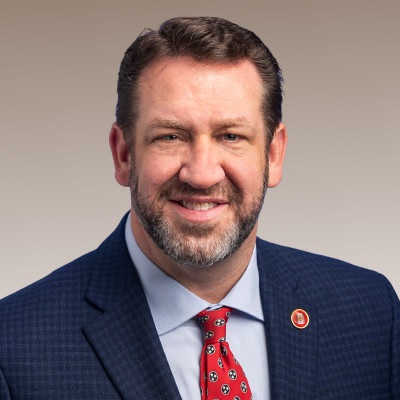
Jeremy Faison
100% support rate
Top opponent
Justin Jones
19% support rate
Ranked legislators
10
5 support · 5 oppose
Key legislators

Who's moving healthcare in Tennessee

Legislators moving healthcare in Tennessee
Legislator Party Stance Support rate Decisive votes
Jeremy Faison
Jeremy Faison House · District 11
R
Strong +
100% 18
Cameron Sexton
Cameron Sexton House · District 25
R
Strong +
100% 16
Tim Rudd
Tim Rudd House · District 34
R
Strong +
100% 15
Steve Southerland
Steve Southerland Senate · District 9
R
Strong +
100% 12
Ferrell Haile
Ferrell Haile Senate · District 18
R
Strong +
100% 11
Justin Jones
Justin Jones House · District 52
D
Strong −
19% 16
Gabby Salinas
Gabby Salinas House · District 96
D
Oppose
25% 20
Jason Powell
Jason Powell House · District 53
D
Oppose
28% 18
Aftyn Behn
Aftyn Behn House · District 51
D
Oppose
29% 17
Jeff Yarbro
Jeff Yarbro Senate · District 21
D
Oppose
33% 12
Showing 401–410 of 553 bills

All healthcare bills

in committee · Tennessee · Senate Feb 12, 2025

SB 463: Insurance, Health, Accident - As introduced, enacts the "Freedom to Grow Our Tennessee Families Act." - Amends TCA Title 56 and Title 71.

SB 463, the "Freedom to Grow Our Tennessee Families Act," requires health insurance plans in Tennessee to cover fertility diagnostic care, fertility treatment, and fertility preservation services starting January 1, 2026. It mandates coverage for up to three complete oocyte retrievals with unlimited embryo transfers (per medical guidelines) and prohibits exclusions based on medical history (like cancer treatment), use of donor gametes, or protected characteristics like race or disability. The bill explicitly excludes coverage for "experimental fertility procedures" as defined by medical standards. This directly affects enrollees with fertility needs, ensuring comprehensive coverage under their health insurance plans.
Sub-Topics Insurance
signed · Tennessee · Senate May 13, 2025

SB 1414: Insurance, Health, Accident - As enacted, revises present law relative to 340B entities. - Amends TCA Title 47, Chapter 18 and Title 56.

SB 1414, effective May 5, 2025, strengthens Tennessee's alignment with the federal 340B drug discount program by prohibiting drug manufacturers from restricting access to 340B drugs or imposing unfair requirements on participating entities. The bill directly affects 340B entities (such as community health centers and hospitals) and their contracted pharmacies, banning actions like denying 340B drug access, demanding extra health data, or applying stricter audit rules than for non-340B providers. Key provisions require manufacturers to comply with federal 340B rules and prohibit interference with 340B entities' drug choices or contracts. Violations carry a $50,000 civil penalty per violation, enforceable by the state commissioner or attorney general. The law explicitly states it does not override applicable federal 340B regulations.
in committee · Tennessee · Senate Mar 24, 2025

SB 241: Mental Illness - As introduced, requires the chief officer of an inpatient mental health treatment resource to notify the committing court if a patient who was involuntarily committed for mental health treatment becomes eligible for discharge; permits the court to hold a hearing to determine whether to order the person's return to the hospital under the original commitment or order the person's release from involuntary commitment in accordance with the recommendations of the chief officer. - Amends TCA Title 33 and Title 52.

SB 241 requires inpatient mental health facilities in Tennessee to notify the court that ordered a patient's involuntary commitment when the patient becomes eligible for discharge. The court can then hold a hearing within 21 days to decide whether to release the patient or return them to the hospital based on the facility's recommendation. This bill directly affects patients under involuntary commitment, mental health facilities, and the courts handling these cases. The law, set to take effect July 1, 2025, modifies existing procedures in Tennessee Code Annotated, Title 33, and Title 52.
Sub-Topics Courts Hospitals
in committee · Tennessee · Senate Apr 4, 2025

SB 1342: Children - As enacted, requires on or before June 30, 2026, and each June 30 thereafter, the council on children's mental health care to submit a report to certain officials regarding the status of the statewide system of care for children's mental health and the service delivery system and the status of children's mental health in this state. - Amends TCA Title 37, Chapter 3.

SB 1342 requires Tennessee's Council on Children's Mental Health Care to submit annual reports starting June 30, 2026, detailing the status of the state's children's mental health system and service delivery. The reports must include a current list of all state and federally funded mental health programs for children, along with recommendations for improving coordination between agencies and addressing treatment gaps. The council must share these reports with the governor, state agency commissioners, and legislative leaders. This bill does not create new programs but mandates regular, comprehensive assessments to inform state-level decision-making on children's mental health services.
Sub-Topics Mental Health
in committee · Tennessee · House Mar 25, 2026

HB 465: Medical Occupations - As introduced, extends from 30 business days to 60 business days the period of time an individual, applicant, licensee, certificate holder, or registrant has to file a petition in Davidson County chancery court following receipt of a notice from a health-related licensing authority that the authority is denying an application for or refusing to renew a license, certificate, or registration on the basis of a prior criminal conviction. - Amends TCA Title 39; Title 40; Title 63 and Title 68.

HB 465 extends the time for health care professionals to challenge licensing denials from 30 to 60 business days. It directly affects individuals, applicants, licensees, certificate holders, or registrants in health-related fields who receive a notice from a licensing authority denying an application or renewal due to a prior criminal conviction. The bill amends Tennessee law (Titles 39, 40, 63, and 68) to change the filing deadline for petitions in Davidson County chancery court. This change takes effect on July 1, 2025, providing more time to address licensing decisions.
in committee · Tennessee · Senate May 27, 2025

SB 1426: TennCare - As enacted, enacts "Lucca's Law," which addresses TennCare coverage of treatment for pediatric autoimmune neuropsychiatric disorders associated with streptococcal infections (PANDAS) and pediatric acute-onset neuropsychiatric syndrome (PANS). - Amends TCA Title 8; Title 56 and Title 71.

SB 1426, known as "Lucca's Law," requires TennCare managed care plans to cover medically necessary treatments for children diagnosed with PANDAS (pediatric autoimmune neuropsychiatric disorders associated with streptococcal infections) and PANS (pediatric acute-onset neuropsychiatric syndrome). It mandates coverage for antibiotics, behavioral therapies, immune-modulating drugs, plasma exchange, and IV immunoglobulin therapy, with no higher copays or deductibles than other similar treatments. The law also prohibits denying or delaying coverage based on prior treatment history or different diagnostic labels, and requires coverage to be provided without lifetime limits. This applies to all TennCare managed care organizations starting January 1, 2026, and specifies that PANDAS/PANS must be coded as autoimmune encephalitis until new medical codes are established.
Sub-Topics Children's Health
signed · Tennessee · House Apr 28, 2025

HB 1198: Drugs, Prescription - As enacted, adds mandating the use of biosimilar drugs as a cost-saving measure the bureau of TennCare may implement; adds that a health carrier, health benefit plan, or utilization review organization may require a patient to try a biosimilar product prior to providing coverage for the equivalent branded prescription drug; requires the TennCare pharmacy advisory committee to consider as a factor the use of biosimilar drugs in the committee's recommendation to the bureau of TennCare on any drugs to be added to the state preferred drug list. - Amends TCA Title 4; Title 53; Title 56; Title 68 and Title 71.

HB 1198 requires Tennessee health insurers and TennCare to allow patients to try biosimilar drugs (cost-effective copies of brand-name medications) before covering the original branded drug. It amends state law to permit health carriers to mandate a biosimilar trial for equivalent branded prescriptions, removing prior requirements for generic drug trials. The bill also directs TennCare’s pharmacy committee to consider biosimilar drugs when recommending medications for the state’s preferred drug list. These changes aim to reduce prescription drug costs by increasing biosimilar adoption, as stated in the bill’s legislative findings.
Sub-Topics Prescription Drugs
in committee · Tennessee · House Apr 15, 2026

HB 661: Criminal Offenses - As introduced, enacts the "Comprehensive Assault Crime Intervention Act." - Amends TCA Title 38; Title 39 and Title 40.

HB 661, the "Comprehensive Assault Crime Intervention Act," requires judges to mandate counseling for individuals convicted of assault offenses. It specifies that defendants must complete certified batterer's intervention programs (minimum 26 weeks, 3 hours per session, with a 6:1 participant-to-counselor ratio) or substance abuse treatment as part of sentencing. The bill also mandates annual 12+ hour domestic violence training for judges and court staff. These provisions directly affect assault defendants and court personnel, focusing on rehabilitation and consistent judicial handling of domestic violence-related cases.
failed · Tennessee · Senate Feb 4, 2026

SB 401: TennCare - As introduced, requires, on and after July 1, 2026, a minor who is enrolled in TennCare medicaid or the CoverKids program to remain eligible for such program until the minor reaches 18; prohibits the division of TennCare from subjecting the minor to a redetermination of eligibility or disenrollment, except under certain circumstances; requires the director of TennCare to submit any necessary federal waiver request by December 31, 2025. - Amends TCA Title 71.

SB 401 ensures minors enrolled in Tennessee's TennCare Medicaid or CoverKids program remain eligible until age 18, starting July 1, 2026, without requiring rechecks of their eligibility. The bill prohibits the TennCare division from removing minors from coverage except in specific cases like parental request, death, moving out of state, income exceeding limits, or enrollment fraud. The TennCare director must submit a federal waiver request by December 31, 2025, to implement this change. This directly affects minors under 18 currently covered by these programs, guaranteeing continuous healthcare access through age 18.
Sub-Topics Medicaid
signed · Tennessee · Senate Apr 8, 2025

SB 515: Hospitals and Health Care Facilities - As enacted, extends by four years to June 30, 2029, the current 125-bed limitation on the number of new nursing home beds for which the health facilities commission may issue a certificate of need per fiscal year. - Amends TCA Section 68-11-1619.

SB 515 extends Tennessee's current limit of 125 new nursing home beds per fiscal year for which the health facilities commission may approve (via certificate of need) until June 30, 2029, instead of expiring in 2025. This directly affects nursing home facilities seeking to expand and the health facilities commission, which reviews and approves new bed applications. The key provision is a simple extension of the existing cap, not a change to the 125-bed limit. The bill became effective March 25, 2025, after being signed by the Governor.
Sub-Topics Long-Term Care
Showing 401 to 410 of 553 bills
Previous 1 40 41 42 56 Next