Issue · Healthcare

Healthcare

Every healthcare bill, vote, and legislator stance in Tennessee, automatically classified by Maddy, our AI policy reader.

Total bills
553
114th Regular Session (2025-2026)
Top supporter
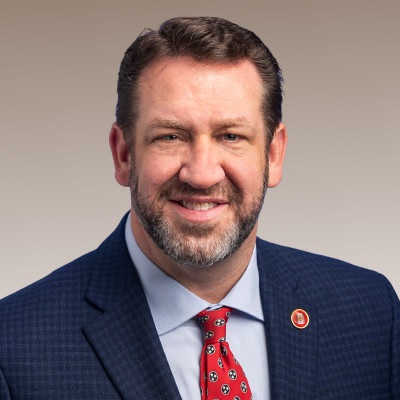
Jeremy Faison
100% support rate
Top opponent
Justin Jones
19% support rate
Ranked legislators
10
5 support · 5 oppose
Key legislators

Who's moving healthcare in Tennessee

Legislators moving healthcare in Tennessee
Legislator Party Stance Support rate Decisive votes
Jeremy Faison
Jeremy Faison House · District 11
R
Strong +
100% 18
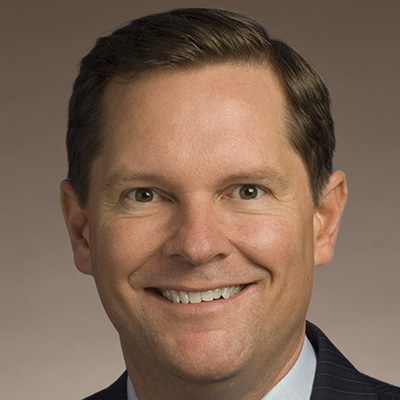
Cameron Sexton
Cameron Sexton House · District 25
R
Strong +
100% 16
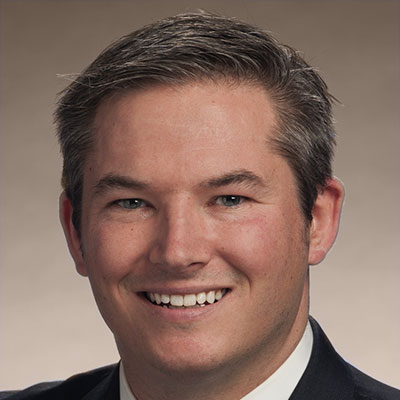
Tim Rudd
Tim Rudd House · District 34
R
Strong +
100% 15
Steve Southerland
Steve Southerland Senate · District 9
R
Strong +
100% 12
Ferrell Haile
Ferrell Haile Senate · District 18
R
Strong +
100% 11
Justin Jones
Justin Jones House · District 52
D
Strong −
19% 16
Gabby Salinas
Gabby Salinas House · District 96
D
Oppose
25% 20
Jason Powell
Jason Powell House · District 53
D
Oppose
28% 18
Aftyn Behn
Aftyn Behn House · District 51
D
Oppose
29% 17
Jeff Yarbro
Jeff Yarbro Senate · District 21
D
Oppose
33% 12
Showing 231–240 of 553 bills

All healthcare bills

in committee · Tennessee · House Apr 6, 2026

HB 1470: Health Care - As enacted, prohibits a person from developing or deploying an artificial intelligence system that advertises or represents to the public that such system is or is able to act as a qualified mental health professional. - Amends TCA Title 33; Title 47 and Title 63.

HB 1470 prohibits developers and deployers of artificial intelligence systems from advertising or representing to the public that their AI acts as a qualified mental health professional. This directly affects AI companies and developers creating mental health-related tools. Violations would be treated as deceptive acts under Tennessee's Consumer Protection Act, subject to a $5,000 civil penalty per violation. The law takes effect July 1, 2026, and defines "artificial intelligence" as systems capable of human-like reasoning and learning.
Sub-Topics Healthcare Workforce Mental Health Tags Artificial Intelligence
signed · Tennessee · House Apr 24, 2026

HB 1984: Controlled Substances - As enacted, authorizes additional healthcare providers to directly administer buprenorphine mono or buprenorphine without the use of naloxone; adds that prescribing a buprenorphine product to nursing mother or prescribing an injectable mono product does not restrict certain healthcare providers from prescribing a buprenorphine product for the treatment of opioid use disorder without naloxone. - Amends TCA Title 53, Chapter 11.

HB 1984 expands access to buprenorphine treatment for opioid use disorder by allowing more healthcare providers to directly administer buprenorphine mono or buprenorphine without naloxone, as long as they act within their scope of practice. It specifically permits prescribing these medications to nursing mothers and patients with documented adverse reactions to naloxone, and clarifies that prescribing injectable forms doesn’t restrict providers from later prescribing non-naloxone buprenorphine. The bill amends Tennessee’s pharmacy law (TCA Title 53, Chapter 11) to remove barriers for these specific scenarios. This directly affects healthcare providers (like nurse practitioners or physician assistants) and patients seeking opioid treatment, particularly nursing mothers and those with allergies to naloxone.
in committee · Tennessee · Senate Mar 23, 2026

SB 1768: Health Care - As introduced, requires the secretary of state to place an advisory ballot question on the November general election ballot in 2026 regarding the legalization of a regulated medical cannabis program. - Amends TCA Title 2; Title 4; Title 39; Title 43; Title 53; Title 57; Title 63; Title 67 and Title 68.

SB 1768 requires Tennessee's Secretary of State to place an advisory ballot question on the 2026 November general election ballot asking voters if the state should authorize a regulated medical cannabis program for qualifying patients. If approved, the program would generate tax revenue dedicated to after-school programs, mental health services, law enforcement training, and community cannabis education. The bill does not create the program itself but seeks voter approval for its implementation through a binding referendum. This would directly affect medical cannabis patients and state funding allocations, with no immediate legislative changes enacted.
Sub-Topics Revenue Mental Health
in committee · Tennessee · House Jan 22, 2026

HB 1727: State Employees - As introduced, requires certain government employers to provide job-protected unpaid leave for a qualifying medical emergency to employees that meet certain criteria. - Amends TCA Title 5; Title 6; Title 7; Title 8; Title 49 and Title 50.

HB 1727 requires Tennessee counties (excluding those with over 800,000 residents or metropolitan governments) and municipalities to provide job-protected unpaid leave for qualifying medical emergencies starting January 1, 2027. It directly affects county and municipal employees who have worked at least 11 months and 3 weeks, meet federal FMLA eligibility, and have no other available leave for the emergency. Key provisions include allowing leave for birth/stillbirth, caring for a family member with a serious health condition, or the employee’s own serious health condition - aligning with federal FMLA standards. The bill amends multiple Tennessee code sections to mandate these policies in employer personnel guidelines.
signed · Tennessee · Senate May 27, 2026

SB 1493: Computers and Electronic Processing - As enacted, requires TACIR to study artificial intelligence and submit a report to the governor and both speakers by January 31, 2027. - Amends TCA Title 29; Title 33; Title 39 and Title 47.

SB 1493 creates a Class A felony offense for knowingly training AI systems that encourage suicide, criminal homicide, or develop emotional relationships with users. It specifically prohibits AI chatbots from simulating human appearance/voice, acting as a mental health professional, or prompting users to isolate from family or share sensitive information. The bill directly affects AI developers and companies creating chatbots that meet its definitions, excluding standard customer service bots, video game features, and basic voice assistants. Violators face criminal penalties and civil lawsuits allowing victims to seek $150,000 in liquidated damages or actual harm compensation.
signed · Tennessee · House Mar 24, 2025

HB 404: Sunset Laws - As enacted, extends the professional music therapy advisory committee of the board of examiners in psychology to June 30, 2027. - Amends TCA Title 4, Chapter 29 and Title 63, Chapter 11.

HB 404 extends the professional music therapy advisory committee under Tennessee's psychology board until June 30, 2027. This bill updates Tennessee Code Sections 4-29-246 and 4-29-248 to formally maintain the committee's existence, preventing its automatic termination. The committee, which advises the Board of Examiners in Psychology on music therapy licensure, is directly affected by this extension. The change ensures continuity for this advisory body without altering any substantive licensing rules.
Sub-Topics Medical Licensing
in committee · Tennessee · House Mar 11, 2025

HB 1105: Abortion - As introduced, creates an exception to the offense of criminal abortion if the person who performed or attempted to perform the abortion was a licensed physician and the patient's pregnancy was the result of rape or incest. - Amends TCA Title 39, Chapter 15, Part 2.

HB 1105 would amend Tennessee law to create a legal exception for physicians performing abortions when the pregnancy resulted from rape or incest, as defined by specific Tennessee statutes. This exception applies only to licensed doctors who perform or attempt to perform the abortion, and it would prevent criminal charges for the physician in those specific circumstances. The bill directly affects licensed physicians who provide abortions in cases of rape or incest and their patients in those situations. It does not change general abortion restrictions but adds a specific defense for physicians in these defined cases.
Sub-Topics Women's Health
in committee · Tennessee · House Feb 5, 2025

HB 551: Health Care - As introduced, urges the human rights commission to study problems of discrimination against healthcare providers in this state because of their decision to decline to participate in a healthcare service on the basis of religious, moral, or ethical beliefs. - Amends TCA Title 4; Title 20; Title 29; Title 39; Title 49; Title 50; Title 56; Title 63; Title 68 and Title 71.

HB 551 urges Tennessee's Human Rights Commission to study whether healthcare providers face discrimination for declining services based on religious, moral, or ethical beliefs. The bill requires the Commission to include its findings and recommendations in annual reports to the legislature. It directly affects healthcare providers (such as doctors or nurses) who may refuse specific services like abortion or contraception due to personal beliefs. The bill does not change existing laws but mandates a formal study of potential discrimination against such providers.
Sub-Topics Women's Health
signed · Tennessee · House May 27, 2025

HB 783: Housing - As enacted, authorizes local governments to regulate sober living homes for recovery from alcohol, drug, and substance abuse to the extent such regulation complies with the Fair Housing Act and the Americans with Disabilities Act. - Amends TCA Title 5; Title 6; Title 7; Title 13 and Title 33.

HB 783 authorizes Tennessee local governments (counties, cities, or metropolitan areas) to regulate sober living homes - residences for adults recovering from substance abuse without formal treatment - to ensure they comply with federal fair housing and disability laws. Key provisions include requiring these homes to be at least 1,000 feet from schools/daycares, allowing local zoning rules, and mandating clinical referrals from licensed healthcare providers before residency. The law directly affects sober living home operators, residents, and local governments implementing these rules. It becomes effective immediately upon the governor’s signature (May 21, 2025), updating Tennessee housing codes to balance local oversight with federal civil rights protections.
Sub-Topics Substance Abuse
in committee · Tennessee · Senate Apr 20, 2026

SB 748: TennCare - As introduced, requires the bureau of TennCare to reimburse certain public or private ground-based ambulance services that bill for transports at a rate not less than 67.5 percent of the federal medicare program's allowable charge for participating providers for emergency services and 100 percent of the federal medicare program's allowable charge for participating providers for nonemergency services. - Amends TCA Title 71.

SB 748 changes how Tennessee's TennCare program reimburses ambulance services. It requires TennCare to pay public or private ambulance providers in Tennessee at least 67.5% of Medicare's rate for emergency transports and 100% of Medicare's rate for non-emergency transports. This applies specifically to ambulance services with a base of operations in Tennessee that bill for covered services provided to TennCare recipients. The bill amends Tennessee law to establish these specific reimbursement rates relative to Medicare's allowable charges.
Sub-Topics Medicare
Showing 231 to 240 of 553 bills
Previous 1 23 24 25 56 Next