Issue · Criminal Justice

Criminal Justice

Every criminal justice bill, vote, and legislator stance in Tennessee, automatically classified by Maddy, our AI policy reader.

Total bills
693
114th Regular Session (2025-2026)
Top supporter
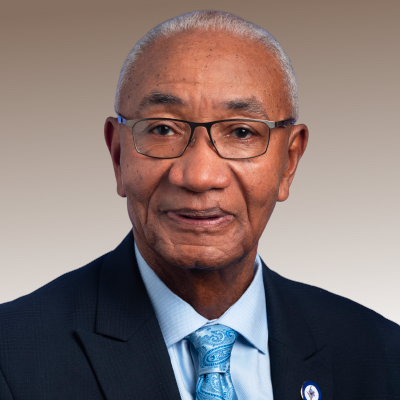
Johnny Shaw
77% support rate
Top opponent
Tim Rudd
19% support rate
Ranked legislators
10
5 support · 5 oppose
Key legislators

Who's moving criminal justice in Tennessee

Legislators moving criminal justice in Tennessee
Legislator Party Stance Support rate Decisive votes
Johnny Shaw
Johnny Shaw House · District 80
D
Support
77% 56
John Clemmons
John Clemmons House · District 55
D
Support
76% 63
Harold Love
Harold Love House · District 58
D
Support
75% 56
Bob Freeman
Bob Freeman House · District 56
D
Support
75% 59
Joe Towns
Joe Towns House · District 84
D
Support
74% 73
Tim Rudd
Tim Rudd House · District 34
R
Strong −
19% 59
Chris Todd
Chris Todd House · District 73
R
Oppose
24% 84
Johnny Garrett
Johnny Garrett House · District 45
R
Oppose
24% 75
Renea Jones
Renea Jones House · District 4
R
Oppose
24% 62
Dan Howell
Dan Howell House · District 22
R
Oppose
25% 71
Showing 371–380 of 693 bills

All criminal justice bills

in committee · Tennessee · House May 15, 2025

HB 1371: Criminal Offenses - As enacted, clarifies that a person commits the offense of unlawful exposure by distributing a private, intimate image of another identifiable person with intent to cause emotional distress, regardless of whether the person who distributes the image was a party to the original agreement or understanding that the image would remain private. - Amends TCA Title 39, Chapter 17.

HB 1371 clarifies that distributing a private, intimate image of another identifiable person with intent to cause emotional distress constitutes unlawful exposure, regardless of whether the distributor was part of the original private agreement. This bill directly affects individuals who share such images without consent, including those who obtained them through private arrangements. The key change removes the previous requirement that the distributor must have been a party to the original private understanding, making it a crime to distribute these images whenever the intent is to cause emotional distress. The law amends Tennessee Code § 39-17-318(a)(1) and takes effect July 1, 2025.
signed · Tennessee · House Apr 28, 2025

HB 973: Statutes of Limitations and Repose - As enacted, extends the statute of limitations for criminal prosecution of certain child sexual abuse felonies from 25 years from the child's eighteenth birthday to 30 years from the child's eighteenth birthday; extends the statute of limitations for a civil action based on child sexual abuse from 15 years from the child's eighteenth birthday to 30 years from the child's eighteenth birthday. - Amends TCA Title 28 and Title 40, Chapter 2.

HB 973 extends time limits for legal action related to child sexual abuse in Tennessee. It increases the criminal prosecution window from 25 to 30 years after the victim turns 18, and the civil lawsuit window from 15 to 30 years after the victim turns 18. The law directly affects victims of child sexual abuse who wish to pursue legal action later in life. This change takes effect July 1, 2025, and applies to offenses occurring on or after July 1, 2025.
in committee · Tennessee · Senate Apr 2, 2025

SB 923: Controlled Substances - As introduced, decriminalizes the possession of less than one ounce of marijuana or less than five marijuana plants; authorizes municipalities and counties to impose civil penalties on the possession of marijuana in certain circumstances. - Amends TCA Title 16, Chapter 18, Part 3; Title 39, Chapter 17, Part 4 and Title 40.

SB 923 decriminalizes the possession of less than one ounce (28.35 grams) of marijuana or up to five marijuana plants in Tennessee, removing criminal penalties for these amounts. It directly affects individuals caught with these small quantities, while allowing municipalities and counties to impose civil penalties (up to $250) for public possession or casual sharing of small amounts. Key provisions include defining "casual exchange" as spontaneous sharing without money or payment methods, and specifying penalties calculated at $25 per 0.1 ounce or $50 per plant. The bill does not change laws regarding marijuana sales or larger quantities, and takes effect July 1, 2025.
Sub-Topics Drug Policy
signed · Tennessee · House May 27, 2025

HB 1128: County Officers - As enacted, revises present law relative to constables. - Amends TCA Title 8, Chapter 10 and Title 38, Chapter 8.

HB 1128 revises Tennessee's laws governing county constables by establishing new training requirements and removing certain certification barriers. It requires all constables newly elected or appointed on or after July 1, 2025, to complete 128 hours of law enforcement training within their first year, with a pairing requirement with experienced officers during training unless they have prior POST-certified experience. The bill eliminates the requirement for constables to be certified by the POST commission to perform their duties and removes any mandated work-hour minimums for maintaining certification. This directly affects county constables in Tennessee, changing how they qualify and train for their roles.
Sub-Topics Law Enforcement
in committee · Tennessee · Senate May 15, 2026

SB 1467: Criminal Offenses - As enacted, enacts "The Memphis Safe Task Force Accountability Act." - Amends TCA Title 8, Chapter 7 and Title 39.

SB 1467, the "Memphis Safe Task Force Accountability Act," requires Tennessee district attorneys general to submit a 24-hour report to state and federal officials whenever they make specific decisions about felony cases tied to two federal law enforcement operations: the Memphis Safe Task Force or Operation Viper. The report must be filed if the district attorney enters a plea agreement, reduces charges, dismisses a case, or declines to prosecute. This applies only to cases originating from these operations, which are defined as federal efforts focused on combating violent crime in Memphis through aggressive policing and prosecution. The bill aims to increase transparency around prosecutorial decisions in these specific cases without altering the legal standards for handling them.
died · Tennessee · Senate Feb 4, 2025

SB 613: Expunction - As introduced, allows an eligible petitioner to have the records of a conviction for driving under the influence of an intoxicant expunged if the person has no other criminal convictions and 20 years have elapsed since the completion of the sentence imposed; requires the petitioner to pay an additional $50.00 fee to be used by the county for certain alcohol, drug, and mental health treatment purposes. - Amends TCA Title 40, Chapter 32 and Title 55, Chapter 10, Part 4.

SB 613, a proposed Tennessee bill, would have allowed individuals convicted of driving under the influence (DUI) to have their criminal records expunged after 20 years from completing their sentence, provided they had no other criminal convictions. It required petitioners to pay a $50 fee, with the funds directed to county alcohol, drug, and mental health treatment programs. The bill amended Tennessee expungement law (TCA Title 40, Chapter 32) to extend the waiting period for DUI convictions from 10 to 20 years and added the fee requirement. The bill was introduced on January 31, 2025, but was withdrawn on February 4, 2025, and did not become law.
Sub-Topics Mental Health
in committee · Tennessee · House Feb 4, 2026

HB 1098: Firearms and Ammunition - As introduced, creates the offense of carrying or possessing a firearm, including a firearm that was privately assembled and does not contain a serial number or other mark that conforms with federal law, if, at the time of carrying or possessing, the person is not a citizen of the United States or a lawful permanent resident. - Amends TCA Title 39, Chapter 17, Part 13 and Title 55, Chapter 50.

HB 1098 would make it a Class A misdemeanor to carry or possess a privately made firearm without a serial number (or other federal-compliant mark) if the person is not a U.S. citizen or lawful permanent resident. This bill directly affects non-citizens and non-permanent residents who possess such firearms, which are typically homemade and lack federally required markings. The law would apply to firearms assembled outside commercial channels, creating a new criminal offense under Tennessee law. The bill is scheduled to take effect on July 1, 2025.
Sub-Topics Firearms
in committee · Tennessee · Senate Feb 12, 2025

SB 1174: Law Enforcement - As introduced, requires a law enforcement agency that uses body cameras to adopt a written policy for the use of the cameras by its law enforcement officers; establishes certain requirements for the policies. - Amends TCA Title 38, Chapter 1.

SB 1174 requires Tennessee law enforcement agencies using body cameras to adopt written policies governing their use. These policies must mandate that officers activate cameras during all public encounters (except immediate safety threats), wear them properly to capture footage, and notify people they're being recorded. The bill also specifies exceptions: officers must ask residents before entering homes without a warrant, victims of domestic violence or rape, and anonymous crime reporters if they want the camera turned off. These policies must include training for officers and cover how recordings are handled. The law directly affects all state and local law enforcement agencies that use body cameras and the public they interact with during patrols and investigations.
in committee · Tennessee · Senate Apr 28, 2025

SB 170: Juvenile Offenders - As enacted, requires suspension of a minor's driving privileges or ability to obtain a driver license for a period of one year as part of the disposition if a minor is adjudicated delinquent for an act that would constitute the offense of harassment by bullying or cyber-bullying. - Amends TCA Title 37; Title 39 and Title 55, Chapter 10, Part 7.

SB 170 requires Tennessee courts to suspend a minor's driving privileges or driver's license for one year when a juvenile is found delinquent for an act that would be considered harassment through bullying or cyberbullying. This policy change directly affects minors convicted of these specific offenses, adding a mandatory driving suspension to their court disposition. The bill amends Tennessee law (Title 37, 39, and 55) to implement this requirement, effective July 1, 2025. It does not create new offenses but modifies existing juvenile court sentencing options for bullying and cyberbullying cases.
in committee · Tennessee · Senate May 27, 2025

SB 963: Criminal Procedure - As enacted, increases from 11 months and 29 days to two years from the date of arrest the time within which misdemeanor charges against a defendant who has been found incompetent must be retired unless the defendant is restored to competency; adds to present law that, when a defendant whose misdemeanor charges were retired due to a finding of incompetency is released into the community, the chief officer is required to notify the court of the defendant's discharge and provide the court and the sheriff with an outpatient treatment plan that accounts for the safety of the community. - Amends TCA Title 33; Title 40 and Title 52.

SB 963 extends the deadline for filing misdemeanor charges against defendants found incompetent to stand trial from 11 months and 29 days to two years after arrest. If charges are dismissed due to ongoing incompetence, the chief officer must notify the court of the defendant's release and provide an outpatient treatment plan addressing community safety. The bill directly affects misdemeanor defendants declared incompetent, requiring courts and sheriffs to receive updated discharge and treatment information. These changes amend Tennessee law in Titles 33, 40, and 52 to improve coordination during the competency process.
Sub-Topics Courts Law Enforcement
Showing 371 to 380 of 693 bills
Previous 1 … 37 38 39 … 70 Next