

Maddy summarySB 200 amends South Dakota's state aid formula for funding public school districts' general and special education programs. The bill establishes a base teacher salary of $62,821.19 for the 2025 school year, with annual increases tied to inflation (using the consumer price index). It updates how school districts calculate their funding by revising definitions for enrollment counts, English learner adjustments, and local need factors. This change directly affects all South Dakota public school districts by altering how state education funding is determined each year.
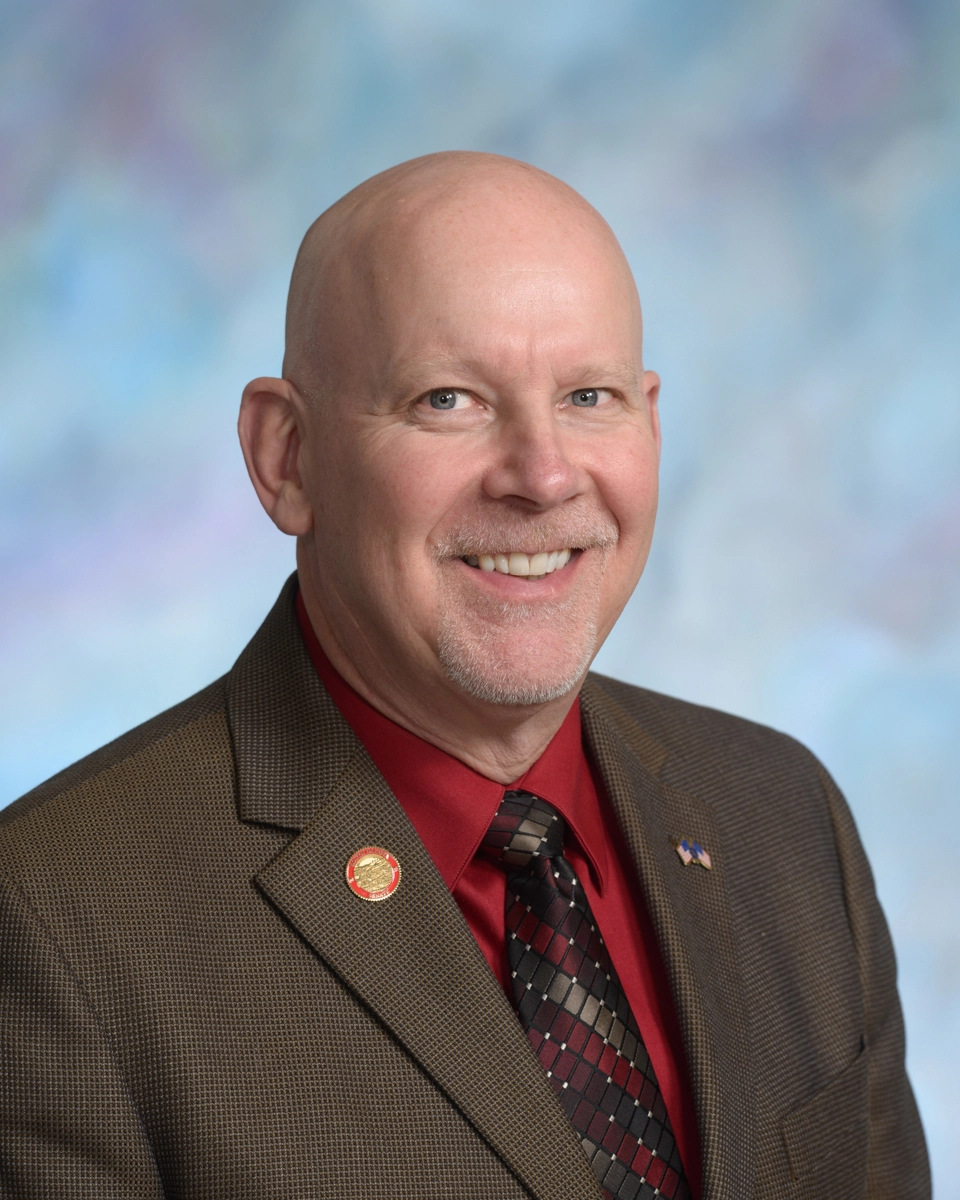
Sen. Jim Mehlhaff
Sponsored bills
Maddy summarySB 2 amends South Dakota law to clarify that firearm silencers (devices reducing gunshot noise) are not classified as "controlled weapons." This change removes silencers from the category of weapons subject to strict state regulations, such as special permits or licensing requirements. The bill directly affects gun owners, manufacturers, and sellers of silencers in South Dakota by eliminating these regulatory barriers. The key mechanism is an amendment to the definitions section of the state's criminal code (§ 22-1-2), specifically excluding silencers from the definition of "controlled weapon."
Maddy summaryHB 1153 protects healthcare providers' right to refuse participation in or payment for medical services that conflict with their moral, ethical, or religious beliefs (Section 2). It applies broadly to all healthcare professionals (like doctors, nurses, pharmacists), healthcare entities (hospitals, clinics), and organizations arranging medical payments (Section 1). The bill prohibits discrimination against providers who exercise this right, engage in protected speech about it, report violations, or disclose conscience-related concerns to authorities (Section 3). It clarifies that employers may accommodate this right through reassignment or schedule changes but cannot retaliate, while not affecting existing duties to provide non-conflicting care.
Maddy summarySB 202 requires vehicle owners to pay for removing their vehicles from bodies of water in South Dakota. It applies specifically to owners who intentionally abandon vehicles on public roads, drive vehicles into lakes or streams causing disablement, or drive onto frozen water that breaks through. The law makes owners civilly liable for both towing/removal costs and any associated storage fees under existing law. This bill directly affects vehicle owners whose actions result in a vehicle being submerged or disabled in water, shifting the financial responsibility from public agencies to the owner.
Maddy summarySB 201 permits hunters to use drones to locate and recover mortally wounded deer or elk when standard tracking methods fail, directly affecting hunters who meet specific conditions. The bill requires hunters to reasonably believe the animal was mortally wounded during a lawful hunt and that it cannot be found with conventional methods. Drone use is restricted to private land, outside September-November, with pilot permission from landowners, FAA compliance, and adherence to rules set by the Game, Fish and Parks Commission. Violating these rules would be a Class 1 misdemeanor. The law does not change general hunting regulations but adds a specific exception for drone-assisted recovery under strict parameters.
Maddy summaryHB 1005 exempts sales and use taxes on data center equipment and software for businesses operating qualified data centers in South Dakota. It specifically covers servers, cooling systems, power infrastructure, security systems, and related technology used in facilities meeting strict criteria (e.g., built between 2026-2036, meeting fire safety standards). Qualified businesses must verify eligibility with the Department of Revenue and maintain compliance with electric utility agreements and water usage requirements. The tax exemption lasts 50 years from the facility's construction permit date. This directly affects data center operators seeking to reduce operational costs in South Dakota.
Maddy summaryHB 1093 creates a new "small-batch winery" license in South Dakota for producers making limited quantities of wine. It sets specific requirements: producers must use at least 50% locally grown agricultural materials, limit annual production to 3,750 gallons, and pay a $500 license fee. The bill allows these wineries to sell directly on-site and to other licensed producers (like distillers or breweries) for use in manufacturing, while requiring verification of local ingredient sourcing. This license is distinct from existing "farm winery" licenses, which have higher production limits (150,000 gallons annually). The bill directly affects small-scale winery operators seeking to produce and sell wine under these defined parameters.
Maddy summaryThis ceremonial resolution (SCR 602) celebrates South Dakota's 42-year sister-state relationship with Taiwan, established in 1984. It highlights specific trade ties, including a 2025 agricultural mission visit and a wheat purchase agreement between South Dakota and Taiwan. The resolution expresses support for strengthening trade relations, academic exchanges, the U.S.-Taiwan tax agreement, and Taiwan's participation in international organizations. As a symbolic gesture, it does not create new laws or policies but formally recognizes the partnership.
Maddy summarySB 99 eliminates property taxes on owner-occupied single-family homes in South Dakota by reducing the maximum tax levy to $0 per thousand valuation, while increasing gross receipts tax rates for retailers from 4.2% to 6.2%. The bill also expands the 4.2% gross receipts tax to cover additional services like accountants, beauty shops, and laundry services (previously taxed at 4.2% under § 10-45-5). These changes directly affect homeowners (specifically single-family residents) and businesses in the listed service sectors. The policy shifts local tax burden from property to retail sales, with the revenue funding a new "property tax local effort replacement fund" to offset the reduced property tax revenue for school districts.
Maddy summaryThis is a ceremonial Senate resolution (not a law), not a bill affecting policies or people. It formally recognizes the 250th anniversary of the Declaration of Independence on July 4, 2026, as a moment to reflect on foundational American principles. The resolution has no legal effect or concrete policy changes; it serves only to symbolically acknowledge the anniversary through a formal statement by the South Dakota Senate. It does not impose requirements, allocate funds, or directly impact any individuals or groups.