

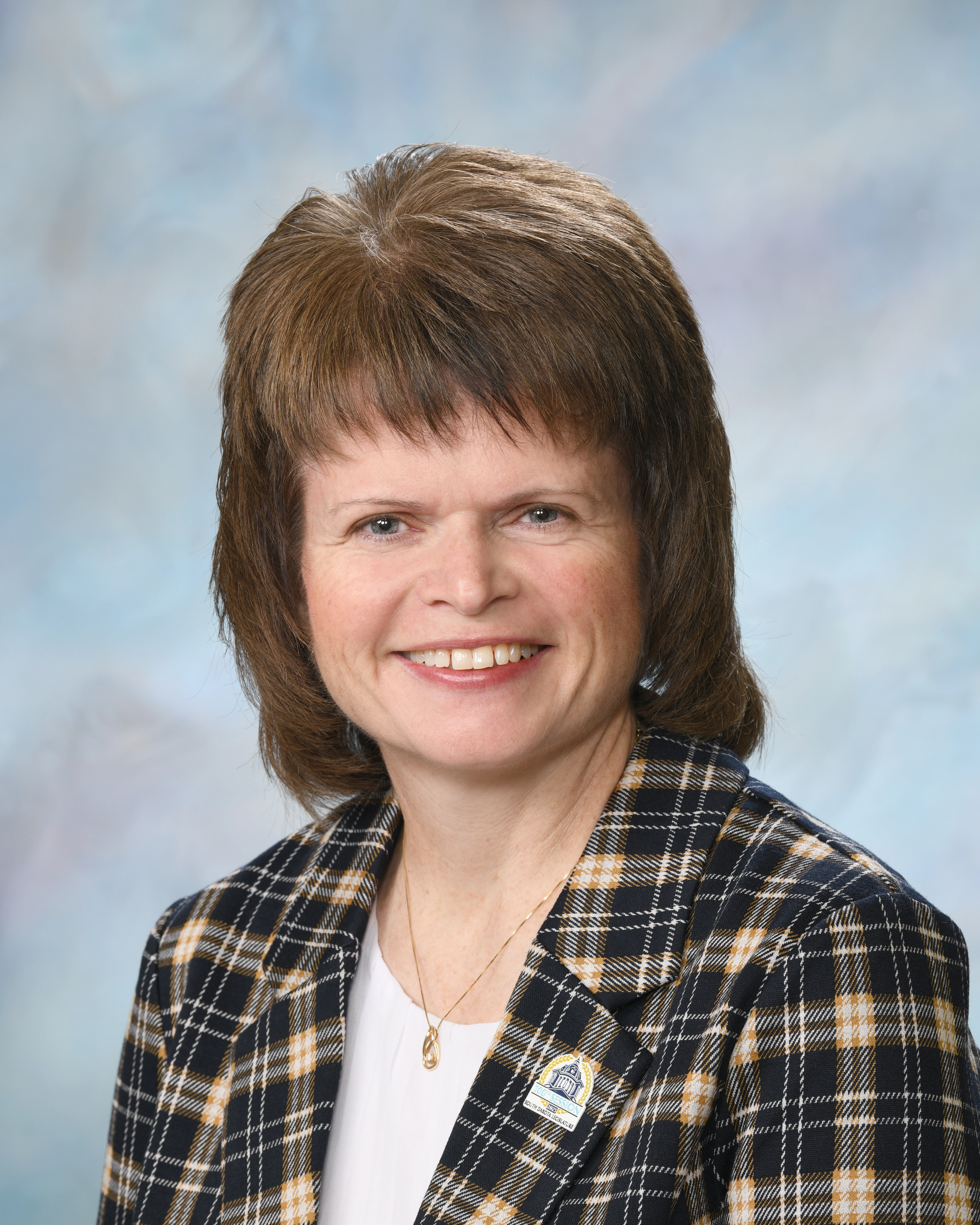
Photo of Lauren Nelson
R South Dakota Senate · District 18 On the 2026 ballot

Sen. Lauren Nelson

Compare
Total votes
674
all sessions
Attendance
100%
of floor votes
Higher than 81% of chamber peers
With party
84%
of cast votes
Lower than 77% of chamber peers
Bipartisan score
10%
crosses aisle rarely
Higher than 79% of chamber peers
Sponsored
143
bills & resolutions
Higher than 88% of chamber peers
Committees
5
assignments
143 bills and resolutions

Sponsored bills

Total
143
Primary
143
Co-sponsor
0
This page
143
matching current filters
Primary SB 205
Failed · South Dakota Senate · Lead sponsor
revise registration fees for drones and establish a fund to support drone aviation.

Maddy summarySB 205 revises drone registration fees in South Dakota, charging 1.5% of purchase price for agricultural drones and 2% for all other drones. The collected fees fund a new "drone aviation fund" administered by the Board of Technical Education to support drone training grants at state technical colleges. This bill directly affects drone owners (especially agricultural users) by changing their registration tax rates and creating a dedicated funding source for drone industry workforce development. The fund will receive all drone registration fees and interest, with expenditures requiring annual budget approval. The bill does not apply to small unmanned aircraft systems covered under federal regulations.

Failed Feb 24, 2026 0 co-sponsors
Primary SB 229
In committee · South Dakota Senate · Lead sponsor
require an election to approve the issuance of certain capital outlay certificates, lease-purchase contracts, or installment purchase contracts.

Maddy summarySB 229 requires South Dakota school districts to hold a voter election before issuing certain financing tools, including capital outlay certificates, lease-purchase contracts, or installment purchase contracts that would obligate the district for future payments exceeding $50,000 or 1.5% of the district’s taxable property valuation. The bill mandates a public hearing and referral to voters for approval, with the election requiring at least 60% "yes" votes. School boards must schedule these elections on specific dates (March, June, or November) and cover associated costs, unless combined with regular elections. This directly affects school districts managing large-scale facility or equipment financing.

In committee Feb 23, 2026 0 co-sponsors
Primary SB 210
In committee · South Dakota Senate · Lead sponsor
provide that a portion of revenues from wind farms remain with school districts.

Maddy summaryThe provided bill text only shows an amendment to education funding definitions (§ 13-13-10.1) and does not include the specific provision about wind farm revenues mentioned in the bill title. The text defines terms like "fall enrollment" and "target teacher ratio" but omits any mechanism for allocating wind farm revenues to school districts. Without the actual revenue-sharing language or relevant sections of the bill, a factual summary cannot be generated from the given context.

In committee Feb 23, 2026 0 co-sponsors
Primary HB 1067
Passed · South Dakota House · Lead sponsor
provide a rebuttable presumption in favor of joint physical custody of a minor child.

Maddy summaryHB 1067 creates a legal presumption in South Dakota that joint physical custody (approximately equal time with both parents) is in the best interest of a minor child for initial custody decisions. This means courts must assume joint custody is appropriate unless evidence shows it would harm the child, based on factors like parental cooperation or the child's needs. The bill directly affects parents involved in custody disputes by shifting the starting point for court decisions toward shared parenting. It defines joint physical custody as roughly equal time-sharing agreed upon by parents or ordered by a court, and repeals a prior section that handled custody determinations. Courts must still make written findings about the child's best interests.

Passed Feb 23, 2026 0 co-sponsors
Primary HB 1080
Signed into law · South Dakota House · Lead sponsor
allow a business owner who is a veteran to display military specialty plates on a noncommercial vehicle registered to the veteran's business and to limit personal liability to the business owner and veteran.

Maddy summaryHB 1080 allows veteran business owners to display military specialty plates on noncommercial vehicles (like personal cars or vans) registered to their business, provided the veteran is listed as an additional owner on the vehicle's title. It also limits the veteran's personal liability for damages from accidents involving these business vehicles. The bill requires the veteran to meet standard military plate eligibility and vehicle registration rules, with a $10 additional fee for the specialty plates. This directly affects veteran business owners who operate noncommercial vehicles under their business registration.

Signed into law Feb 23, 2026 0 co-sponsors
Primary SB 199
Failed · South Dakota Senate · Lead sponsor
establish a new fund to provide property tax relief.

Maddy summarySB 199 creates a Property Tax Relief Fund in the state treasury to help reduce property taxes for homeowners and businesses. The fund is funded by transferring 25% of the annual increase in the state's general fund revenue each August into the account, starting in 2026. Local governments (political subdivisions) can use these funds to lower property tax levies on real property within their jurisdictions. The Department of Revenue administers the fund, and deposits automatically adjust based on state revenue changes each year. This provides a structured, ongoing mechanism for property tax relief tied to state budget growth.

Failed Feb 23, 2026 0 co-sponsors
Primary SB 91
Signed into law · South Dakota Senate · Lead sponsor
clarify the procedure for petitioning a board of county commissioners for a change to the comprehensive plan or zoning ordinances.

Maddy summarySB 91 clarifies the process for citizens to request changes to a county's comprehensive plan or zoning ordinances by setting specific deadlines. It requires county commissioners to hold a public hearing within 45 days of receiving a petition, and mandates the county planning commission to review the request and provide a recommendation within 45 days of the petition's submission. This bill directly affects residents, property owners, and local government officials by streamlining the petition process and ensuring timely responses. The key mechanism adds clear timeframes to existing procedures, reducing delays in reviewing land-use change requests. The bill focuses solely on procedural timing, not on the substance of zoning decisions.

Signed into law Feb 23, 2026 0 co-sponsors
Primary HB 1230
Failed · South Dakota House · Lead sponsor
modify requirements for payment of the employer's investment in South Dakota's future fee.

Maddy summaryHB 1230 modifies the requirements for South Dakota employers to pay an "investment in South Dakota's future fee" (a separate charge from unemployment insurance contributions). It establishes a new opt-in/opt-out system: employers can choose not to pay the fee by submitting a simple form (fitting on one page), and those who opt out face no penalties. Employers who opt in pay a fee rate based on their unemployment fund balance (ranging from 0.00% to 0.53%), with rates adjusted annually according to specific schedule tables. The fee proceeds go to a dedicated fund, not the main unemployment trust, and employers cannot deduct the fee from employee wages.

Failed Feb 23, 2026 0 co-sponsors
Primary SB 218
Passed · South Dakota Senate · Lead sponsor
provide for the establishment of charter schools.

Maddy summarySB 218 establishes a legal framework for charter schools in South Dakota. It defines charter schools as public schools operating under contracts with school districts or the state education department, granting them exemptions from most state education laws while requiring compliance with civil rights, health/safety rules, and standardized testing. The bill mandates annual performance reporting to the state, outlines application requirements for nonprofit organizers (including community support and financial plans), and specifies that charter schools must serve grades K-12 nonsectarianly without religious instruction. This directly affects school districts (as authorizing entities), nonprofit organizers seeking to open charter schools, and students enrolled in these schools.

Passed Feb 20, 2026 0 co-sponsors
Primary SB 109
Passed · South Dakota Senate · Lead sponsor
modify requirements to create a tax increment financing district.

Maddy summarySB 109 modifies South Dakota's rules for creating tax increment financing (TIF) districts, which are areas where increased property tax revenue from development is used to fund improvements. The bill requires that at least 50% of a district's area must be designated as "blighted" (meeting specific criteria like deteriorated structures or unsafe conditions) or serve economic development purposes. It also adds new consent requirements: counties need municipal approval to create districts within city limits, and municipalities need county approval for districts in unincorporated areas. The bill clarifies the definition of "blighted area" to include factors like substandard structures, inadequate infrastructure, or safety hazards. These changes directly affect local governments (municipalities and counties) seeking to establish TIF districts for redevelopment projects.

Passed Feb 20, 2026 0 co-sponsors
Showing 31 to 40 of 143 bills
Previous 1 … 3 4 5 … 15 Next