

Maddy summaryThis bill (SC 812) is a ceremonial resolution honoring Glenn Muller, a South Dakota agricultural leader. It formally commends his career in the state's pork industry, including his work with the South Dakota Pork Producers Council, his role in expanding swine operations, and his advocacy for agriculture. The resolution specifically recognizes his receipt of awards like the South Dakota Corn Growers Association Lifetime Achievement Award and the 2025 Governor's Ag Ambassador designation. As a commemorative measure, it has no policy impact - it solely expresses legislative appreciation for his contributions to South Dakota agriculture.
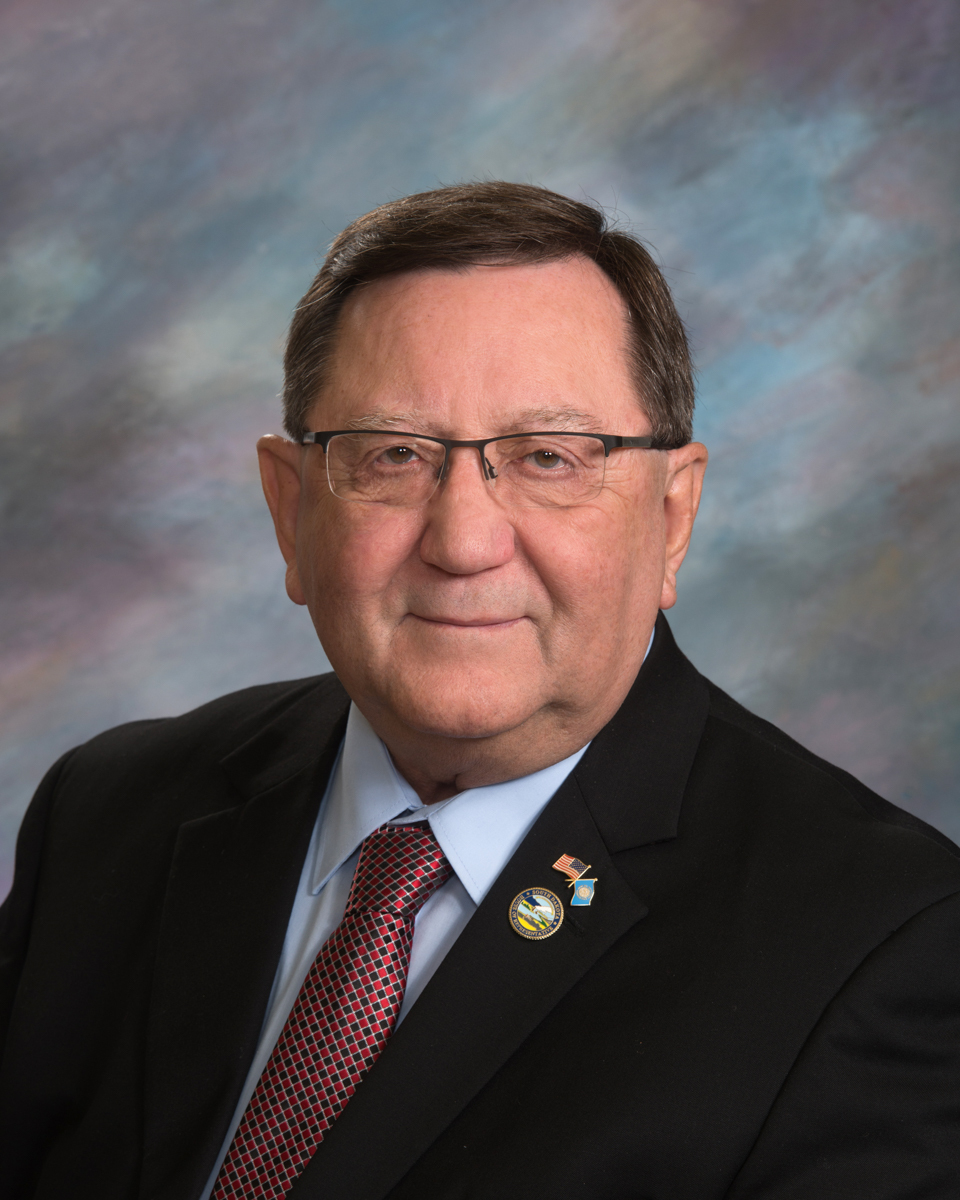
Sen. Larry Zikmund
Sponsored bills
Maddy summarySB 118 creates a "homeowner tax reduction fund" in South Dakota's state treasury. Each year by January 31st, the treasurer must deposit either $100 million or 0.3% of revenues collected from specific property taxes (chapters 10-45, 10-46, 10-46E, 10-58, and § 32-5B-20) into this fund. The Department of Revenue will use these funds to provide property tax rebates for owner-occupied single-family homes, with money in the fund not allowed to transfer to the general fund and requiring annual budgeting through the general appropriation bill. The bill takes effect July 1, 2027.
Maddy summaryHB 1080 allows veteran business owners to display military specialty plates on noncommercial vehicles (like personal cars or vans) registered to their business, provided the veteran is listed as an additional owner on the vehicle's title. It also limits the veteran's personal liability for damages from accidents involving these business vehicles. The bill requires the veteran to meet standard military plate eligibility and vehicle registration rules, with a $10 additional fee for the specialty plates. This directly affects veteran business owners who operate noncommercial vehicles under their business registration.
Maddy summarySB 199 creates a Property Tax Relief Fund in the state treasury to help reduce property taxes for homeowners and businesses. The fund is funded by transferring 25% of the annual increase in the state's general fund revenue each August into the account, starting in 2026. Local governments (political subdivisions) can use these funds to lower property tax levies on real property within their jurisdictions. The Department of Revenue administers the fund, and deposits automatically adjust based on state revenue changes each year. This provides a structured, ongoing mechanism for property tax relief tied to state budget growth.
Maddy summaryHB 1255 requires South Dakota's Department of Health to accept medical records from the U.S. Department of Veterans Affairs (VA) when veterans apply for a medical cannabis registry ID card. Veterans must submit VA records (within three years) showing a debilitating condition, along with proof of an honorable military discharge, to qualify under this provision. This eliminates the need for veterans to obtain a new certification from a South Dakota healthcare provider for the card application. The bill applies specifically to veterans meeting these documentation requirements, streamlining access to medical cannabis registry cards.
Maddy summaryHB 1256 requires South Dakota's Bureau of Human Resources to create rules governing public access to the Capitol complex, including hours of operation, parking, and safety regulations. It also mandates that capitol access pass holders (such as state employees and contractors) can use electronic cards to enter all outside Capitol entrances. This directly affects pass holders and the public visiting the Capitol complex by changing access procedures. The bill focuses on administrative access rules without altering security policies.
Maddy summaryThis bill amends South Dakota tax law to establish two specific methods for determining the purchase price of a used vehicle acquired by gift or other transfer with no or minimal payment. It directly affects individuals receiving vehicles this way, as it provides an alternative to the default tax assessment method. The key change allows taxpayers to use either the retail value from a nationally recognized dealers' guide (approved by the Secretary of Revenue) or a documented bill of sale showing the actual prior purchase price. This gives people a clearer path to prove the vehicle's value for excise tax purposes, potentially reducing their tax burden compared to the previous default of using the retail guide value.
Maddy summaryHB 1072 allocates $20.6 million in state and federal funds to provide South Dakota state employees with a payment equal to 1.5% of their January 1, 2026 salary. Starting July 1, 2026, each active state employee as of that date will receive this amount monthly in 12 equal installments. The payment applies only to employees still working at the time of each monthly disbursement, meaning no payments are made to those who left state employment before a payment date. The funds must be expended by June 30, 2027, with unused amounts reverting to the state.
Maddy summarySB 6 reduces the maximum duration of reemployment benefits for eligible South Dakota workers. The bill amends Section 61-6-8 to shorten the standard benefit period from 26 weeks to a shorter duration (as specified in the amended statute). This directly affects individuals who qualify for state unemployment benefits by limiting how long they can receive payments. The key provision modifies the existing benefit calculation to decrease the total weeks available, without changing the weekly benefit amount. The bill does not address trade readjustment training extensions or base period wage calculations.
Maddy summaryThis House Concurrent Resolution (HCR 6014) honors the 37 privately owned cabin owners in Custer State Park and their property rights. It recognizes that these owners pay property taxes, lease fees to the park, and contribute to the park foundation, but face uncertainty as their leases expire soon. The resolution urges the Governor and Department of Game, Fish and Parks to create new leases for the cabin owners to secure their future in the park. As a symbolic resolution, it does not create new legal rights but expresses legislative support for the cabin owners' continued role in the park.