

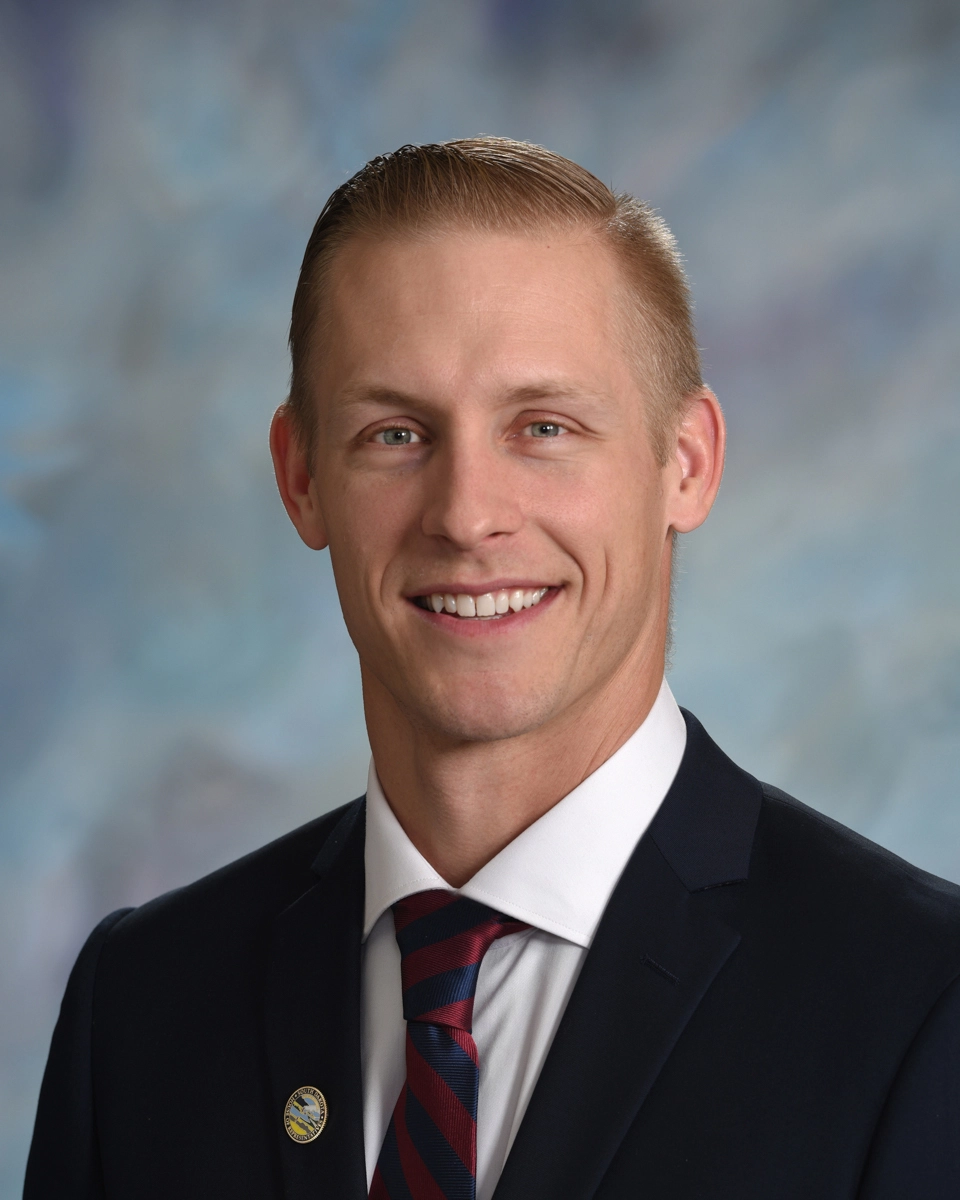
Photo of Aaron Aylward
R South Dakota House · District 6

Rep. Aaron Aylward

Compare
Total votes
2,364
all sessions
Attendance
95%
97 missed
Lower than 93% of chamber peers
With party
67%
of cast votes
Lower than 95% of chamber peers
Bipartisan score
18%
some cross-party votes
Higher than 92% of chamber peers
Sponsored
488
bills & resolutions
Higher than 88% of chamber peers
Committees
5
assignments
488 bills and resolutions

Sponsored bills

Total
488
Primary
488
Co-sponsor
0
This page
488
matching current filters
Primary SJR 505
Passed · South Dakota Senate · Lead sponsor
proposing and submitting to the voters at the next general election an amendment to the Constitution of the State of South Dakota, limiting the assessed value of real property and limiting real property taxes.

Maddy summaryThis bill proposes a constitutional amendment that would limit property taxes in South Dakota to no more than 1% of a property's assessed value. It also caps annual increases to assessed property values at 2% (starting with 2027 valuations) and allows adjustments for ownership changes, renovations, or damage. The amendment would affect all real property owners in South Dakota by restricting how local governments can levy taxes on their land and buildings. Voters would need to approve this change at the next general election for it to take effect.

Passed Feb 23, 2026 0 co-sponsors
Primary HB 1168
In committee · South Dakota House · Lead sponsor
provide a property tax credit for the payment of nonpublic school tuition.

Maddy summaryHB 1168 creates a property tax credit for South Dakota homeowners who pay for qualifying K-12 education expenses for children aged 5-19. The credit covers tuition, school fees (including sports/fine arts), textbooks, tutoring, test fees, transportation, and educational technology. It limits the credit to $1,000 per year or 80% of the school district taxes owed. Homeowners must apply annually by June 1st with documentation from the school or alternative instruction provider.

In committee Feb 23, 2026 0 co-sponsors
Primary HB 1080
Signed into law · South Dakota House · Lead sponsor
allow a business owner who is a veteran to display military specialty plates on a noncommercial vehicle registered to the veteran's business and to limit personal liability to the business owner and veteran.

Maddy summaryHB 1080 allows veteran business owners to display military specialty plates on noncommercial vehicles (like personal cars or vans) registered to their business, provided the veteran is listed as an additional owner on the vehicle's title. It also limits the veteran's personal liability for damages from accidents involving these business vehicles. The bill requires the veteran to meet standard military plate eligibility and vehicle registration rules, with a $10 additional fee for the specialty plates. This directly affects veteran business owners who operate noncommercial vehicles under their business registration.

Signed into law Feb 23, 2026 0 co-sponsors
Primary SB 199
Failed · South Dakota Senate · Lead sponsor
establish a new fund to provide property tax relief.

Maddy summarySB 199 creates a Property Tax Relief Fund in the state treasury to help reduce property taxes for homeowners and businesses. The fund is funded by transferring 25% of the annual increase in the state's general fund revenue each August into the account, starting in 2026. Local governments (political subdivisions) can use these funds to lower property tax levies on real property within their jurisdictions. The Department of Revenue administers the fund, and deposits automatically adjust based on state revenue changes each year. This provides a structured, ongoing mechanism for property tax relief tied to state budget growth.

Failed Feb 23, 2026 0 co-sponsors
Primary HCR 6016
Passed · South Dakota House · Lead sponsor
supporting reform of the beef checkoff program.

Maddy summaryThis South Dakota resolution urges federal lawmakers to support the Opportunities for Fairness in Farming Act (S. 1848/H.R. 3516), which aims to reform the federal beef checkoff program. It highlights concerns about the current program’s lack of transparency, conflicts of interest, and its impact on cattle producers, including declining U.S. cow numbers and increased meatpacking concentration. The resolution specifically calls for reforms requiring producer votes on program decisions, independent audits by USDA, and restrictions on contracts with groups influencing policy. These changes would directly affect cattle producers who pay the mandatory checkoff fee, aiming to make the program more accountable to farmers.

Passed Feb 20, 2026 0 co-sponsors
Primary SB 218
Passed · South Dakota Senate · Lead sponsor
provide for the establishment of charter schools.

Maddy summarySB 218 establishes a legal framework for charter schools in South Dakota. It defines charter schools as public schools operating under contracts with school districts or the state education department, granting them exemptions from most state education laws while requiring compliance with civil rights, health/safety rules, and standardized testing. The bill mandates annual performance reporting to the state, outlines application requirements for nonprofit organizers (including community support and financial plans), and specifies that charter schools must serve grades K-12 nonsectarianly without religious instruction. This directly affects school districts (as authorizing entities), nonprofit organizers seeking to open charter schools, and students enrolled in these schools.

Passed Feb 20, 2026 0 co-sponsors
Primary SB 109
Passed · South Dakota Senate · Lead sponsor
modify requirements to create a tax increment financing district.

Maddy summarySB 109 modifies South Dakota's rules for creating tax increment financing (TIF) districts, which are areas where increased property tax revenue from development is used to fund improvements. The bill requires that at least 50% of a district's area must be designated as "blighted" (meeting specific criteria like deteriorated structures or unsafe conditions) or serve economic development purposes. It also adds new consent requirements: counties need municipal approval to create districts within city limits, and municipalities need county approval for districts in unincorporated areas. The bill clarifies the definition of "blighted area" to include factors like substandard structures, inadequate infrastructure, or safety hazards. These changes directly affect local governments (municipalities and counties) seeking to establish TIF districts for redevelopment projects.

Passed Feb 20, 2026 0 co-sponsors
Primary HB 1163
Failed · South Dakota House · Lead sponsor
prohibit certain persons from requiring genetic-based vaccinations.

Maddy summaryHB 1163 prohibits employers, schools, and public accommodations from requiring genetic-based vaccinations (defined as those using mRNA, DNA, or similar genetic technology) as a condition for employment, enrollment, or services. It also bans adverse actions like termination or denial of services based on vaccination status. The bill allows reasonable safety measures like masks or remote work but exempts healthcare facilities under federal rules, existing school vaccine requirements, health science program placements, court-ordered vaccinations, and the National Guard. This directly affects employers, educational institutions, and public service providers in South Dakota.

Failed Feb 20, 2026 0 co-sponsors
Primary SB 145
Passed · South Dakota Senate · Lead sponsor
revise the limitations on a municipality's power to take actions for the promotion of health or the suppression of disease.

Maddy summaryThis bill (SB 145) amends South Dakota law to clarify and expand municipalities' authority to take actions promoting health or suppressing disease. It removes specific restrictions that previously limited municipal power, such as prohibitions against actions that might interfere with religious freedom, free speech, assembly, or Second Amendment rights. Municipalities can now enact health-related ordinances or resolutions without needing to avoid these specific constitutional considerations. The change directly affects all South Dakota cities and towns when creating local health or disease prevention policies.

Passed Feb 20, 2026 0 co-sponsors
Primary HB 1210
Failed · South Dakota House · Lead sponsor
prohibit COVID-19 vaccination requirements and to provide a penalty therefor.

Maddy summaryHB 1210 bans employers, schools, state agencies, and other entities from requiring COVID-19 vaccinations as a condition for employment, enrollment, or accessing services. It directly affects workers, students, and individuals seeking public benefits or services. Violating this ban would result in a Class 2 misdemeanor penalty. The law overrides existing requirements and takes effect immediately upon enactment.

Failed Feb 20, 2026 0 co-sponsors
Showing 31 to 40 of 488 bills
Previous 1 … 3 4 5 … 49 Next