

Maddy summaryHB 1058 requires online betting platforms offering pari-mutuel wagering on horse or dog races to obtain a specific license from South Dakota. It clarifies that both in-state operators (with a physical presence) and out-of-state operators must pay a tax of 1.5% on South Dakota contributions, while multi-jurisdictional hubs pay 0.25% (with portions going to racing and breeding funds). The bill specifies that tax revenue will fund the state, a special racing revolving fund, and a South Dakota-bred racing fund. This applies only to online wagering for authorized horse and dog races, updating existing tax and licensing rules.
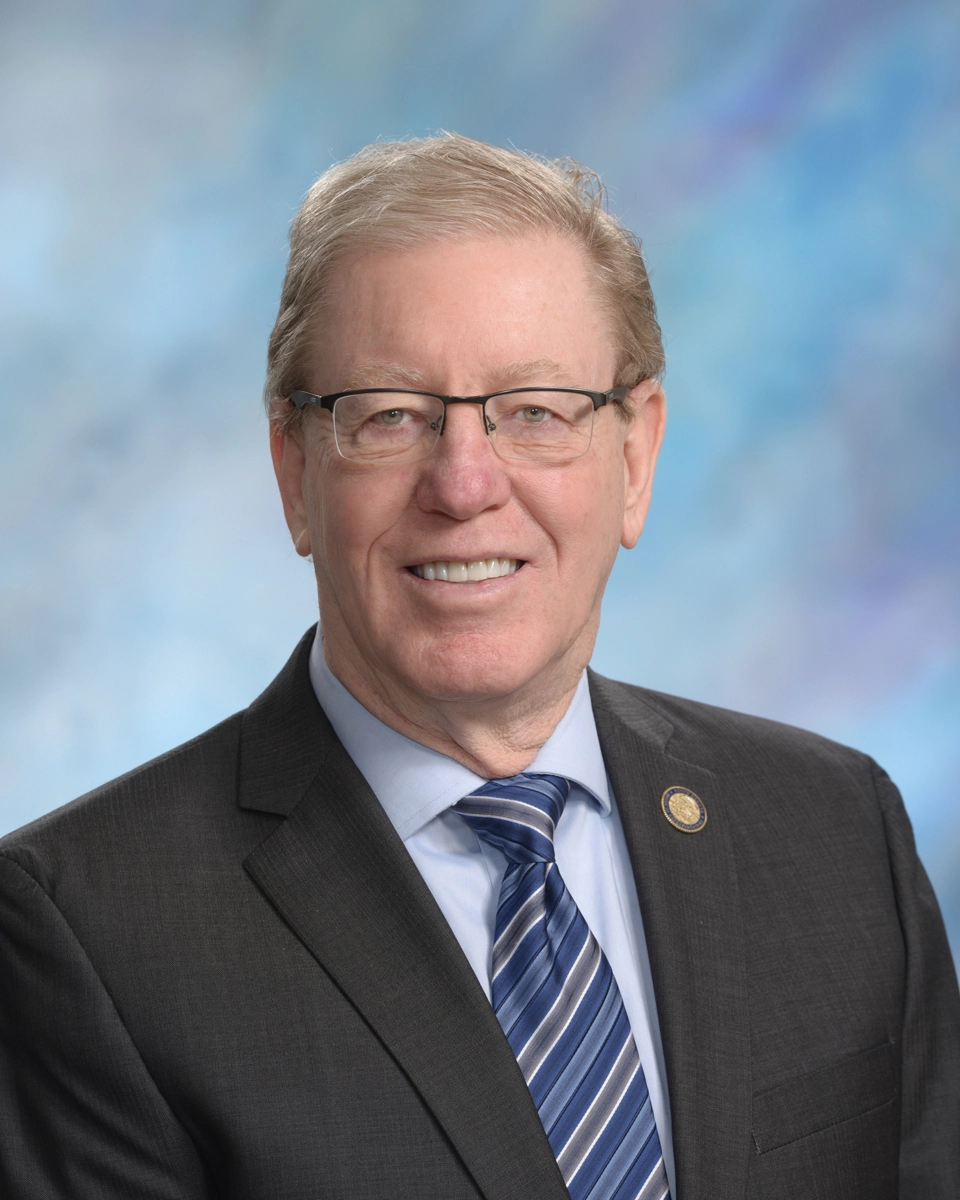
Rep. Steve Duffy
Sponsored bills
Maddy summarySB 2 amends South Dakota law to clarify that firearm silencers (devices reducing gunshot noise) are not classified as "controlled weapons." This change removes silencers from the category of weapons subject to strict state regulations, such as special permits or licensing requirements. The bill directly affects gun owners, manufacturers, and sellers of silencers in South Dakota by eliminating these regulatory barriers. The key mechanism is an amendment to the definitions section of the state's criminal code (§ 22-1-2), specifically excluding silencers from the definition of "controlled weapon."
Maddy summaryThis ceremonial resolution (SCR 602) celebrates South Dakota's 42-year sister-state relationship with Taiwan, established in 1984. It highlights specific trade ties, including a 2025 agricultural mission visit and a wheat purchase agreement between South Dakota and Taiwan. The resolution expresses support for strengthening trade relations, academic exchanges, the U.S.-Taiwan tax agreement, and Taiwan's participation in international organizations. As a symbolic gesture, it does not create new laws or policies but formally recognizes the partnership.
Maddy summaryHB 1114 allocates state funds to purchase equipment for the South Dakota Board of Technical Education. This appropriation directly supports vocational training programs by providing necessary tools and machinery for students. The bill authorizes financial resources without specifying exact equipment types or quantities. This measure enables the board to maintain and expand its technical education facilities.
Maddy summaryThis bill modifies the structure and staffing rules for the South Dakota-Ireland Trade Commission. It directly affects the commission's members and employees by changing how they are appointed and how many staff members the commission must have. The key provisions adjust the composition requirements and establish new staffing standards for the commission's operations. These changes aim to update the commission's framework to better support trade activities between South Dakota and Ireland.
Maddy summaryThis bill authorizes the South Dakota Housing Infrastructure Fund to provide a loan to a school district located next to a federal military installation. The funds can be used to construct or expand a school building to meet educational needs. The provision applies specifically to school districts that are geographically adjacent to federal military facilities. This measure does not require new funding but instead allows existing infrastructure funds to be used for this specific purpose.
Maddy summaryThis bill grants legislative approval for a future water permit application submitted by the Western Dakota Regional Water System. It allows the water system to proceed with obtaining a permit for future water use, which is necessary for their planned infrastructure projects. The measure does not authorize the water use itself but provides the required legislative consent for the permit process to move forward.
Maddy summaryHB 1189 extends the deadline by two years for funds appropriated to the Governor's Office of Economic Development in 2021 to be returned to the general fund if not spent. The bill directly affects the state's economic development office and the general fund by delaying when unused marketing, route restoration, business development, and air service marketing money must revert. This change allows the office additional time to utilize the designated funds for their intended purposes before the money returns to the state's general treasury. The legislation does not alter how the money is used, only when any remaining balance must be transferred back.
Maddy summaryThis bill proposes a constitutional amendment to South Dakota that would tie the state's obligation to expand Medicaid coverage to the level of federal funding provided for the program. It directly affects South Dakota residents and the state government by establishing a condition under which expanded Medicaid benefits must be implemented. The key provision requires that the state only expand Medicaid if the federal government contributes a sufficient level of financial assistance, effectively making state participation dependent on federal financial support levels. This change would alter the state's current Medicaid obligations by adding a financial condition precedent to the expansion requirement.
Maddy summarySB 202 proposes establishing a new Water Infrastructure Development Fund in South Dakota to support water-related projects. The bill directly affects state agencies, local governments, and communities that manage or need water infrastructure improvements. Key provisions include creating a dedicated funding source, likely through state appropriations or fees, to finance water system upgrades, maintenance, and expansion. The fund would provide financial resources for projects addressing water supply, treatment, or distribution needs across the state.