

Maddy summaryHB 1181 prohibits the injection, release, or dispersal of specific chemicals (including aluminum barium, strontium, sulfur dioxide, and other substances known to cause health issues) into the atmosphere for weather or climate modification. It directly affects individuals and businesses engaging in such activities, imposing a minimum $100,000 civil penalty plus $10,000 per day for ongoing violations. The bill creates a monitoring fund to cover enforcement costs (funded by fines), requires airports to report on aircraft equipped for such dispersal, and establishes an online public reporting system for suspected violations. Key mechanisms include mandatory airport reporting, public submission of details (e.g., chemicals used), and departmental rules for investigations and compliance.
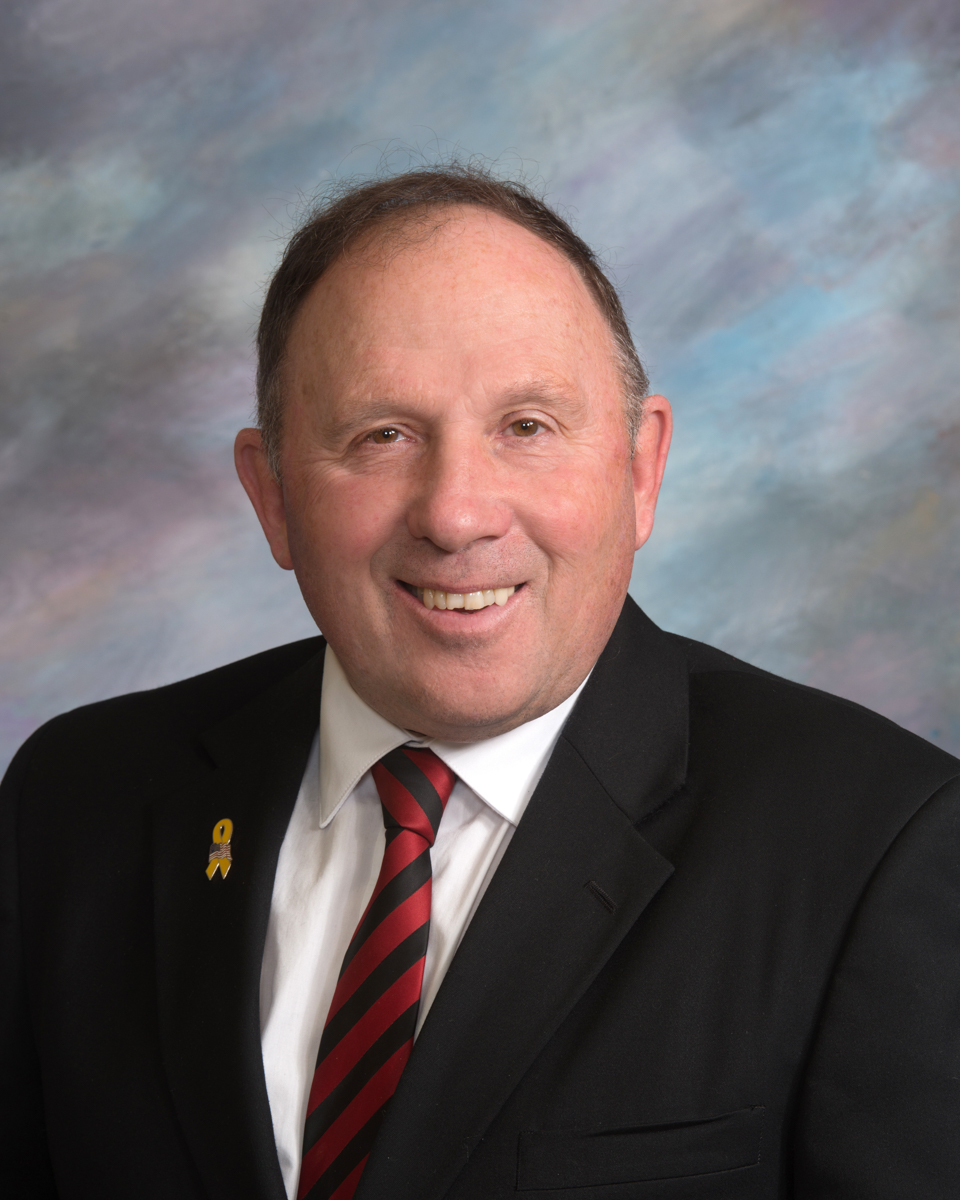
Rep. Tim Goodwin
Sponsored bills
Maddy summaryHB 1093 creates a new "small-batch winery" license in South Dakota for producers making limited quantities of wine. It sets specific requirements: producers must use at least 50% locally grown agricultural materials, limit annual production to 3,750 gallons, and pay a $500 license fee. The bill allows these wineries to sell directly on-site and to other licensed producers (like distillers or breweries) for use in manufacturing, while requiring verification of local ingredient sourcing. This license is distinct from existing "farm winery" licenses, which have higher production limits (150,000 gallons annually). The bill directly affects small-scale winery operators seeking to produce and sell wine under these defined parameters.
Maddy summaryThis bill is a symbolic resolution commemorating Deadwood's 150th anniversary as a historical milestone. It formally recognizes the city's founding in 1876 during the Black Hills Gold Rush and its evolution from a frontier mining town into a preserved historic destination. The resolution invites all South Dakotans to celebrate Deadwood's cultural heritage, historical significance, and ongoing contributions to the state's identity. As a commemorative measure, it has no legal effect or policy changes.
Maddy summaryHB 1085 requires South Dakota health insurers to cover nonopioid prescription drugs for pain treatment when prescribed by a doctor, without denying coverage in favor of opioids. Insurers cannot impose stricter approval steps (like prior authorization) or higher cost-sharing tiers for nonopioid drugs compared to opioids or narcotics. This directly affects patients seeking pain management and insurers operating in South Dakota, ensuring equal coverage treatment for nonopioid options when clinically appropriate. The law applies to all health insurance policies sold or renewed in the state.
Maddy summarySB 103 states that individuals present at shooting ranges assume all inherent risks that are obvious, including injuries from noise, discharges, equipment malfunctions (not owned by the range), terrain variations, weather conditions, or natural obstacles like rocks or debris. It directly affects anyone visiting public or private shooting ranges, including those operated by law enforcement. The bill defines "shooting range" broadly to cover all facilities using firearms or archery for activities like skeet or trap shooting. This legal assumption of risk limits liability for range operators regarding these specific, inherent dangers.
Maddy summaryThis ceremonial resolution (SCR 602) celebrates South Dakota's 42-year sister-state relationship with Taiwan, established in 1984. It highlights specific trade ties, including a 2025 agricultural mission visit and a wheat purchase agreement between South Dakota and Taiwan. The resolution expresses support for strengthening trade relations, academic exchanges, the U.S.-Taiwan tax agreement, and Taiwan's participation in international organizations. As a symbolic gesture, it does not create new laws or policies but formally recognizes the partnership.
Maddy summaryHB 1158 revises South Dakota's requirements for students receiving alternative instruction (such as homeschooling). It requires these students to take state-mandated academic assessments if they are "partially enrolled" in a public school district (at least 50% of school hours), removing a previous exemption. The bill also adds specific deadlines: parents must file notification of alternative instruction within 30 days of starting it or changing districts, and annually by September 1st until the child graduates or fully enrolls in school. This directly affects homeschooling families and parents choosing alternative education within a public school district's boundaries.
Maddy summaryThis is a symbolic concurrent resolution (not a bill with enforceable provisions), introduced by Senator Voita. It urges South Dakotans to observe July as a time of prayer and fasting to seek divine healing and mercy for the state, referencing Judeo-Christian values and historical religious appeals. The resolution does not create new laws, alter policies, or impose requirements on citizens or government. It is purely a ceremonial expression of religious sentiment, based on the state's constitutional motto ("Under God, the People Rule") and historical references to faith in governance.
Maddy summaryThis bill (SC 802) is a ceremonial resolution recognizing the 77th anniversary of Tabor Czech Days, an annual cultural festival in Tabor, South Dakota, scheduled for June 18-20, 2026. It formally honors the event and the Czech immigrant heritage it celebrates, highlighting traditions like music, food, museums, and community activities. The resolution has no legal effect or policy changes - it simply offers official state recognition through the legislature. It directly acknowledges the festival’s cultural significance to South Dakota’s Czech community and its annual events.
Maddy summaryHB 1131 amends how South Dakota school districts calculate their fall enrollment for state education funding. The bill specifically requires districts to exclude students residing in residential treatment facilities (when the facility operates the education program) from their enrollment count used in the funding formula. This change directly affects school districts serving students in such facilities, potentially altering their state funding amounts based on revised enrollment calculations. The amendment clarifies an existing definition within the state's education funding structure without changing other elements like teacher salary formulas or English learner adjustments.