

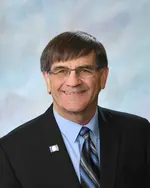
Photo of Al Novstrup
R South Dakota House · District 3

Rep. Al Novstrup

Compare
Total votes
2,213
all sessions
Attendance
93%
144 missed
Near the chamber average
With party
89%
of cast votes
Near the chamber average
Bipartisan score
7%
crosses aisle rarely
Near the chamber average
Sponsored
345
bills & resolutions
Higher than 87% of chamber peers
Committees
2
assignments
345 bills and resolutions

Sponsored bills

Total
345
Primary
345
Co-sponsor
0
This page
345
matching current filters
Primary SC 808
Introduced · South Dakota Senate · Lead sponsor
commending and honoring Richard Schlosser, a member of the Frederick Area School District Board of Education, on his twenty-five years of school board service.

Maddy summaryThis bill is a legislative commemoration (not a law) formally commending Richard Schlosser for 25 years of service on the Frederick Area School District Board of Education. It recognizes his dedication to students and the community, including his receipt of the Association of School Boards of South Dakota's Distinguished Service Award. The resolution is a symbolic gesture by the South Dakota Legislature honoring his service, with no policy changes or direct impact on laws or regulations.

Introduced Feb 17, 2026 0 co-sponsors
Primary SC 810
Introduced · South Dakota Senate · Lead sponsor
commending and honoring the Hill City School Board on its selection as the Associated School Boards of South Dakota Outstanding School Board of South Dakota for 2025.

Maddy summaryThis bill (SC 810) is a ceremonial resolution honoring the Hill City School Board for being named the "Outstanding School Board of South Dakota" by the Associated School Boards of South Dakota for 2025. It recognizes their work in improving student achievement, teacher retention, and school culture, including six consecutive years receiving the Gold Level ALL Award. The resolution formally commends the board's efforts in enhancing education within their district. As a commemorative measure, it does not create new laws or affect any policies or funding.

Introduced Feb 17, 2026 0 co-sponsors
Primary HB 1060
Signed into law · South Dakota House · Lead sponsor
remove the five percent calculation requirement from the county budgetary process.

Maddy summaryHB 1060 removes a requirement that county commissioners must add a mandatory 5% buffer to tax levy calculations when creating annual budgets. This change affects South Dakota county governments by simplifying their budget process - county boards will no longer need to calculate a 5% excess over projected revenue needs. The bill specifically repeals Section 7-21-18 and amends Sections 7-21-19 and 10-12-8 to eliminate the 5% addition step from the tax levy formula. County commissioners will now calculate tax levies based solely on the difference between budgeted expenses and expected revenue, without the fixed 5% adjustment.

Signed into law Feb 17, 2026 0 co-sponsors
Primary HB 1088
Signed into law · South Dakota House · Lead sponsor
remove the requirement that counties remit to municipalities an amount equal to the road levy for calendar years 1984, 1985, and 1986.

Maddy summaryHB 1088 removes a requirement that South Dakota counties must remit funds to municipalities equal to the road levy amounts distributed to those municipalities for calendar years 1984, 1985, and 1986. This specifically targets a provision in existing law that mandated counties pay municipalities a share of road tax revenue from those three years. The bill repeals Section 10-12-32.1, which previously established that municipalities incorporated after January 1, 1984, were entitled to 25% of county road funds for those historical years. This change eliminates a longstanding financial obligation between counties and municipalities for a specific historical period.

Signed into law Feb 17, 2026 0 co-sponsors
Primary HB 1064
Signed into law · South Dakota House · Lead sponsor
provide for the sale of producer-raised meat and meat food products directly to consumers pending legalization under federal law.

Maddy summaryHB 1064 allows South Dakota livestock producers to sell meat they raised and processed directly to end consumers in the state, pending federal legalization of such sales. The bill requires meat to be raised, slaughtered, and processed entirely within South Dakota, sold only to final consumers (not resold), and labeled with a warning that it’s uninspected and cannot be redistributed. It becomes effective only after the attorney general certifies that federal law permits such sales, either through new federal legislation or a court ruling declaring the current federal prohibition unconstitutional. This bill does not change current federal restrictions but prepares South Dakota for future direct-to-consumer sales once federal barriers are lifted.

Signed into law Feb 17, 2026 0 co-sponsors
Primary SB 187
Failed · South Dakota Senate · Lead sponsor
define nonpublic school.

Maddy summarySB 187 defines "nonpublic school" in South Dakota law as an institution operated by individuals or groups (not publicly elected boards) that teaches math and English fundamentals to children of compulsory school age, with English instruction focused on mastery. The bill specifies that such schools may limit enrollment, charge tuition, receive grants or services from school districts, but cannot claim geographic territory for tax revenue or receive state education aid under Chapter 13-13. It also clarifies that nonpublic schools are not required to be accredited or have certified teachers. This definition applies to all nonpublic schools in South Dakota, establishing their legal boundaries for funding and operations.

Failed Feb 17, 2026 0 co-sponsors
Primary HB 1151
Failed · South Dakota House · Lead sponsor
ban kratom and kratom products and to provide a penalty therefor.

Maddy summaryHB 1151 bans kratom and kratom products in South Dakota, making it a Class 2 misdemeanor to sell, distribute, purchase, consume, or possess them. It specifically prohibits sales or use by anyone under 21 (except by parents/guardians), and requires strict labeling for products that remain legal, including serving sizes, alkaloid content, and health warnings. The bill also prohibits products containing over 2% 7-hydroxymitragynine, synthetic compounds, or harmful additives. This directly affects consumers, businesses selling kratom, and retailers who must comply with new labeling rules.

Failed Feb 17, 2026 0 co-sponsors
Primary HB 1218
Passed · South Dakota House · Lead sponsor
create a new class of nonagricultural property for purposes of taxation, and to provide a penalty therefor.

Maddy summaryHB 1218 creates two new tax classifications for nonagricultural property in South Dakota: "commercial-operator" (for properties actively managed by owners/families) and "commercial-investor" (for other nonagricultural property). It requires property owners to apply annually by August 1st to qualify for the lower-tax "commercial-operator" status, proving they or a family member materially participate in the business. Owners who falsely claim eligibility face a Class 1 misdemeanor penalty. This directly affects commercial property owners, particularly family-run businesses seeking lower tax rates. The bill modifies existing tax code to define these categories and establish the reclassification process.

Passed Feb 12, 2026 0 co-sponsors
Primary SB 189
Passed · South Dakota Senate · Lead sponsor
provide for an automatic refund of an assessment on crops, livestock, and milk.

Maddy summarySB 189 creates an automatic refund process for agricultural assessments on specific crops and livestock. It directly affects growers who pay mandatory assessments on wheat, oilseeds (like canola), corn, livestock, and pulse crops (such as peas). The key change replaces the current system - where growers must apply for individual refunds within 60 days of each assessment - with a new annual electronic process. Under this bill, growers can submit one online request by December 31 to receive refunds for all assessments paid during the upcoming year, eliminating the need for separate applications per transaction. The bill modifies existing refund procedures across multiple agricultural chapters (wheat, oilseeds, corn, livestock, pulse crops) to implement this streamlined system.

Passed Feb 12, 2026 0 co-sponsors
Primary HB 1165
In committee · South Dakota House · Lead sponsor
establish basic and advanced esthetics licenses, and to revise the licensure chapter for cosmetology, nail technology, and esthetics.

Maddy summaryHB 1165 creates two new esthetics licenses (basic and advanced) for skin care professionals in South Dakota, replacing the previous single license. It revises cosmetology and nail technology licensing rules while explicitly exempting natural hair braiders from all licensing requirements. The bill defines specific skin treatments like dermaplaning (using a blade) and microdermabrasion (mechanical exfoliation) as part of the new licensing framework. This directly affects estheticians seeking to perform these treatments, salons offering such services, and natural hair braiders who remain unlicensed under the exemption.

In committee Feb 11, 2026 0 co-sponsors
Showing 51 to 60 of 345 bills
Previous 1 … 5 6 7 … 35 Next