

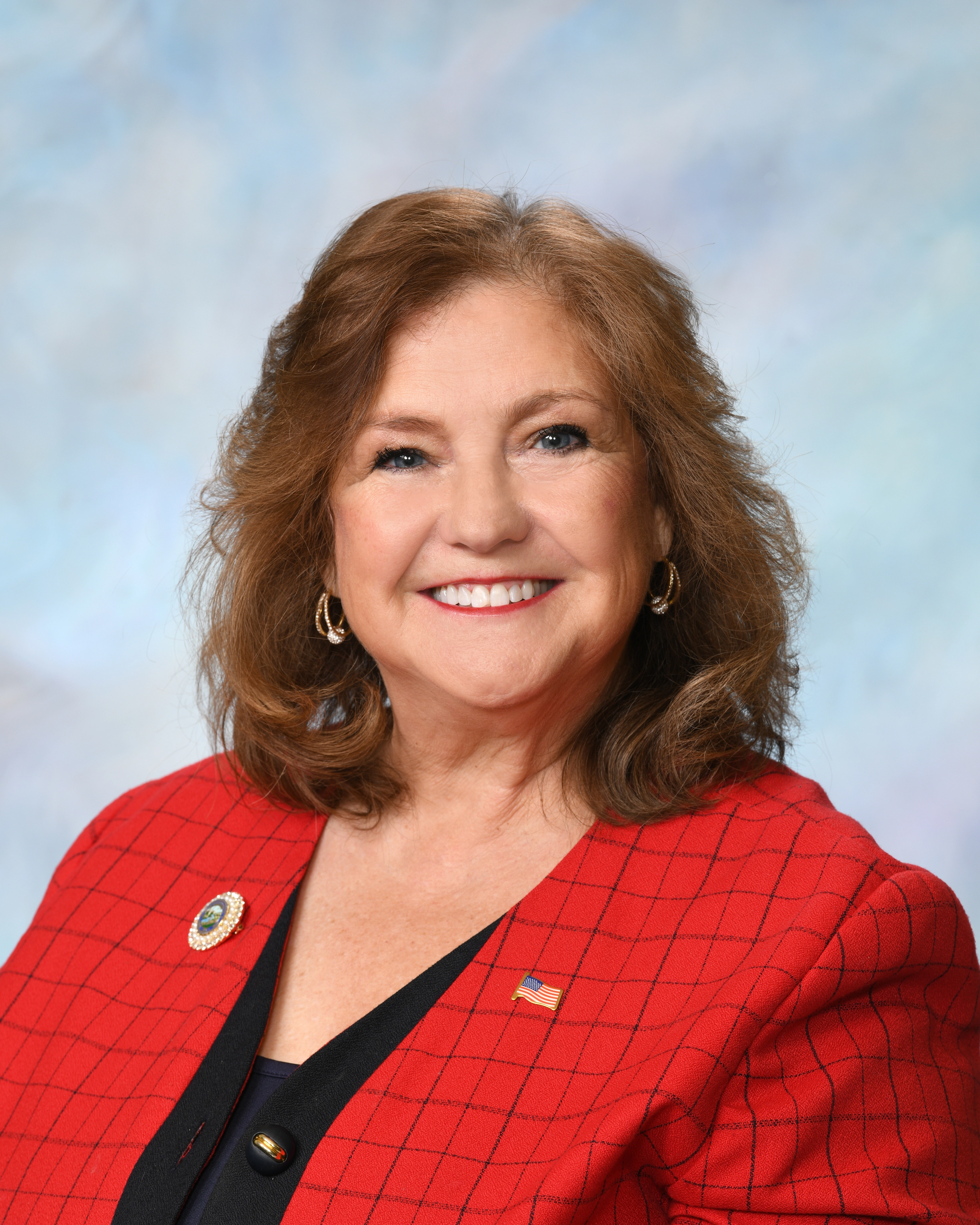
Photo of Kathy Rice
R South Dakota House · District 29

Rep. Kathy Rice

Compare
Total votes
806
all sessions
Attendance
100%
of floor votes
Higher than 80% of chamber peers
With party
78%
of cast votes
Lower than 92% of chamber peers
Bipartisan score
13%
some cross-party votes
Higher than 89% of chamber peers
Sponsored
159
bills & resolutions
Higher than 85% of chamber peers
Committees
2
assignments
159 bills and resolutions

Sponsored bills

Total
159
Primary
159
Co-sponsor
0
This page
159
matching current filters
Primary HB 1209
Passed · South Dakota House · Lead sponsor
require employment verification eligibility through the e-verify program and to provide a penalty therefor.

Maddy summaryHB 1209 requires South Dakota employers to verify new employees' work eligibility using the federal DHS e-Verify program within the hiring process and maintain records throughout employment. Employers who fail to comply lose eligibility for state economic incentives (like grants or loans) and must repay any such funds received within 30 days of a final noncompliance determination. Additionally, the bill makes it a Class 1 misdemeanor for individuals to knowingly provide false information to evade e-Verify checks. The law directly affects all South Dakota employers receiving state economic incentives and their employees.

Passed Mar 11, 2026 0 co-sponsors
Primary HB 1323
Failed · South Dakota House · Lead sponsor
modify the requirements to refer an ordinance or resolution to the voters of a political subdivision.

Maddy summaryHB 1323 amends South Dakota law to require that petitions referring county or municipal ordinances/resolutions to voters be filed within **45 days** of the ordinance's adoption, instead of the previous timeframe. This affects **voters** in counties or municipalities who wish to challenge local government decisions through a referendum. The bill specifies that petitions must be signed by **at least 5% of registered voters** (based on the last general election's total), and it updates related sections (like §7-18A-15) to reflect this 45-day deadline. The change streamlines the process but does not alter which ordinances/resolutions can be referred (e.g., those affecting public safety remain excluded).

Failed Mar 10, 2026 0 co-sponsors
Primary HB 1101
Signed into law · South Dakota House · Lead sponsor
prohibit an insurer from declining or limiting life, disability, or long-term care insurance policies based solely on an individual's status as a living organ donor.

Maddy summaryHB 1101 prohibits insurers from denying or limiting life, disability, or long-term care insurance coverage solely because someone is a living organ donor. It specifically bans insurers from: (1) refusing coverage based on donor status, (2) requiring donors to stop donating to maintain coverage, or (3) charging higher premiums or imposing other restrictions due to donor status alone. The bill ensures that living organ donors cannot face insurance discrimination without evidence of actual increased health risk. This directly protects individuals who donate organs while alive from unfair treatment by insurance companies.

Signed into law Mar 9, 2026 0 co-sponsors
Primary HB 1169
Signed into law · South Dakota House · Lead sponsor
classify medetomidine as a Schedule III controlled substance and establish permissible uses.

Maddy summaryHB 1169 classifies medetomidine - a drug used in veterinary medicine - as a state-controlled substance under Schedule III, effective January 1, 2026. This bill directly affects veterinarians, animal drug manufacturers, and pharmacists who handle medetomidine for animal use. The key provision exempts specific veterinary applications, including federally approved animal drugs (under 21 U.S.C. § 360b) and uses permitted by federal law, ensuring continued access for animal care while imposing state-level controls on other uses.

Signed into law Mar 9, 2026 0 co-sponsors
Primary HB 1241
Passed · South Dakota House · Lead sponsor
modify the requirements for public notice of a hearing prior to a vote to impose an excess tax levy, and to modify requirements to refer an excess tax levy of a school district to a vote.

Maddy summaryHB 1241 increases the property tax exemption amount for disabled veterans and surviving spouses in South Dakota. It amends existing law (§ 10-4-40 for veterans and § 10-4-41 for surviving spouses) to raise the value of a primary residence exempt from property taxes. Currently set at $225,000, this exemption applies to owner-occupied homes where the veteran is permanently and totally disabled from service-connected injuries, or to surviving spouses of such veterans. To qualify, applicants must submit a confidential form to the Department of Revenue and maintain occupancy; the exemption ends if they sell the home, stop living there, or remarry (for surviving spouses).

Passed Mar 9, 2026 0 co-sponsors
Primary SB 81
Signed into law · South Dakota Senate · Lead sponsor
clarify the prohibition on injuring or harassing a service animal.

Maddy summarySB 81 clarifies South Dakota's law against harming service animals by specifying that it is illegal to maliciously beat, injure, harass, or interfere with a service animal that is controlled by a person with a disability and wearing a harness or control device. The bill directly affects individuals with disabilities who rely on service animals and anyone who might harass or harm such animals. It explicitly defines "service animal" as a dog trained to perform tasks directly related to a person's disability (per federal guidelines), excluding emotional support, comfort, or crime deterrent effects. The law makes it a Class 2 misdemeanor to violate these provisions.

Signed into law Mar 9, 2026 0 co-sponsors
Primary SB 87
Signed into law · South Dakota Senate · Lead sponsor
clarify and establish requirements related to forensic medical examinations.

Maddy summarySouth Dakota's SB 87 ensures counties cover the full cost of forensic medical examinations for victims of sexual assault or rape, eliminating out-of-pocket expenses for victims. The bill specifies covered costs include physician services, necessary tests (like STD screenings and pregnancy tests), supplies, and medications, with payments capped at Medicaid rates. It allows minors aged 16+ to consent to exams without parental permission and permits exams for protected persons without guardian consent, provided informed consent is obtained. Hospitals and clinics cannot bill victims beyond these Medicaid-based limits, and must notify victims of their no-cost access regardless of cooperation with law enforcement.

Signed into law Mar 9, 2026 0 co-sponsors
Primary HB 1056
Signed into law · South Dakota House · Lead sponsor
require that the Department of Social Services submit a federal waiver request to exclude soft drinks from the supplemental nutrition assistance program.

Maddy summaryHB 1056 requires South Dakota's Department of Social Services to submit a federal waiver request by September 1, 2026, to exclude soft drinks from the Supplemental Nutrition Assistance Program (SNAP). The bill defines "soft drink" as nonalcoholic sweetened beverages (excluding milk, milk substitutes, and approved juices) and mandates annual waiver requests if initially denied. If approved, the restriction would take effect within six months, directly affecting SNAP participants who currently purchase soft drinks with benefits. This policy change would alter eligibility under federal SNAP rules for South Dakota recipients.

Signed into law Mar 4, 2026 0 co-sponsors
Primary HB 1197
Signed into law · South Dakota House · Lead sponsor
revise a provision related to the venue of adoption proceedings.

Maddy summaryHB 1197 clarifies the court where adoption cases must be filed in South Dakota. It specifies that adoption petitions must be filed in a county where the adopting parent resides, the child's care agency is located, or the child was born/resides - unchanged from current law. The bill streamlines the language of existing rules without adding new options or altering the process. This procedural update directly affects adoption cases and the courts handling them, ensuring clarity in venue selection. (2 sentences, as it is a procedural clarification).

Signed into law Mar 4, 2026 0 co-sponsors
Primary HB 1173
Passed · South Dakota House · Lead sponsor
require certain applicants that seek a permit from the Public Utilities Commission of the State of South Dakota to prepare and pay for an environmental impact statement.

Maddy summaryHB 1173 requires South Dakota's Public Utilities Commission to mandate an environmental impact statement (EIS) for certain utility permit applications before final approval. It specifically applies to applicants seeking permits for carbon dioxide transmission facilities and may require an EIS for other projects if the Commission determines it is necessary under state environmental law (Chapter 34A-9). The bill does not change the permit process itself but adds a requirement for an EIS review, which could affect project timelines and costs for utility developers. This applies to all pending and future permit applications before the Commission.

Passed Mar 3, 2026 0 co-sponsors
Showing 11 to 20 of 159 bills