

Maddy summarySB 123 prohibits the manufacture, sale, and distribution of any food product containing cell-cultured protein within South Dakota. It directly affects food service businesses, restaurants, and mobile food vendors that sell such products. The bill defines "cell-cultured protein" as human food made from animal cells grown outside a live animal, and establishes a Class 2 misdemeanor penalty for violations. Authorities may inspect establishments, issue stop-sale orders, and suspend business licenses for noncompliance. The law aims to ban these products through direct sales restrictions and enforcement mechanisms.
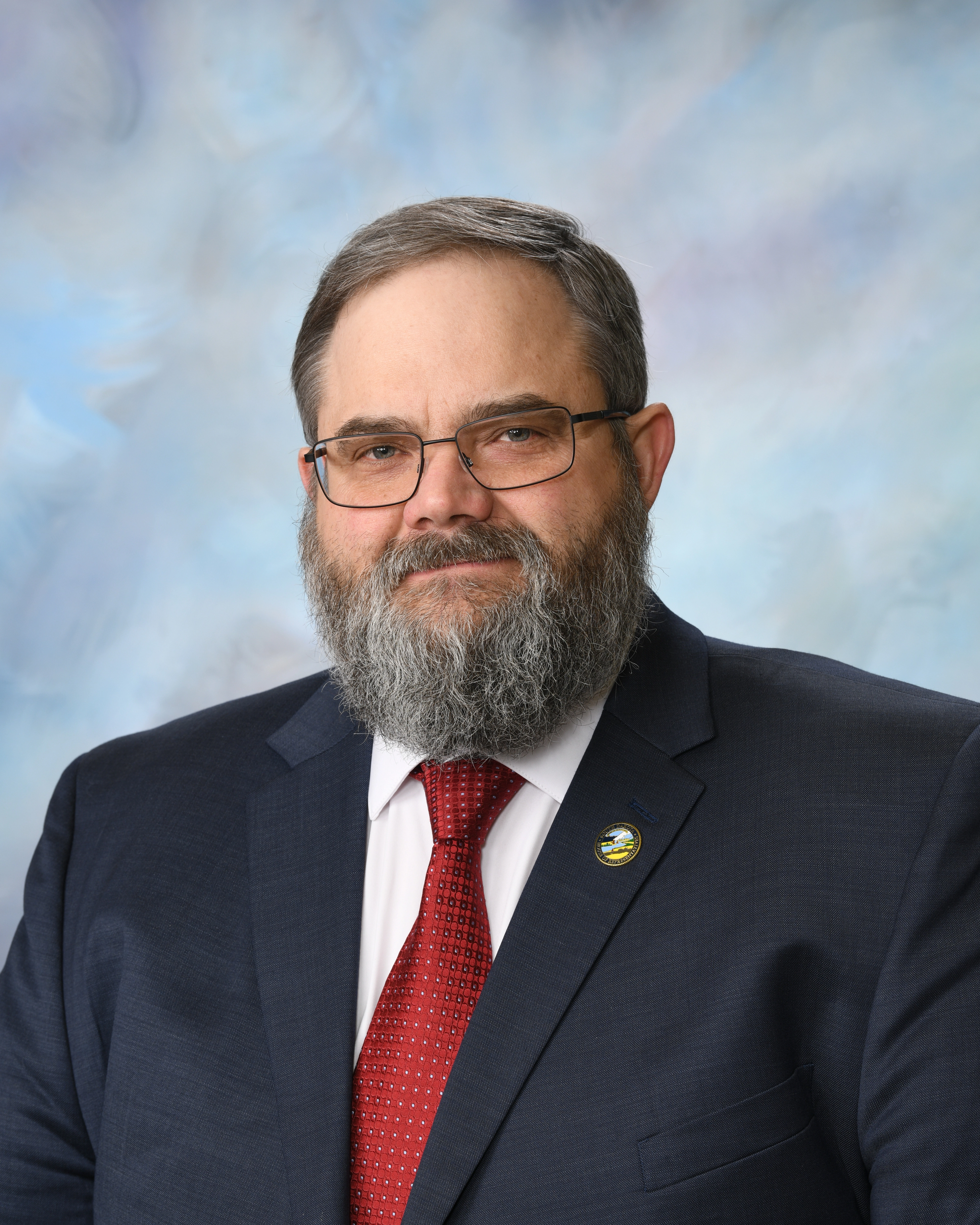
Rep. Travis Ismay
Sponsored bills
Maddy summaryHCR 6004 is a non-binding House Concurrent Resolution encouraging South Dakotans to use physical cash for transactions. It urges citizens to pay with cash when possible and support businesses offering cash discounts, while also encouraging businesses to provide such discounts. The resolution cites reasons including preventing purchase tracking, reducing transaction fees for businesses, keeping money circulating locally, enabling unbanked residents to participate in the economy, and improving disaster resilience. It does not create new laws or requirements but serves as a symbolic expression of support for cash-based transactions.
Maddy summaryHB 1087 prohibits the use of paid petition circulators for initiatives seeking to amend South Dakota's constitution or propose new laws. The bill requires that all petition circulators disclose whether they are volunteers or paid, and if paid, state the exact compensation amount. This disclosure requirement effectively bans paid circulators by making it impossible to circulate petitions without revealing payment details. The bill directly affects petition sponsors and circulators working on constitutional amendment or initiated measure petitions. It amends existing petition filing rules to enforce this prohibition.
Maddy summaryHB 1004 authorizes voters to remove county commissioners through a recall process. It requires petitions signed by 15% of district voters or 5% of county voters (based on the last general election), with signatures valid only within 60 days of filing. The petition must state specific grounds for removal, such as corruption, incompetence, or misconduct, and triggers a special election within 60 days to replace the commissioner. This bill directly affects county commissioners and voters in South Dakota counties, establishing a new procedure for their removal.
Maddy summaryHB 1078 requires South Dakota's Board of Education to amend administrative rules by September 2026 to update high school graduation coursework requirements. The bill mandates specific credit counts: 4 units of language arts (including writing, speech, and American literature), 3 social studies units (U.S. history and government), 3 math units (including Algebra I), 3 science units (including biology), plus required courses in personal finance, fine arts, physical education, health, and electives. It allows substitutions for one science credit using approved advanced computer science or agriculture science courses (but not for biology), and permits up to one fine arts credit through extracurricular activities with documented alignment to state standards. This directly affects all South Dakota public high school students and school districts implementing graduation standards.
Maddy summaryHCR 6002 is a ceremonial joint resolution honoring Charlie Kirk, founder of Turning Point USA and a prominent conservative commentator, who was assassinated in 2025 at age 31. The resolution recognizes his work founding Turning Point USA at 18, his advocacy for free markets and constitutional liberties, and his influence through media and policy advising. It does not create new laws or affect any policies, as it is purely symbolic. The resolution urges South Dakota citizens to reflect on Kirk’s legacy and extends condolences to his family. This is a procedural honor without legal or practical impact.
Maddy summaryThis non-binding South Dakota House Concurrent Resolution (HCR 6006) urges the state's congressional delegation (Senators Thune and Rounds, Rep. Johnson) to end U.S. foreign aid programs and halt overseas nation-building efforts until federal debt is controlled. It cites the national debt exceeding $38 trillion, projected $1 trillion in 2026 interest payments, and a 124% debt-to-GDP ratio as justification. The resolution specifically asks the delegation to "rein in the federal debt" by halting foreign aid and advocating for congressional declarations of war before military engagements. As a concurrent resolution, it has no legal effect and cannot alter U.S. foreign policy or budget decisions.
Maddy summaryThis bill bans the sale, distribution, possession, and use of kratom and kratom products for all individuals, not just those under 21. It prohibits selling kratom products containing more than 2% 7-hydroxymitragynine, synthetic compounds, or harmful additives, and requires mandatory labeling with serving sizes, alkaloid content, and health warnings. Violations are classified as Class 2 misdemeanors, punishable by fines or jail time. The law directly affects consumers, retailers, and manufacturers of kratom products across South Dakota.
Maddy summaryHB 1037 exempts active-duty members of the U.S. armed forces and veterans (discharged under conditions other than dishonorable) from paying resident fishing license fees in South Dakota. The bill adds a new provision to state law requiring the Game, Fish and Parks Commission to waive these fees for eligible individuals. This change directly affects military personnel and veterans who reside in South Dakota and purchase resident fishing licenses. The exemption applies to all resident fishing license fees mandated under existing state law.
Maddy summaryHB 1032 eliminates a 10% cap on how much unused property tax revenue authority counties and municipalities in South Dakota can accumulate from prior years. Currently, local governments could only use up to the prior three years' total of unused tax revenue calculations or 10% of the tax base, whichever was lower. The bill removes the 10% limit, allowing local governments to utilize all accumulated unused tax revenue authority without this restriction. This directly affects South Dakota counties and municipalities that collect property taxes, changing how they calculate annual tax revenue limits. The change modifies specific sections of state tax law (§ 10-13-35.4 and § 10-13-35.5) to remove the percentage cap.