

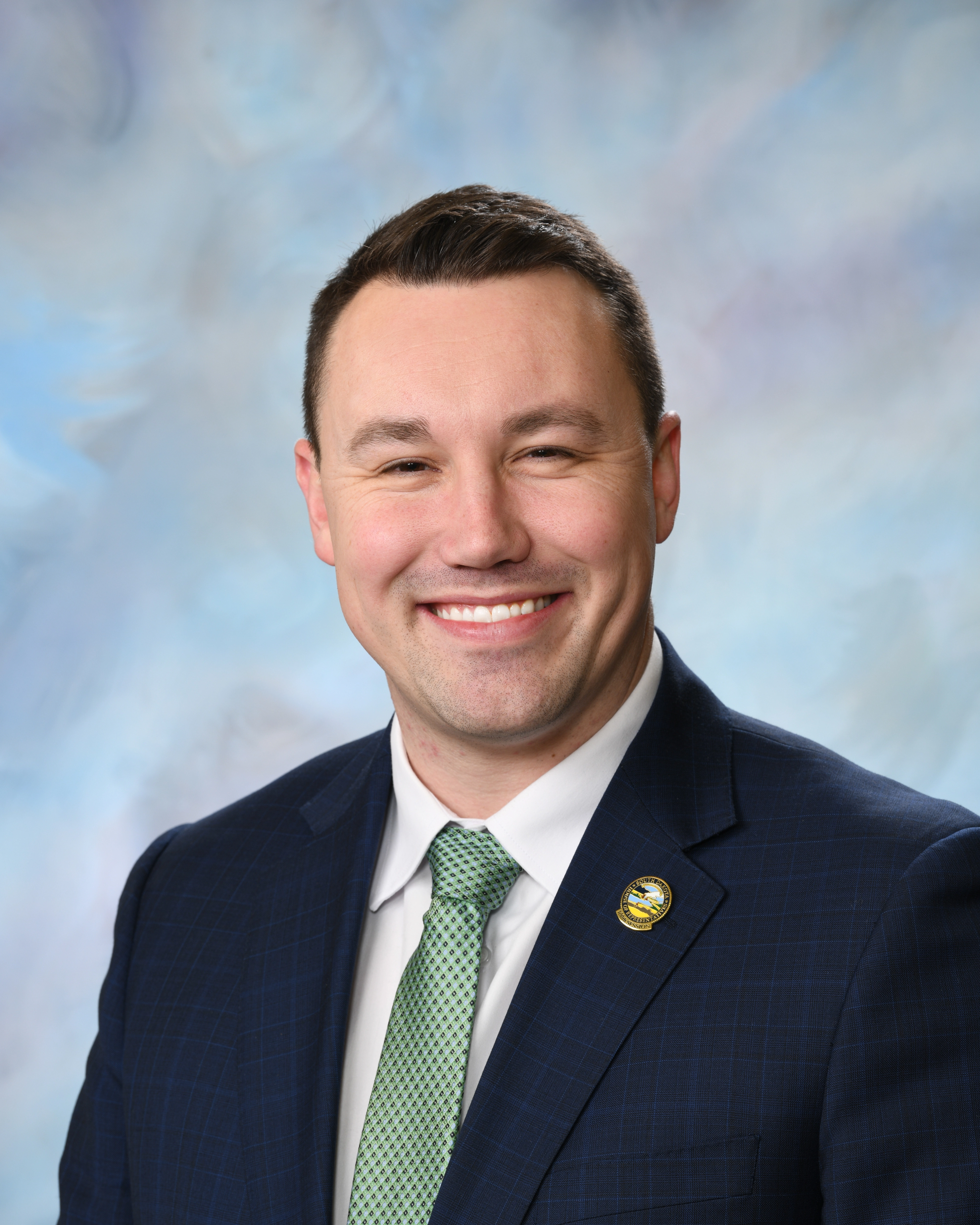
Maddy summarySB 157 amends South Dakota's school funding formula to require using an *average fall enrollment* (instead of enrollment on a single date) when calculating a school district's "local need" for state funding. This directly affects all public school districts in South Dakota by changing how their student enrollment count is determined for funding calculations. The bill replaces the current method - using enrollment on the last Friday of September - with an average, which could stabilize funding by smoothing out seasonal enrollment fluctuations. The change applies specifically to the calculation of "local need" under § 13-13-10.1(32) in the education funding code.
Sponsored bills
Maddy summaryHB 1114 requires South Dakota to submit specific mental health information to the National Instant Criminal Background Check System (NICS) for three groups: individuals acquitted by reason of insanity, those found incompetent to stand trial, and people involuntarily committed as dangers to self or others. The bill mandates that this information be transmitted to NICS within one business day but automatically removed after 18 months. It also requires notifying the affected person or their guardian about both the submission and removal. The law prohibits including diagnosis or treatment details in the reports, focusing solely on identifying information.
Maddy summaryHB 1154 establishes a new legal structure for for-profit corporations in South Dakota called "public benefit corporations." These corporations must formally commit to pursuing either a general public benefit (affecting society/environment broadly) or a specific public benefit (targeting a particular group), and their names must include "general benefit corporation" (GBC) or "specific benefit corporation" (SBC). Existing for-profit corporations can convert to this status by amending their articles of incorporation and obtaining shareholder approval with a two-thirds vote ("minimum status vote"). The bill directly affects for-profit businesses seeking to legally prioritize social/environmental impact alongside profit, while excluding nonprofits and requiring clear public benefit commitments in corporate governance.
Maddy summaryThis is a commemorative resolution (not a bill with policy changes), recognizing February as National Career and Technical Education and National Career and Technical Student Organizations Month. It formally acknowledges South Dakota's career and technical education programs serving over 30,000 students and student organizations with more than 10,000 members (including FFA, SkillsUSA, and HOSA). The resolution has no binding effect or policy impact; it serves only to honor these educational efforts through symbolic recognition. No specific groups or individuals are directly affected by this commemoration.
Maddy summaryThis bill (SC 806) is a non-binding legislative commemoration honoring four South Dakota school administrators for their service: David Olson (Meade Middle School Principal), Kendra Becker (Redfield Secondary School Principal), Richie Hutchinson (Sioux Falls Assistant Middle School Principal), and Kay Bass (Harrisburg Assistant Secondary School Principal). It recognizes their combined 88 years of dedication to education, peer-elected "Outstanding School Administrator" status for 2025-2026, and their commitment to improving educational opportunities. The resolution formally names them as official representatives of South Dakota School Administrators. This is purely ceremonial and does not create new laws or affect policies.
Maddy summaryThis bill is a ceremonial resolution honoring seven South Dakota school administrators for their service. It commends Dr. Jeff Danielsen (Watertown Superintendent), Bo Beck (Aberdeen Middle School Principal), Connie Alspach (Dupree School Business Official), Jay Swatek (Tea Elementary Principal), Kelly Messmer (Harding County Secondary Principal), Sherri Nelson (Brandon Valley Curriculum Leader), and Monica Waltman (Douglas Director of Special Education). The resolution recognizes their combined 197 years of service and dedication to education. It does not create new laws or policies - it solely provides formal recognition through a legislative commendation.
Maddy summaryHB 1120 revises South Dakota's DUI laws by lowering the legal blood alcohol limit for commercial drivers to 0.04% (from a higher threshold), maintaining 0.08% as the standard for non-commercial drivers, and setting a 0.02% limit for drivers under 21. It clarifies that 0.08% or higher blood alcohol content presumes impairment and expands prohibitions to include driving under the influence of marijuana or non-prescribed drugs. These changes directly affect commercial drivers, all motorists operating vehicles, and underage drivers. The bill applies to operating vehicles, boats, or aircraft while impaired, with penalties including license suspensions for violations.
Maddy summaryHB 1093 creates a new "small-batch winery" license in South Dakota for producers making limited quantities of wine. It sets specific requirements: producers must use at least 50% locally grown agricultural materials, limit annual production to 3,750 gallons, and pay a $500 license fee. The bill allows these wineries to sell directly on-site and to other licensed producers (like distillers or breweries) for use in manufacturing, while requiring verification of local ingredient sourcing. This license is distinct from existing "farm winery" licenses, which have higher production limits (150,000 gallons annually). The bill directly affects small-scale winery operators seeking to produce and sell wine under these defined parameters.
Maddy summaryHB 1085 requires South Dakota health insurers to cover nonopioid prescription drugs for pain treatment when prescribed by a doctor, without denying coverage in favor of opioids. Insurers cannot impose stricter approval steps (like prior authorization) or higher cost-sharing tiers for nonopioid drugs compared to opioids or narcotics. This directly affects patients seeking pain management and insurers operating in South Dakota, ensuring equal coverage treatment for nonopioid options when clinically appropriate. The law applies to all health insurance policies sold or renewed in the state.
Maddy summaryThis ceremonial resolution (SCR 602) celebrates South Dakota's 42-year sister-state relationship with Taiwan, established in 1984. It highlights specific trade ties, including a 2025 agricultural mission visit and a wheat purchase agreement between South Dakota and Taiwan. The resolution expresses support for strengthening trade relations, academic exchanges, the U.S.-Taiwan tax agreement, and Taiwan's participation in international organizations. As a symbolic gesture, it does not create new laws or policies but formally recognizes the partnership.