

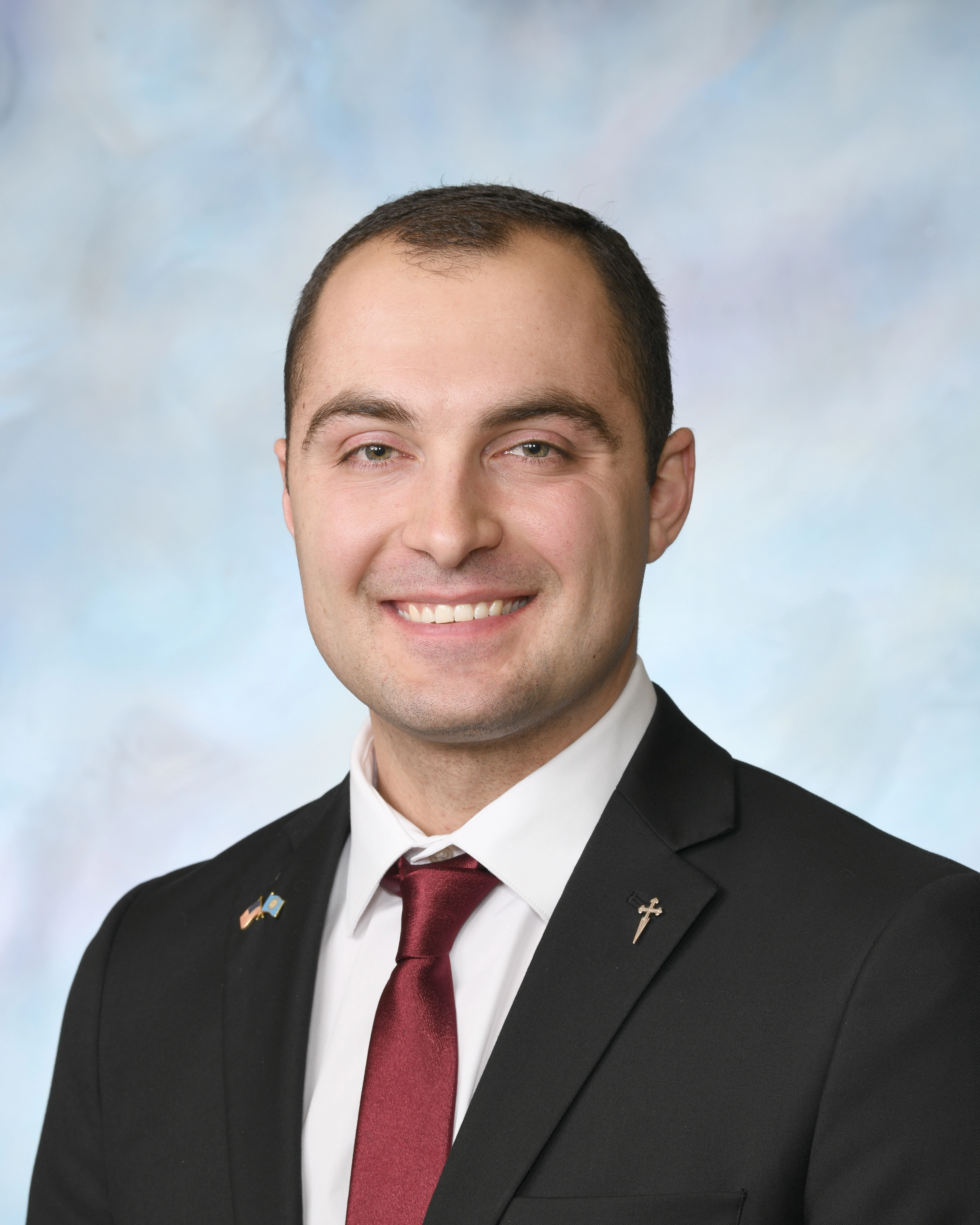
Photo of Logan Manhart
R South Dakota House · District 1

Rep. Logan Manhart

Compare
Total votes
807
all sessions
Attendance
100%
of floor votes
Higher than 80% of chamber peers
With party
72%
of cast votes
Lower than 90% of chamber peers
Bipartisan score
16%
some cross-party votes
Higher than 88% of chamber peers
Sponsored
104
bills & resolutions
Near the chamber average
Committees
2
assignments
104 bills and resolutions

Sponsored bills

Total
104
Primary
104
Co-sponsor
0
This page
104
matching current filters
Primary HB 1156
died · South Dakota House · Lead sponsor
extend each waterfowl hunting season for veterans and active duty personnel.

Maddy summaryHB 1156 extends each waterfowl hunting season in South Dakota by two days specifically for veterans and active-duty military personnel. The bill requires the Game, Fish and Parks Commission to create rules allowing these individuals - defined as active duty members under §58-33-117 or veterans with non-dishonorable discharge - to hunt during this extended period. This change applies only to the season length; it does not alter existing license requirements, daily bag limits, or other hunting regulations. The bill directly affects eligible veterans and active-duty service members who participate in waterfowl hunting.

died Feb 9, 2026 0 co-sponsors
Primary HB 1155
Passed · South Dakota House · Lead sponsor
permit the state to invest in Bitcoin.

Maddy summaryHB 1155 amends South Dakota's investment rules to allow the state to allocate up to 10% of its investment funds into Bitcoin. The bill specifically defines Bitcoin as a digital asset meeting strict network criteria (starting from its 2009 genesis block) and requires all Bitcoin holdings to be stored through secure custody solutions or qualified custodians. It applies only to state investment funds, not individual citizens or private entities, and explicitly prohibits investments in other digital assets like cryptocurrency exchanges. The bill does not authorize new spending but modifies existing investment guidelines to include Bitcoin under defined security and limit requirements.

Passed Feb 6, 2026 0 co-sponsors
Primary HB 1068
In committee · South Dakota House · Lead sponsor
authorize the dispensing of ivermectin and hydroxychloroquine under a written protocol developed by a health care provider, and to provide liability protection therefor.

Maddy summaryHB 1068 allows South Dakota pharmacists to dispense ivermectin and hydroxychloroquine to adults 18+ based on written protocols created by physicians. These protocols must include risk assessments, drug information (indications, usage, side effects), and instructions for handling adverse events. The law shields physicians and pharmacists from liability for good-faith compliance, except in cases of gross negligence or willful misconduct. It directly affects healthcare providers who dispense these drugs and patients receiving them under this new process.

In committee Feb 5, 2026 0 co-sponsors
Primary HB 1207
died · South Dakota House · Lead sponsor
amend the period of time before which ballots and other election materials may be destroyed following an election.

Maddy summaryHB 1207 extends the retention period for election materials in South Dakota from 60 days to 22 months after an election. It affects municipal, school district, and non-federal election officials who handle ballots and voting records. The bill standardizes the timeline across all election types - previously, non-federal elections had a 60-day retention period, while federal elections already required 22 months. Election officials may now destroy materials only after this 22-month period, ensuring records remain available for audits or recounts. Federal elections remain unchanged at 22 months but are now explicitly included in the unified timeline.

died Feb 5, 2026 0 co-sponsors
Primary HB 1127
Passed · South Dakota House · Lead sponsor
revise provisions related to birth centers and the practice of certified professional midwives at birth centers.

Maddy summaryHB 1127 revises South Dakota's regulations for birth centers and certified professional midwives. It requires birth centers to obtain a license from the Department of Health (with a $500 fee), mandates risk assessments to confirm low-risk pregnancies before admission, and requires written care plans addressing each client's medical and emotional needs. The bill also mandates that a practitioner or registered nurse be on-site during active labor and repeals the previous requirement that birth centers be within 30 minutes of a hospital. These changes directly affect birth centers, certified midwives, and patients seeking care at these facilities.

Passed Feb 5, 2026 0 co-sponsors
Primary HB 1124
In committee · South Dakota House · Lead sponsor
establish the crime of trespass upon a place of worship, provide a penalty therefor, and declare an emergency.

Maddy summaryHB 1124 makes it a felony to enter or remain within 1,000 feet of a place of worship with intent to disrupt services, harass attendees, or intimidate through political means. Violators face a Class 5 felony charge. The bill defines "place of worship" as any building regularly used for religious activities, identifiable by design, signs, or features. This law directly affects individuals who intentionally trespass near religious sites with the prohibited intentions.

In committee Feb 4, 2026 0 co-sponsors
Primary HB 1185
Passed · South Dakota House · Lead sponsor
require that a voter use a black ink ballpoint pen when marking an optical scan ballot.

Maddy summaryHB 1185 requires voters using optical scan ballots in South Dakota to mark their choices with a black ink ballpoint pen instead of a pencil. This change directly affects voters who cast ballots using optical scan machines at polling locations. The bill amends existing election law to specify that only black ink ballpoint pens are permitted for marking these ballots, replacing the previous allowance for pencils or other marking instruments.

Passed Feb 4, 2026 0 co-sponsors
Primary HB 1125
In committee · South Dakota House · Lead sponsor
create a taskforce to study the impact of artificial intelligence systems on the state.

Maddy summaryHB 1125 establishes a 15-member taskforce to study how artificial intelligence systems affect South Dakota, directly involving state government, industries (healthcare, banking, retail, manufacturing, tech), education (teachers/administrators), local governments (county auditors, municipalities), and the judiciary. The taskforce, appointed by legislative leaders, the governor, the Supreme Court chief justice, and the Board of Regents, must report findings and recommendations - including potential legislation - to the Legislative Research Council by December 1, 2028. The bill does not enact new laws but mandates a study of AI's impacts, dissolving the taskforce after its report. This procedural bill focuses on gathering data to inform future policy decisions.

In committee Feb 4, 2026 0 co-sponsors
Primary HB 1094
Passed · South Dakota House · Lead sponsor
clarify that consent for the donation of ovum or sperm must be explicit.

Maddy summaryHB 1094 (South Dakota House Bill 1094) clarifies that consent for organ donation does not automatically cover the donation of ovum (eggs) or sperm. The bill requires individuals to give explicit, separate consent specifically for ovum or sperm donation - distinct from organ donation consent. This directly affects potential donors and medical facilities handling reproductive tissue donations. The key provision amends state law to ensure clear, affirmative permission is obtained for gamete donation before any retrieval occurs.

Passed Feb 3, 2026 0 co-sponsors
Primary HB 1133
Passed · South Dakota House · Lead sponsor
remove an enhanced permit as a condition of carrying a concealed pistol while on the campus of a public institution of higher education.

Maddy summaryHB 1133 removes the requirement for an "enhanced permit" to carry a concealed pistol on campuses of South Dakota's public colleges and universities. Currently, the law (in sections 13-39A-43 and 13-53-56) mandates that only individuals with an enhanced, restricted enhanced, or reciprocal permit may carry concealed weapons on these campuses. This bill would allow anyone with a standard concealed carry permit (or equivalent) to carry on campus without needing the enhanced permit. It directly affects students, faculty, and visitors carrying concealed weapons at public higher education institutions across South Dakota.

Passed Feb 2, 2026 0 co-sponsors
Showing 21 to 30 of 104 bills
Previous 1 … 2 3 4 … 11 Next