

Maddy summaryThis bill, known as the Absentee and Mail Voter Protection Act, aims to overturn a specific executive order by repealing it and prohibiting the use of federal funds to implement similar directives in the future. It directly affects the United States Postal Service, various federal agencies, and state election officials by restricting their ability to regulate mail-in ballots or create national citizenship lists for voting purposes. Key provisions ban federal agencies from sharing voter registration data, compel the Postal Service to continue delivering state-issued mail ballots without interference, and forbid the use of taxpayer money to enforce rules that would require states to adopt specific citizenship verification methods. The legislation seeks to preserve the current system where states manage their own election administration while the Postal Service delivers ballots, citing historical precedents and the high volume of mail-in voting used by Americans.
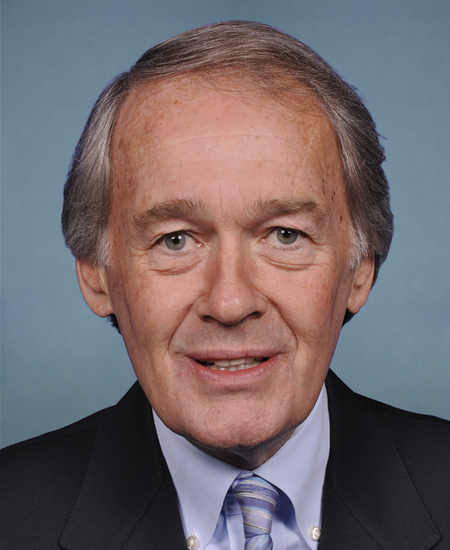
Sen. Edward J. Markey
Sponsored bills
Maddy summaryThe Speedy Tariff Refund Act of 2026 requires U.S. Customs and Border Protection to automatically issue interest-bearing refunds for duties collected under the International Emergency Economic Powers Act. This process applies to all importers of affected goods and does not require them to submit requests or additional paperwork to receive their money. The bill also mandates that Customs prioritize these refunds for small businesses and re-process any previously finalized transactions to ensure the correct refund amount is paid. Additionally, the legislation expresses a congressional preference that importers pass these refunds on to their customers, though this is a statement of intent rather than a mandatory requirement.
Maddy summaryThis bill, titled the Home Modifications for the Climate Crisis Act, expands the Older Americans Act to help older individuals improve their living environments. It directly affects older adults living in single-family homes, multi-family dwellings, rental units, or shared housing situations. The legislation authorizes funding for air-quality monitors, ventilation upgrades, and electrification to reduce indoor pollution from gas appliances and pesticides. Additionally, it supports modifications for better heating and cooling while prioritizing technologies that lower greenhouse gas emissions, and it extends utility assistance programs to eligible seniors.
Survival Aid For Emergencies through Medicare Act or the SAFE through Medicare Act This bill provides for Medicare coverage of medically necessary services for beneficiaries who are determined to be medically at-risk during a climate or manmade disaster (i.e., home resiliency services), such as heat pumps, batteries for medical equipment, and energy efficient storage for medical supplies.
Maddy summaryThe Hazard Pay for Health Care Heroes Act establishes a federal grant program to provide extra pay and safety resources to essential health care workers during declared emergencies or disasters. This legislation directly affects medical staff, janitorial workers, and other non-remote roles in health facilities who face hazardous working conditions or dangerous commutes. Under the bill, eligible workers could receive up to $13 per hour in additional compensation, with a yearly cap of $25,000, while facilities can also use funds for protective equipment and alternative transportation. The program is funded through emergency grants authorized to public and private nonprofit health care organizations when a specific emergency is declared by the President or local authorities.
Maddy summaryThis bill establishes a $100 million grant program to help communities protect pregnant people and young children from health risks linked to climate change, such as extreme heat and air pollution. The funds are awarded to local groups in areas with high vulnerability or poor air quality to provide resources like cooling units, weatherization support, and training for healthcare workers. Additionally, the legislation creates a separate $5 million grant program to update medical and nursing school curricula so future providers can better identify and address these climate-related health risks. To support these efforts, the bill also mandates the formation of a research consortium at the National Institutes of Health to study the specific impacts of climate change on birth outcomes and requires the development of a national strategy to map high-risk areas.
Maddy summaryThe Southeast New England Program Authorization Act of 2026 creates a new grant program within the Environmental Protection Agency to support water quality and ecosystem projects in the coastal watersheds of Rhode Island and southeastern Massachusetts. This initiative allows eligible recipients, including state and local governments, tribes, nonprofits, and universities, to receive funding for activities such as reducing pollution, restoring habitats, and improving stormwater management. The bill authorizes up to $30 million annually from 2027 to 2031 for these projects, with a maximum federal share of 75 percent and specific limits on funds used for technical assistance and administrative costs. Additionally, the act requires the EPA Administrator to coordinate federal agency efforts and provide necessary staff to implement the program effectively.
Maddy summaryThis resolution supports designating April 11-17, 2026, as "Black Maternal Health Week." The designation aims to bring national attention to the maternal and reproductive health crisis in the United States, specifically emphasizing the importance of reducing maternal mortality and morbidity among Black women and birthing people.
Maddy summaryThis legislation modifies the Federal Power Act to restrict the Federal Energy Regulatory Commission's ability to issue emergency orders for power generation facilities. It requires the Commission to consider alternatives that minimize environmental impacts and conduct public hearings before acting. The bill also prohibits orders that would delay the retirement or permanent closure of a facility unless a unique emergency exists and is formally requested. Furthermore, it mandates that utilities inform customers about the costs and impacts of any emergency orders issued under these rules.
Maddy summaryThe Ending the Carried Interest Loophole Act changes how the IRS treats partnership interests given to employees for their work, specifically targeting financial managers and investment professionals. Under the new rules, these individuals must pay ordinary income tax on the value of their partnership shares at the time they receive them, rather than waiting until they sell the shares to pay lower capital gains taxes. The law also establishes a 10-year window during which any future profits earned from these shares are taxed as ordinary income instead of capital gains. Additionally, the bill repeals an existing tax provision that previously allowed certain carried interest payments to be classified as capital gains.