

Maddy summaryThis bill updates administrative procedures for the Public Safety Officers' Benefits Program to speed up claim processing and expand disability coverage. It requires the Bureau of Justice Assistance to notify claimants about missing information within 90 days and issue interim payments if claims aren't resolved within 270 days, while also mandating annual audits of backlogged claims. The legislation adds benefits for permanent partial disabilities that prevent officers from working in their previous capacity and creates a faster approval process for claims supported by World Trade Center health certifications.
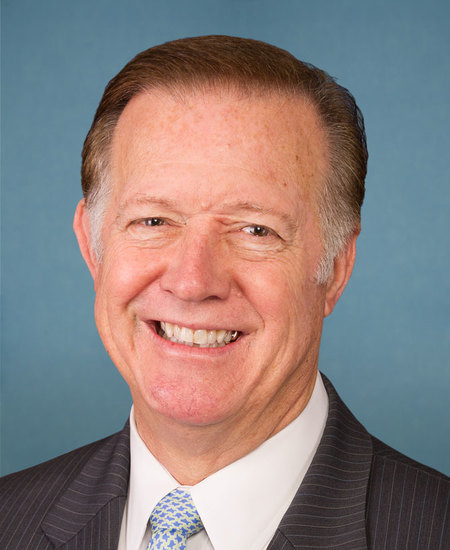
Rep. Randy K. Weber, Sr.
Sponsored bills
Maddy summaryHRES 1076 is a House resolution recognizing the 10th anniversary of the first U.S. liquefied natural gas (LNG) export shipment from the lower 48 states, which occurred on February 24, 2016. The resolution celebrates this milestone as a historic achievement in American energy production, highlighting its role in supporting over 273,000 annual jobs and $400 billion in economic growth over the past decade. It honors the workers and communities involved and acknowledges LNG exports' contribution to U.S. economic growth, energy security, and global partnerships. The resolution has no binding effect or policy changes - it solely expresses recognition of a past event.
Maddy summaryThis bill directs U.S. agencies to support Iranian people's access to uncensored information and hold Iranian officials accountable for human rights abuses. It requires the State Department and FCC to report on technologies (like satellite networks and mesh systems) that could bypass internet restrictions in Iran, and authorizes $2 million annually to develop such tools. The bill also establishes a new "Iran Kleptocracy Initiative" at FinCEN to track corruption, freeze assets of Iranian regime officials and state-owned businesses, and coordinate with international partners. These measures apply to U.S. policy toward Iran but do not alter Iran's domestic laws; they focus on U.S. sanctions, technology development, and anti-corruption efforts targeting the Iranian regime.
Maddy summaryHR 7592 requires key energy regulatory agencies - including the Department of Energy, Bureau of Land Management, Bureau of Ocean Energy Management, Bureau of Safety and Environmental Enforcement, Office of Surface Mining, and Federal Energy Regulatory Commission - to set expiration dates for specific energy-related regulations. Existing regulations must expire within one year of enactment, while new regulations expire after five years unless renewed. Renewal requires public comment on costs/benefits and agency determination that the regulation has a "net deregulatory effect," with extensions limited to five years per renewal. If not renewed, regulations cease to be enforceable and are removed from federal rules. The bill directly affects how these agencies manage energy and environmental regulations under specific statutes like the Energy Policy Act and Surface Mining Control Act.
Protection of Women in Olympic and Amateur Sports Act This bill requires certified national governing bodies (NGBs) of amateur sports (e.g., USA Gymnastics) to prohibit a person whose sex is male from participating in an amateur athletic competition that is designated for females, women, or girls. Under the bill, male means an individual who has, had, will have—or would have, but for a developmental or genetic anomaly or historical accident—the reproductive system that at some point produces, transports, and utilizes sperm for fertilization.
Maddy summaryThis bill establishes the United States-Israel Defense Technology Cooperation Initiative to accelerate joint development and integration of defense technologies between the two countries. It directs the U.S. Secretary of Defense, with Israel’s agreement, to identify Israeli-origin technologies for rapid adoption into U.S. military systems, focusing on areas like counter-drone systems, missile defense (including "Golden Dome for America"), AI, cyber defense, and directed energy. The initiative requires annual congressional reporting on progress, partnerships with industry, and technology transitions, while authorizing $150 million annually for fiscal years 2027-2029. It aims to strengthen bilateral defense innovation and streamline the use of Israeli technologies within U.S. military programs.
Maddy summaryHR 7442 establishes a new National Bridge Program under federal highway law to allocate funding for bridge replacement, rehabilitation, and construction. It changes how funds are distributed: 75% based on the total deck area of bridges on federal-aid highways in each state, and 25% based on the deck area of bridges in poor condition. This directly affects state transportation departments managing federal-aid highway bridges, requiring them to prioritize projects using this updated formula starting after December 31, 2024. The bill eliminates prior programs (Carbon Reduction and PROTECT) and revises related funding mechanisms.
Maddy summaryThe SELF DRIVE Act of 2026 establishes federal safety standards for vehicles with automated driving systems (ADS), requiring manufacturers to develop detailed "safety cases" demonstrating their systems won't present unreasonable risks to road users. It creates a National Automated Vehicle Safety Data Repository to collect crash data from ADS-equipped vehicles, including information about vulnerable road users (pedestrians, bicyclists, etc.) and crash circumstances. The bill preempts state laws that conflict with these federal standards while allowing states to enforce identical requirements, and defines key terms related to automation levels (Level 3-5) and operational design domains. Manufacturers must demonstrate ADS capabilities for handling various driving scenarios, including detecting vulnerable road users and achieving minimal risk conditions during emergencies. The bill also establishes requirements for cybersecurity protections and reporting of crash data to the National Highway Traffic Safety Administration.
Maddy summaryThe REPAIR Act requires motor vehicle manufacturers to provide car owners and independent repair shops with full access to vehicle data and repair information, prohibiting technological or legal barriers that restrict this access. It mandates that manufacturers share vehicle-generated data, critical repair information, and tools on equal terms with dealers and authorized service providers, without requiring consumers to use specific brands of parts or tools. The law establishes an advisory committee to monitor implementation and ensure fair competition in vehicle repair, while giving the Federal Trade Commission authority to enforce these requirements as unfair or deceptive practices. This legislation directly affects car owners, independent repair facilities, aftermarket parts manufacturers, and motor vehicle manufacturers by shifting control of repair information and data from manufacturers to consumers.
Maddy summaryThe No Tax Dollars for Terrorists Act requires the U.S. State Department to identify foreign countries and organizations receiving U.S. foreign aid that have provided financial or material support to the Taliban, including the amounts of aid they receive and the support they give to the Taliban. It mandates a strategy to use U.S. aid to discourage such support, with initial and follow-up reports to Congress on the strategy and its implementation. The bill also demands detailed reports on U.S. cash assistance programs in Afghanistan and the Afghan Fund, explaining how funds are transferred (including traditional money transfer systems) and how safeguards prevent Taliban access.