

Maddy summaryH.J. Res. 117 is a joint resolution that would disapprove an Environmental Protection Agency (EPA) rule concerning the reconsideration of National Ambient Air Quality Standards for particulate matter. The EPA rule, published on March 6, 2024, was part of the agency’s process to review these standards, which set limits for harmful air pollutants. This resolution invokes a congressional disapproval procedure under federal law to block the rule from taking effect. If enacted, the rule would have no force or effect, preserving the existing air quality standards for particulate matter.
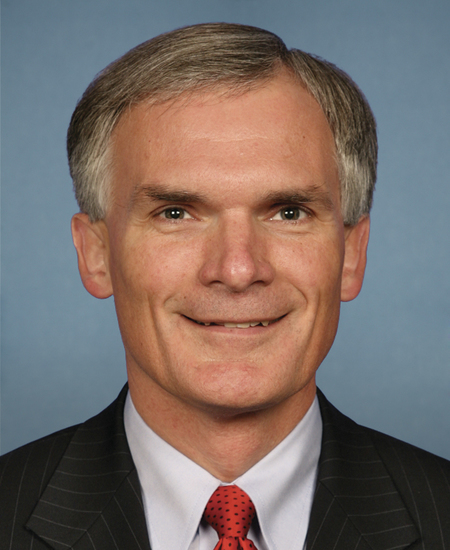
Rep. Robert E. Latta
Sponsored bills
Maddy summaryThis bill directs the Joint Committee on the Library to procure a statue of Benjamin Franklin and place it in the U.S. Capitol. The committee must secure the statue within two years of the bill's enactment and install it in a public-accessible location by January 1, 2026, for viewing during Capitol Visitor Center guided tours. It is a procedural measure with no policy changes or direct impact on constituents or legislation.
Maddy summaryHRES 1456 is a symbolic resolution designating September 17, 2024, as "Constitution Day" to honor the signing of the U.S. Constitution on September 17, 1787. It calls for the people of the United States to observe the day with ceremonies and activities, recognizing the Constitution's historical significance and foundational role in American governance. This resolution does not create new laws or affect any individuals or policies; it is purely a non-binding expression of support by the House of Representatives.
Maddy summaryThe ROUTERS Act (HR 7589) requires the Commerce Secretary to study national security risks posed by consumer routers and modems made by companies tied to certain foreign countries. It directs a one-year study focusing on devices designed, manufactured, or supplied by entities influenced by "covered countries" (as defined in U.S. law). The study will culminate in a report to Congress within one year, detailing findings on these security risks. This is a procedural bill that initiates research but does not impose new regulations or restrictions on devices.
This resolution supports the designation of National FFA Week. It also (1) recognizes the important role of the National FFA Organization (Future Farmers of America) in developing the next generation of globally conscious leaders who will change the world; and (2) celebrates the 10th anniversary of the Give the Gift of Blue program, which has donated more than 17,000 FFA blue jackets to FFA members in need.
Maddy summaryThis bill increases funding for replacing potentially insecure telecommunications equipment from $1.9 billion to $4.98 billion under the Secure and Trusted Communications Networks Act. It appropriates $3.08 billion specifically for the Federal Communications Commission (FCC) to implement this program in fiscal year 2024. The bill mandates the FCC to conduct a spectrum auction for certain frequencies within one year of enactment, regardless of prior expiration deadlines for such auctions. This directly affects the FCC, telecom companies bidding on spectrum licenses, and national security networks requiring secure communications infrastructure.
Maddy summaryThis resolution aims to block a rule issued by the National Highway Traffic Safety Administration (NHTSA) that sets new fuel efficiency standards for passenger cars, light trucks (starting in 2027), and heavy-duty pickup trucks/vans (starting in 2030). If passed, it would prevent this specific rule from taking effect by disapproving it under a congressional review process. The rule directly affects vehicle manufacturers by requiring them to meet these updated fuel economy targets for future model years. This is a procedural resolution, not a new law, focused solely on halting the implementation of the existing NHTSA rule.
Maddy summaryThis is a commemorative resolution (HRES 1369) honoring Corey Comperatore, a volunteer firefighter, U.S. Army Reserves veteran, and community leader from Sarver, Pennsylvania, who died on July 13, 2024. The resolution formally mourns his passing and celebrates his life, noting he left behind his wife, Helen, and two daughters, Allyson and Kaylee. It recognizes his service to the Buffalo Township Volunteer Fire Department, his military service, and his role as a devoted member of Cabot Methodist Church. As a ceremonial resolution, it has no policy impact or direct effect on legislation or constituents beyond this formal acknowledgment.
Maddy summaryThis bill amends the Energy Policy and Conservation Act to require states to include local distribution systems (electric infrastructure at 35 kilovolts or lower owned by utilities) in their energy security plans. It mandates states to identify specific hazards like weather threats, human error, physical attacks, and cybersecurity risks to these systems. States must also develop response methods, including public-private partnerships, new financing models, and secure energy technologies, to address identified vulnerabilities. The bill directly affects state energy planning processes and electric utilities operating local distribution systems.
Maddy summaryThis bill prevents the Department of Energy from setting or enforcing new dishwasher energy efficiency standards unless three conditions are met: the standard must be technologically feasible and economically justified, not increase net costs to consumers (including purchase and maintenance), and result in significant energy savings. It directly affects the Department of Energy (as the rulemaker) and dishwasher manufacturers/consumers (as the affected parties). The bill amends existing law to add these requirements to the process for establishing dishwasher energy conservation standards, without changing current efficiency levels. It focuses on procedural barriers to new rules rather than altering actual energy performance.