

Maddy summarySB 2225 repeals specific provisions in state law that required women participating in the community corrections program to pay additional costs for prostitution-related offenses. This change directly affects female offenders who are eligible for community confinement, removing the mandatory financial assessments of $500 or $350 for felony and misdemeanor charges respectively. By eliminating these fees, the bill ensures that women in the program are no longer subject to these extra penalties regardless of whether they are sentenced to prison or released into the community. The legislation removes the requirement for these funds to be deposited as general revenue, simplifying the financial obligations associated with this specific correctional pathway.
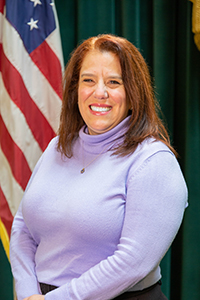
Sen. Pam Lauria
Sponsored bills
Maddy summarySB 2571 amends Rhode Island's real estate tax laws to limit assessments for low- and moderate-income housing units to the last sales price within a five-year period. For properties that have not sold in that timeframe, the bill allows assessors to use a calculated maximum sales price determined by a monitoring agent instead of current market estimates. The legislation also includes specific tax exemptions for new construction on vacant homes and certain improvements in the cities of Warwick and Central Falls. Additionally, it ensures that renewable energy resources on a property do not trigger a reassessment of the underlying land value. These changes aim to provide stability in property tax calculations for affordable housing and specific residential development scenarios.
Maddy summaryThis bill creates a tax credit for Rhode Island residents who convert their existing gas-powered vehicles to run on alternative fuels like electricity, natural gas, or hydrogen. The credit covers up to 50% of the equipment and labor costs for the conversion, with a maximum limit of $2,000 for most vehicles and $3,000 for heavier ones, but the amount cannot exceed the taxpayer's total income tax liability. To qualify, the conversion must be completed in the same year the credit is claimed, and sellers of alternative fuel cannot claim the credit for converting their own company vehicles.
Provides that the $5,500,000 appropriation to the infrastructure bank from the 2023 budget act be allocated for eligible municipal infrastructure grant program projects.
Raises the amount of life insurance the state would provide at no charge to Rhode Island National Guard members called up for federal duty to five hundred thousand dollars ($500,000).
Establishes the Wholesale Prescription Drug Importation Program for the importation of wholesale prescription drugs from Canada to provide savings to Rhode Island consumers.
Requires executive office of health and human services to establish an early childhood mental health hub program focused on improving access to infant and early childhood mental health services for children under age 6 and their families.
Phases in modifications to federal adjusted gross income over a 4 year period for social security income, from 25% up to 100%, beginning on or after January 1, 2025.
Maddy summaryThis Senate resolution designates May 28, 2024, as "Arts Advocacy Day" in Rhode Island to highlight the economic and cultural value of the arts sector. The bill recognizes that the arts contribute billions to the state economy and support local businesses, while also benefiting students through arts education programs. It urges residents to appreciate and support artists and cultural organizations, particularly those affected by pandemic-related shutdowns. Finally, the resolution directs the Secretary of State to send copies of the document to the Rhode Island State Council on the Arts and the Rhode Island Coalition for the Arts.
Maddy summarySB 2057, known as the Education Equity and Property Tax Relief Act, amends state law to provide ongoing financial support for specific school programs and districts. The bill establishes a permanent two percent bonus for regionalized school districts and creates a stabilization fund to assist the Central Falls, Davies, and Met Center areas with high education costs. Additionally, it directs state funding toward special education expenses, career and technical education initiatives, pre-kindergarten access, and transportation for students attending non-public or regional schools. The legislation also allocates extra resources for English learners based on a specific per-pupil factor. These changes aim to ensure equitable funding distribution and address unique financial challenges faced by various school districts and student populations.