

Maddy summaryThis bill (SR 871) appropriates $500,000 from the state treasury to fund the operational costs of Rhode Island's 2-1-1 human services hotline. The 2-1-1 system, operated by the United Way of Rhode Island, provides free, confidential, 24/7 assistance in nearly 200 languages to help residents access resources for housing, healthcare, food, childcare, and crisis support. The funding supports the existing service, which handled over 190,000 requests in 2023-2024 and aids state agencies by identifying community needs. The resolution passed the Senate on June 20, 2025, and directs the state controller to pay the United Way upon verification.
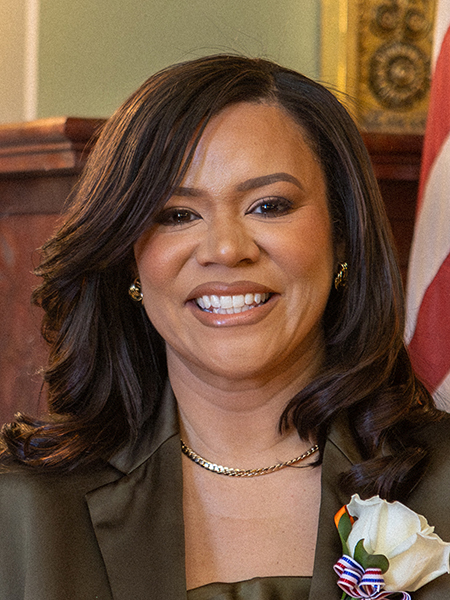
Sen. Lammis Vargas
Sponsored bills
Requires health insurance plans to cover services provided by licensed certified professional midwives. Insurers must report utilization and cost data annually. Certain limited benefit policies are exempt.
Maddy summaryThis bill (SR 421) authorizes $1,000,000 in state funding for the Rhode Island Food Bank to address food insecurity. It directly affects the Food Bank’s ability to support households facing hunger, as nearly 38% of Rhode Island households experience food insecurity. The key provision is a one-time appropriation from the state treasury, requiring the controller to pay the funds upon verified requests. This provides immediate financial support for food distribution services without altering existing eligibility rules or creating new programs.
Increases rates paid for licensed childcare centers to meet the federal equal access benchmark, implement a new differential bonus rate for infants under age 18 months and adopt fair payment practices consistent with the federal rules.
Allows the department of environmental management to acquire established foot paths by eminent domain in order to provide public access to streams, rivers, lakes and ponds.
Maddy summarySB 1113 requires contractors working on Rhode Island public projects (like construction or school transportation) to provide actual healthcare and pension benefits to employees instead of paying cash equivalents. Specifically, starting July 1, 2024, contractors cannot pay employees cash for healthcare benefits (except for those employed 90 days or less), and starting July 1, 2025, they cannot pay cash for pension benefits (again, except for short-term employees). Contractors must provide proof of actual benefit purchases to employees and their bargaining agents, and violations carry $1,000-$3,000 penalties per incident. The bill directly affects public works contractors and their employees, ensuring benefits are delivered as intended rather than replaced with cash.
Allows the board of elections to tabulate mail ballots in local special elections in the same manner as in tabulate mail ballots in statewide elections.
Provides a duty upon midwives, physician assistants and nurse practitioners to obtain a blood specimen of pregnant women within thirty (30) days after the first professional visit.
Requires the state investment commission to create a capital access initiative to expand potential investment opportunities for the state’s pension fund and engage qualified but traditionally underrepresented investment managers.
Provides that statements by a health care provider regarding the unanticipated outcome of a patient's medical care and treatment shall be inadmissible as evidence of an admission of liability or as evidence of an admission.