

Maddy summarySB 2322 amends state property tax laws to allow holders of a life estate to claim veteran's tax exemptions on the real property they own. This change directly affects individuals who possess a life estate in a property, enabling them to use the same tax breaks previously reserved for veterans and their unmarried widows or widowers. The bill does not create new exemptions but rather clarifies that life estate holders are eligible for the existing exemptions, which vary by municipality and can range from $1,000 to over $40,000 depending on the town. By making this adjustment, the legislation ensures that life estate owners in specific towns can reduce their property tax bills just like other qualifying veterans.
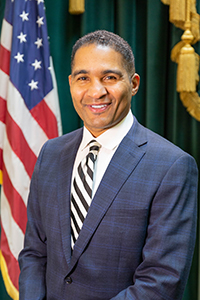
Sen. Bob Britto
Sponsored bills
Requires all health care facilities to provide functional automated external defibrillators (AEDs) and least one person who is properly trained in the operation and use of an AED.
Requires the chief resilience officer (CRO) and a resiliency office within the department of environmental management (DEM) be charged with the creation, maintenance and updating of the state's resiliency and community recovery program.
Requires that developers of ground-mounted solar systems submit a plan for decommissioning to be held on file by the municipality and requires DEM, with the office of energy resources, make publicly available model decommissioning plans.
Maddy summaryThis bill creates a new licensing system for youth camps in Rhode Island that receive state child care assistance payments. To operate legally, these camps must meet specific standards regarding facility safety, staff qualifications, and background checks for all employees over eighteen. The law requires regular inspections by the Department of Human Services and mandates that camps keep detailed records for each camper and their guardians. Effective January 1, 2025, the legislation ensures that only camps adhering to these health and safety rules can accept state funding.
Maddy summaryThis bill codifies the Rhode Island Early Care and Education Workforce Data Act to formally establish a statewide registry for early childhood educators. The Department of Human Services must implement this system by July 1, 2025, to collect data on staff working in licensed child care centers and family homes, including their demographics, qualifications, and turnover rates. Once established, the registry will provide educators with professional development opportunities and allow the state to generate annual reports on workforce characteristics for the public and government officials.
Maddy summaryThis bill establishes the Transparency in Arts Education Access and Proficiency Act to increase visibility of arts programs in Rhode Island public middle and high schools. Starting in the 2025-26 school year, schools must report annually on the percentage of students enrolled in arts courses and the number of available classes in dance, media arts, music, theater, and visual arts. Additionally, the state may appoint arts education curriculum coordinators to assist schools with these reporting requirements, and high schools must begin submitting student portfolios demonstrating proficiency in an art form by the 2026-27 school year.
Amends various provisions relative to the duties of the state building commissioner and would establish a building code education and training unit to educate building officials and inspectors statewide.
Establishes the renewable ready program and fund to promotes the responsible siting/development of renewable energy generating resources in locations where it would be an ancillary beneficial use to the redevelopment of previously contaminated property.
Maddy summaryThis bill allows voters who do not belong to a political party to vote in party primaries without automatically becoming affiliated with that party. Under the new rules, unaffiliated voters can cast ballots in either a Republican or Democratic primary, and their status will remain unaffiliated regardless of which primary they choose. The legislation also clarifies that signing nomination papers or helping candidates does not count as party affiliation for voting purposes. Election officials are required to inform voters at polling places that no additional steps are needed to keep their unaffiliated status after voting in a primary.