

Maddy summaryThis resolution designates May 2025 as "National Speech-Language-Hearing Month" in Rhode Island to raise public awareness about communication disorders. It urges the Department of Human Services to conduct hearing screenings and the Department of Elementary and Secondary Education to encourage schools and professionals to participate in awareness activities. The resolution is symbolic and does not create new laws or funding.
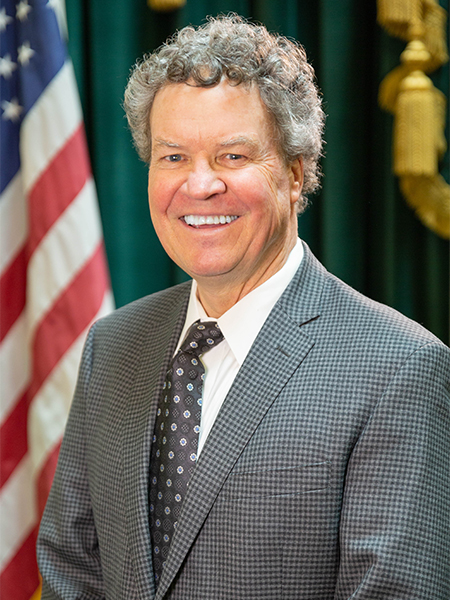
Sen. Walter Felag
Sponsored bills
Prohibits the holding of multiple drivers licenses or identification cards and would change the term "re-constructed salvage" to "rebuilt salvage" for purposes of the Rhode Island salvage law.
Requires the executive office of health and human services to apply to the Centers for Medicare and Medicaid Services for a state plan amendment for reimbursement for health services in a school.
Maddy summarySR 1081 is a Senate Resolution that extends the deepest condolences and sympathy from the State of Rhode Island Senate to the family and friends of the Honorable Robert G. Salisbury upon his passing. The resolution acknowledges his life of service, including his time as a Central Falls firefighter and a member of the Rhode Island House of Representatives.
Maddy summarySenate Resolution (SR 1023) proclaims May 2025 as "Brain Tumor Awareness Month" in the State of Rhode Island. This resolution aims to raise public awareness about brain tumors and highlight the urgent need for further research into the condition. It also directs the Secretary of State to send copies of the resolution to the leadership of the American Brain Tumor Association.
Maddy summarySB 341 proposes to provide a full property tax exemption for real property owned by a veteran and used as their primary residence. Currently, veterans receive various partial property tax exemptions, with amounts differing based on their service and the specific municipality. This bill would replace those existing partial exemptions with a complete property tax exemption for their primary home, directly affecting eligible veteran homeowners.
Maddy summarySB 261 proposes to exempt specific types of batteries from sales tax. It removes the sales tax on "behind-the-meter batteries" that are interconnected with a solar photovoltaic system. This means that individuals or businesses purchasing these particular batteries for solar energy storage would no longer pay sales tax on them. The bill amends the state's existing sales and use tax laws by adding this exemption to the list of items not subject to sales and use taxes.
Increases the income range up to fifty thousand dollars ($50,000) and tax credit up to eight hundred fifty dollars ($850), for elderly and disabled persons who own or rent their homes.
Maddy summarySB 110, known as "The Rhode Island Family Caregiver Tax Credit Act," establishes a state income tax credit for eligible Rhode Island resident taxpayers. The bill allows a credit of 50% of certain uncompensated expenses, up to a maximum of $1,000, incurred for the care and support of a qualifying family member. Eligible family members must be at least 65 years old or have a disability, require assistance with daily activities, and reside with the caregiver for at least six months. This credit, which cannot reduce tax liability below zero, is intended to help relieve the financial burden on family caregivers and applies to taxable years beginning after December 31, 2025.
Maddy summarySB 693 proposes to expand eligibility for Medicare Savings Programs, which help low-income seniors and people with disabilities pay for Medicare costs. The bill increases the income limit for the Qualified Medicare Beneficiary (QMB) program to 125% of the federal poverty line, enabling more individuals to receive assistance with Medicare Part A and B premiums, deductibles, and co-payments. It also sets an income limit for the Qualified Individual (QI) program between 125% and 168% of the federal poverty line, assisting these individuals with Medicare Part B premiums. Enrollment in these programs automatically provides additional help with prescription drug costs. The Secretary of the Executive Office of Health and Human Services is tasked with implementing these changes.