

Maddy summaryHB 5108 allows foreign-trained physicians to obtain a temporary license to practice medicine in Rhode Island under specific conditions. It directly affects physicians who graduated from medical schools outside the U.S., require ECFMG certification, completed residency training abroad (accredited by ACGME-I or recognized international bodies), and have held an unrestricted license in another country for at least three years. The law requires these physicians to work under a participating healthcare facility that provides structured training and assessment to address clinical gaps, while maintaining oversight through the Board of Medical Licensure. This creates a formal pathway for qualified international physicians to contribute to Rhode Island's healthcare workforce under defined safeguards.
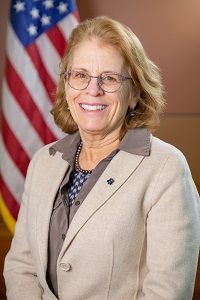
Rep. Terri Cortvriend
Sponsored bills
Maddy summaryHB 5686 requires Rhode Island municipalities to maintain and update a current list of rights-of-way to tidal areas designated by the Coastal Resources Management Council (CRMC). This affects all cities and towns within Rhode Island that have coastal areas or tidal waterways. The bill mandates that municipalities regularly review and revise these lists to ensure accurate records of public access and infrastructure near tidal zones. This update supports the CRMC’s broader coastal management efforts by providing clear, up-to-date information for planning and resource protection.
Gives authority to the department of labor and training to enforce violations of the laws relating to corrosion prevention and mitigation work requirements. It also adds civil monetary penalties for violations of those laws.
Allows food service businesses to provide temporary outdoor dining whenever building/other structure used for food service rendered uninhabitable by casualty fire/flood for 18 months or the building fit for occupancy sunsetting on 6/30/27.
Amends the certain provisions relative to school waste recycling and refuse disposal and requires reports of waste audits by educational entities and reports of program participation by vendors.
Restructures the Rhode Island Housing and Conservation Trust Fund, increases its membership to 15 members, 11 of whom are to be from the general public and reallocates the percentage of the funds for housing, conservation and other goals.
Requires quarterly testing of biosolids for PFAS contaminants by those seeking to apply biosolids to lands, with subsequent reports to the department of environmental management.
Maddy summaryHB 5882 shortens the training requirement for school bus drivers in Rhode Island who already hold a valid commercial driver’s license (CDL). Specifically, it reduces the standard 10-hour school bus driver training course to a shorter, focused program covering only Rhode Island-specific rules and safety requirements. This change directly affects CDL holders seeking to drive school buses in Rhode Island, streamlining their path to certification without altering safety standards or background checks. The bill does not change other requirements, such as passing written/driver tests or providing proof of residency and employment.
Maddy summaryHouse Resolution 6372 is a formal request from the Rhode Island House of Representatives to the U.S. Coast Guard. It urges the Coast Guard to retain and maintain 38 buoys currently considered for removal from Rhode Island waters. The resolution aims to ensure the safety of recreational boaters and commercial traffic, emphasizing the importance of physical aids to navigation alongside modern electronic systems.
Maddy summaryHB 5838 ensures schools provide appropriate support for English language learners (ELLs) and English as a second language (ESL) students during individualized education plan (IEP) processes. It requires evaluations to be conducted in a student’s primary language, mandates IEP teams to include experts in second-language acquisition, and prohibits school districts from pressuring families to decline language services. The bill also requires schools to use trained bilingual interpreters for parent communication and ensures IEPs address both language learning and disability needs. These changes directly affect ELL/ESL students, their families, and school districts in Rhode Island.