

Maddy summaryThis bill creates a tax credit for Rhode Island residents who convert their existing gas-powered vehicles to run on alternative fuels like electricity, natural gas, or hydrogen. The credit covers up to 50% of the equipment and labor costs for the conversion, with a maximum limit of $2,000 for lighter vehicles and $3,000 for heavier ones. To claim the credit, taxpayers must apply it in the same year the conversion is completed, and the amount cannot exceed their total income tax liability for that year. Additionally, the bill prohibits fuel sellers from claiming this credit if they convert their own vehicles to use the fuel they sell.
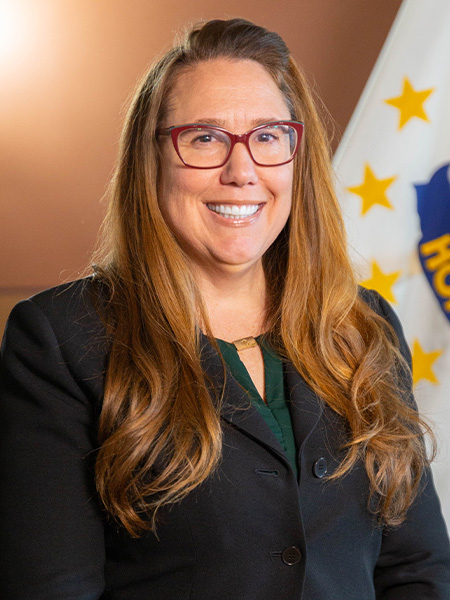
Rep. Cherie Cruz
Sponsored bills
Maddy summaryThis bill seeks to restore $20 million in funding for Rhode Island's Down Payment Assistance program, which helps first-time homebuyers with low to moderate incomes afford a home. The legislation would direct the state treasurer to release these funds to eligible buyers, providing up to $20,000 toward their down payment to remove financial barriers to homeownership. It specifically addresses the removal of this funding in the 2024-2025 proposed budget by authorizing the appropriation from the state treasury for that fiscal year.
Maddy summaryThis bill authorizes a $150,000 appropriation to the Rhode Island Commerce Corporation to provide operating funds for the Blackstone Valley Visitors Center. The money is intended to support the base-level functions of the facility, which serves as a tourist information hub for the ten communities in Rhode Island's Blackstone River Valley. The resolution directs the state controller to release these funds from the general treasury for the 2024-2025 fiscal year upon receipt of proper financial vouchers.
Establishes a compact agreement among at least two (2) states to prohibit the use of subsidies to selectively retain industry or company entice relocation from one state to another state or to open a new facility.
Maddy summaryThis bill proposes a new tax on private colleges and universities that have endowments exceeding one billion dollars. The tax would charge two percent on the amount of the endowment that is above that one billion dollar threshold. Any money collected from this tax would be given to the city or town where the school is mainly located. Those local funds must be used specifically to hire and keep behavioral health staff, such as social workers and psychologists, for the public schools in that same area.
Removes the requirement that families consent to, and cooperate with the department of human services in establishing paternity and enforcing child and medical support orders as a condition of eligibility for childcare assistance.
Creates the Rhode Island Child Care Assistance Program that governs both family eligibility for the state's child care subsidy program and the rates paid to child care providers serving families receiving a subsidy.
This resolution would authorize the appropriation of the sum of $2,000,000 to the Elisha Project.
Increases the number of state child care licensing inspectors to meet the national recommended average of one inspector for every fifty (50) to sixty (60) child care providers.
Establishes the Rhode Island Child Care for All Act which would provide high quality and affordable child care to families throughout the state.