

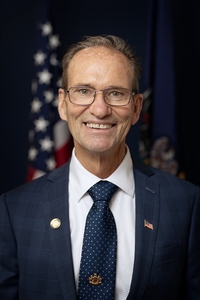
Photo of John Kane
D Pennsylvania Senate · District 9

Sen. John Kane

Compare
Total votes
2,311
all sessions
Attendance
99%
17 missed
Lower than 80% of chamber peers
With party
97%
of cast votes
Near the chamber average
Bipartisan score
2%
crosses aisle rarely
Near the chamber average
Sponsored
1,905
bills & resolutions
Higher than 96% of chamber peers
Committees
4
assignments
1,905 bills and resolutions

Sponsored bills

Total
1,905
Primary
124
Co-sponsor
1,781
This page
1,905
matching current filters
Co-sponsor SB 500
In committee · Pennsylvania Senate · Co-sponsor
An Act amending the act of March 4, 1971 (P.L.6, No.2), known as the Tax Reform Code of 1971, in Pennsylvania Economic Development for a Growing Economy (PA EDGE) Tax Credits, repealing provisions relating to local resource manufacturing, providing for Reliable Energy Investment Tax Credit, repealing provisions relating to Pennsylvania milk processing and providing for Pennsylvania milk processing; in regional clean hydrogen hubs, further providing for definitions, for eligibility, for application and approval of tax credit, for use of tax credits and for applicability; in semiconductor manufacturing and biomedical manufacturing and research, further providing for definitions and for application and approval of tax credit and providing for geothermal energy and for sustainable aviation fuel; and, in application of Prevailing Wage Act, further providing for definitions.

Maddy summarySB 500 repeals outdated tax credits for Pennsylvania petrochemical and fertilizer manufacturing projects and creates new tax credits for clean energy and advanced manufacturing sectors. It establishes tax credits for reliable energy investments, regional clean hydrogen hubs, semiconductor and biomedical manufacturing/research, geothermal energy, and sustainable aviation fuel. Businesses must meet specific eligibility criteria (like capital investment thresholds and job creation targets) to apply for these credits through the Department of Revenue, with annual funding limits and application deadlines outlined. The bill directly affects qualifying companies in these emerging industries seeking tax incentives for new investments.

In committee Jul 8, 2025 1 co-sponsor
Primary SB 900
In committee · Pennsylvania Senate · Lead sponsor
An Act providing for Commonwealth support for a Mental Health and Intellectual Disability Staff Member Loan Forgiveness Program and an Alcohol and Drug Addiction Counselor Loan Forgiveness Program; and imposing duties on the Pennsylvania Higher Education Assistance Agency.

Maddy summaryThis bill establishes a loan forgiveness program in Pennsylvania to help recruit and retain workers in mental health, intellectual disability, and addiction counseling fields. It directly affects full-time employees at county mental health agencies, private providers, and licensed addiction treatment facilities who have student loans and agree to work in these professions for at least four years. Under the program, eligible workers can receive up to $25,000 in loan forgiveness over four years, with a maximum of $6,250 forgiven each year, provided they remain employed in qualifying positions. The Pennsylvania Higher Education Assistance Agency is tasked with administering the program and determining compliance with employment requirements.

In committee Jul 8, 2025 0 co-sponsors
Co-sponsor SB 95
Signed into law · Pennsylvania Senate · Co-sponsor
An Act amending the act of September 27, 1961 (P.L.1700, No.699), known as the Pharmacy Act, further providing for definitions, for licensing of pharmacists and for unlawful acts; and providing for price disclosure.

Maddy summarySB 95 amends Pennsylvania's Pharmacy Act to create a 180-day provisional license for pharmacists moving from other states, allowing them to practice without demonstrating competency under Pennsylvania's requirements. It also permits emergency medical services providers to distribute naloxone dose packages for opioid overdose reversal under specific conditions, including a Department of Health standing order and voluntary distribution without liability. Additionally, the bill requires pharmacies to disclose prescription drug prices (brand vs. generic), cost-sharing amounts, and health insurance options upon customer request. These changes aim to improve pharmacist mobility, expand naloxone access, and increase price transparency for consumers.

Signed into law Jul 7, 2025 1 co-sponsor
Co-sponsor SB 649
Signed into law · Pennsylvania Senate · Co-sponsor
An Act amending Title 18 (Crimes and Offenses) of the Pennsylvania Consolidated Statutes, in forgery and fraudulent practices, providing for the offense of digital forgery.

Maddy summaryPennsylvania's SB 649 (now Act No. 35 of 2025) creates a new criminal offense for "digital forgery," targeting individuals who create and distribute fake digital images or audio recordings of real people without consent, intending to defraud or cause harm. It defines a "forged digital likeness" as a computer-generated representation that materially changes a person's appearance, speech, or behavior to deceive others, with penalties ranging from a misdemeanor to a felony for fraud schemes. The law explicitly excludes satire, political commentary, law enforcement activities, and technology providers from prosecution, and allows a defense if the creator clearly disclosed the content as fake. This law directly affects creators of deceptive digital content and aims to protect individuals from identity-based fraud or harm.

Signed into law Jul 7, 2025 1 co-sponsor
Co-sponsor SB 905
In committee · Pennsylvania Senate · Co-sponsor
An Act amending Title 40 (Insurance) of the Pennsylvania Consolidated Statutes, in regulation of insurers and related persons generally, providing for addiction treatment services information collection and reporting.

Maddy summaryThis Pennsylvania bill requires health insurance companies to collect and report detailed statistics on addiction treatment services provided under their plans. Insurers must submit annual reports to the state department by April 30, including data on the number of people receiving treatment, units of service authorized and paid for, average length of stay, and the percentage of treatment requests that were denied or limited. The reported information is broken down by treatment type, such as inpatient rehabilitation, outpatient services, and detoxification, while protecting individual patient privacy. The state Department of Drug and Alcohol Programs will review these reports to check compliance with federal parity laws and Pennsylvania regulations, then share findings with legislative committees.

In committee Jun 30, 2025 1 co-sponsor
Co-sponsor SB 904
In committee · Pennsylvania Senate · Co-sponsor
An Act amending Title 40 (Insurance) of the Pennsylvania Consolidated Statutes, in mental health parity and access to addiction treatment, further providing for scope of chapter, for definitions and for annual attestation.

Maddy summaryThis bill requires health insurance companies in Pennsylvania to annually certify that their mental health and addiction treatment coverage complies with federal and state parity laws. Insurers must submit sworn statements by January 1 each year confirming they have reviewed all their policies and plans for compliance, including those managed by third-party administrators. The law also clarifies which types of insurance policies are covered and establishes specific filing deadlines with the state insurance department. These changes aim to ensure consistent oversight of mental health and substance use disorder benefits across the state's health insurance market.

In committee Jun 30, 2025 1 co-sponsor
Co-sponsor SB 896
In committee · Pennsylvania Senate · Co-sponsor
An Act amending the act of November 24, 1998 (P.L.882, No.111), known as the Crime Victims Act, in compensation, further providing for determination of claims and for awards.

Maddy summarySB 896 amends Pennsylvania's Crime Victims Act to expand how victims can prove a crime occurred for compensation claims, allowing medical records, protection orders (like those under 23 Pa.C.S. §61), or sexual violence orders (42 Pa.C.S. §62A) instead of requiring police reports. It requires hospitals, funeral homes, and crime scene cleaners to stop billing victims while claims are processed, with a 45-day window after a claim decision. The bill also increases the cap for crime scene cleanup costs from $500 to $1,500 and maintains a $35,000 total award limit. This directly affects victims filing claims and service providers waiting for payment under the compensation program.

In committee Jun 30, 2025 1 co-sponsor
Co-sponsor SB 898
In committee · Pennsylvania Senate · Co-sponsor
An Act amending the act of March 4, 1971 (P.L.6, No.2), known as the Tax Reform Code of 1971, in Waterfront Development Tax Credit, further providing for waterfront development organizations, for waterfront development projects, for tax credit and for limitations.

Maddy summarySB 898 amends Pennsylvania's Waterfront Development Tax Credit program under the Tax Reform Code. It establishes 60-day timelines for the Department of Revenue to approve or renew waterfront development organizations' applications and projects. The bill increases the maximum tax credit from 75% to 90% of a business's annual contribution and raises the annual cap on total tax credits from $5 million to $10 million. These changes directly affect waterfront development organizations and businesses making qualifying contributions to eligible projects.

In committee Jun 30, 2025 1 co-sponsor
Co-sponsor SB 903
In committee · Pennsylvania Senate · Co-sponsor
An Act amending Title 35 (Health and Safety) of the Pennsylvania Consolidated Statutes, providing for alcohol and other drug addiction continuing education.

Maddy summaryThis bill requires healthcare professionals in Pennsylvania to complete continuing education on alcohol and drug addiction as a condition of license renewal starting November 1, 2025. The program applies to physicians, physician assistants, nurses, and nurse practitioners and mandates at least 10 hours of training covering addiction identification, referral procedures, and support group resources. Healthcare licensing boards will enforce this requirement and may grant waivers for individuals facing serious illness, military service, or other hardships. The education must include training on a specific referral protocol called "warm handoff" that connects patients from emergency care to specialty treatment services.

In committee Jun 30, 2025 1 co-sponsor
Co-sponsor SB 466
Signed into law · Pennsylvania Senate · Co-sponsor
An Act amending Title 35 (Health and Safety) of the Pennsylvania Consolidated Statutes, in Commonwealth services, further providing for powers and duties and for curriculum, training and education certification management system; in grants to fire companies and emergency medical services companies, further providing for award of grants to fire companies and for award of grants to emergency medical services companies and providing for expiration of authority; and making a repeal.

Maddy summarySB 466 modifies Pennsylvania's fire and emergency medical services (EMS) grant programs and training requirements. It requires semiannual reports on grant recipients (including recipient names, amounts, and purposes) for federal disaster, homeland security, and public health funds, submitted to legislative leaders. The bill updates training standards to allow online/lecture/hands-on formats and integrates records into a certification system, while setting a 45-day application window and 60-day approval timeline for grants to fire and EMS companies. Crucially, it sets an expiration date of December 31, 2029, for the grant authority under these programs. The bill was enacted as Act No. 25 of 2025 on June 30, 2025.

Signed into law Jun 30, 2025 1 co-sponsor
Showing 311 to 320 of 1,905 bills
Previous 1 … 31 32 33 … 191 Next