

Maddy summaryThis bill establishes a compensation program for Pennsylvania residents who served in the military during the Global War on Terrorism, covering active duty, service-connected hospital stays, and specific campaign medals. Eligible veterans receive between $500 and $1,000 for their service, with an additional $5,000 awarded to those who died or were declared prisoners of war due to their service. To fund these payments, the legislation creates two new bond funds and requires voter approval before the state can issue debt to cover the costs. The Department of Military and Veterans Affairs is tasked with administering applications and determining eligibility, while also prohibiting anyone from charging fees to help veterans apply for these benefits.
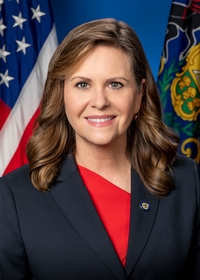
Sen. Camera Bartolotta
Sponsored bills
Maddy summaryThis bill updates Pennsylvania's Liquor Code to clarify rules about employing minors in establishments that serve alcohol. It specifically prohibits licensed hotels, restaurants, clubs, and retail alcohol sellers from hiring anyone under eighteen to serve drinks or anyone under sixteen to work in the premises, though it allows minors aged sixteen to eighteen to perform non-alcohol tasks like clearing tables. The law includes exceptions for specific settings, such as ski resorts and certain nonprofit organizations, which may employ younger minors under strict conditions, and permits unpaid student performances with prior notice.
Maddy summaryThis bill creates a new system of portable benefits for app-based workers, such as delivery couriers and rideshare drivers, who are currently classified as independent contractors. It requires companies that use digital platforms to hire these workers to contribute to a personal financial account for each eligible worker, who must earn at least $1,000 in a quarter to qualify. The money in these accounts can be used for specific needs like illness, emergencies, or to replace lost income if a worker's earnings drop by 50% or more. By establishing this framework, the legislation aims to provide income replacement, health insurance coverage, and other protections that are typically available to employees but not to independent contractors.
Maddy summaryThis bill creates the Agriculture Innovation Grant Program and a new oversight board to support farms and agribusinesses in Pennsylvania. The program offers reimbursement grants to eligible farmers, processors, and service providers for projects that improve energy efficiency, water quality, production methods, biosecurity, or data management. To receive funding, applicants must submit a proposal and provide at least 30% of the project costs from non-state sources. A newly established board, composed of representatives from various agricultural, government, and legislative sectors, will evaluate and award these grants based on criteria such as project feasibility and sustainability.
Maddy summaryThis bill directs funds from the State Lottery Fund to the Pennsylvania Department of Aging to support various programs for older adults. The legislation allocates money for general department operations, a major expansion of the PENNCARE program for services like counseling and community care, caregiver support, and grants for senior centers. Additionally, it provides funding for Alzheimer's outreach, pre-admission assessments, and a transfer to the Pharmaceutical Assistance Fund. These financial changes take effect immediately and apply retroactively to July 1, 2024.
Maddy summaryThis Senate resolution designates September 2024 as "Childhood Cancer Awareness Month" in Pennsylvania to highlight the impact of pediatric cancer on the state's youth and families. The bill does not create new laws or change funding but serves as a symbolic gesture to raise public awareness about the disease and the state's existing support systems. It acknowledges Pennsylvania's role as a leader in pediatric care by recognizing its seven Children's Oncology Group hospitals and the millions of dollars already allocated to research. The resolution encourages residents to join the fight against the disease and honors the patients, families, and medical professionals involved in the cause.
Maddy summaryThis bill requires emergency dispatch centers in Pennsylvania to maintain updated lists of veterinary clinics, hospital emergency departments, and similar facilities capable of treating injured police animals. The primary goal is to ensure that when a law enforcement animal is hurt, dispatchers have the necessary contact information to arrange for its timely transport and medical care. By mandating these records be kept accurate, the legislation aims to streamline the response process for injured service animals without changing existing laws about their care or compensation.
Maddy summaryThis bill is a concurrent resolution that asks the state legislature to officially recognize October 13, 2024, as the 249th birthday of the United States Navy. It does not create new laws, change funding, or affect any specific group of people, as it serves only as a symbolic gesture to honor the Navy's history and values. The text highlights the service's long tradition of protecting the nation and its core principles of honor, courage, and commitment.
Maddy summaryThis resolution designates November 10, 2024, as Marine Corps' Day in Pennsylvania to honor the 249th anniversary of the United States Marine Corps' founding. The bill does not change any laws or create new programs; instead, it serves as a formal statement of recognition within the state legislature. By passing this measure, the Senate acknowledges the historical contributions and service of the Marine Corps without altering existing policies or affecting specific individuals.
Maddy summarySB 917 amends Pennsylvania state laws to provide special fishing and hunting license benefits for law enforcement officers. The bill allows eligible officers, including state police, corrections officers, and various local and campus police personnel, to purchase an annual resident fishing license for just $1 and a resident hunting license for $1. To qualify, these individuals must provide proof of their employment as an officer within the Commonwealth. The legislation also authorizes the state commission to create specific regulations to manage how these discounted licenses are issued and verified.