

Maddy summaryThis law updates the state's Real Estate Tax Sale Law to clarify how properties are handled after tax auctions. It specifically directs that properties acquired by the Pennsylvania Housing Finance Agency should be treated in a certain way, though the provided text cuts off before detailing the full scope of this instruction. Additionally, the bill establishes a county-level fund dedicated to demolition and rehabilitation projects related to these tax sale properties. The legislation was signed into law in July 2024 and becomes effective upon approval by the Governor.
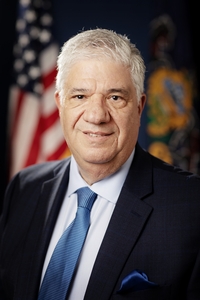
Sen. Wayne Fontana
Sponsored bills
Maddy summaryThis law updates the Real Estate Licensing and Registration Act to clarify how sales agreements can be canceled in wholesale real estate deals. It specifically allows brokers and salespeople to cancel these contracts if they are sent electronically, treating digital transmission the same as traditional mail. The changes also refine the definition of "valuable monetary consideration" within the act to ensure consistency across different sections. By adjusting these definitions and procedures, the bill aims to provide clearer rules for real estate professionals handling wholesale transactions.
Maddy summaryThis Pennsylvania bill updates the legal definition of an abandoned vehicle and establishes a new reporting process for private property owners. It clarifies that vehicles left on private property without consent for more than 24 hours are considered abandoned, while also setting specific timeframes for vehicles on salvage yards and wholesale auctions. Under the new rules, property owners and authorized dealers must file a report with local police before removing or processing these vehicles to legally clear titles and sell them. The legislation also outlines how wholesale auctions can handle unclaimed vehicles, including limits on storage fees and procedures for issuing branded titles to indicate the vehicle's history.
Maddy summaryThis bill requires individuals applying for licenses as healthcare practitioners in Pennsylvania to submit fingerprints for criminal history background checks. The Pennsylvania State Police will conduct these checks using both state and federal databases to verify identities and identify any past arrests or convictions. Licensing boards will use this information to determine eligibility for issuing professional credentials, while strict rules limit who can access these records. The law specifically covers various healthcare fields, including medicine, nursing, dentistry, and pharmacy, and will take effect 180 days after passage.
Maddy summaryThis Senate resolution designates June 2024 as "Migraine and Headache Awareness Month" in Pennsylvania to highlight the impact of these conditions on public health. The bill cites statistics showing that headaches are a leading cause of disability and significantly affect millions of people, including veterans and service members. By officially recognizing this month, the Senate aims to encourage public education and reduce the stigma surrounding migraine disorders. This measure serves as a symbolic gesture to draw attention to the need for better research funding and accessible treatments rather than enacting new laws or policies.
Maddy summaryThis bill creates the Pennsylvania Strategic Investments to Enhance Sites (PA SITES) Program to help fund the development of regional plans and business sites within the state. It authorizes the Pennsylvania Economic Development Financing Authority to issue up to $500 million in bonds to support projects that reduce development risks for municipalities, economic development organizations, and other eligible entities. The funds can be used for creating comprehensive real estate plans, preparing industrial or nonindustrial sites for business relocation or expansion, and other projects deemed eligible by the Department of Community and Economic Development. All bond payments must be covered by specific pledged revenues rather than general state funds, ensuring the bonds do not create a direct debt obligation for the Commonwealth.
Maddy summaryThis bill amends Pennsylvania's Prevailing Wage Act to clarify how "custom fabrication" is defined for public construction projects. It specifically includes offsite production of nonstandard goods like specialized HVAC components, sheet metal ducts, and prefabricated structures, while explicitly excluding standard materials such as structural steel and precast concrete. The changes aim to ensure that workers involved in creating these specific project components are covered by prevailing wage requirements, with a noted exception for general HVAC duct cleaning.
Maddy summaryThis bill designates a specific bridge on Pennsylvania Route 72 in Swatara Township as the Senator David J. Arnold, Jr., Memorial Bridge to honor his service. The legislation officially names the structure after the late state senator, who previously served as Lebanon County's district attorney and later as a state senator. To implement this change, the Pennsylvania Department of Transportation is required to install and maintain signs displaying the new name for drivers traveling in both directions. The act will become effective 60 days after being signed into law.
Maddy summaryThis bill updates Pennsylvania's Medical Practice Act to formally define and regulate the practice of midwifery by nurse-midwives and certified midwives. It establishes specific conditions under which nurse-midwives can prescribe medications, allowing those with advanced pharmacology training to dispense certain controlled substances for acute pain, opioid use disorder, and gynecologic health issues. The legislation also clarifies the scope of practice for nurse-midwives working in hospitals and birth centers versus those in other settings, requiring collaborative agreements with physicians in the latter case. Additionally, the bill grants nurse-midwives authority to order medical devices, immunizing agents, and laboratory tests while maintaining their responsibility for patient care decisions.
Maddy summaryThis bill allows Pennsylvania counties to create public safety authorities specifically for emergency medical services and related support functions. Under the new rules, a county can establish up to two such authorities and must try to include municipal representatives in their governance, while existing emergency organizations can continue operating without restriction. Municipalities within the county can contract with these authorities to meet their legal obligations for providing emergency services, but the authorities generally cannot charge fees unless a municipality explicitly opts in through an ordinance. The legislation also requires the Department of Community and Economic Development to offer guidance and technical assistance to help counties set up and manage these new public safety entities.