

Maddy summaryThis resolution symbolically designates April 2025 as "Sexual Assault Awareness Month" in Pennsylvania. It recognizes the national observance and highlights statistics on sexual violence (e.g., 1 in 5 women and 1 in 71 men in the U.S. experience rape, 81% of women report sexual harassment). The resolution aims to raise community awareness and support for survivors, aligning with the theme "Together We Act, United We Change." As a procedural resolution, it does not create new laws or funding but formally acknowledges the issue for the state.
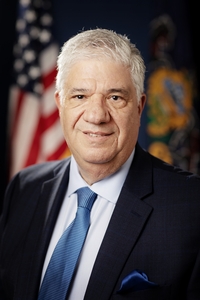
Sen. Wayne Fontana
Sponsored bills
Maddy summarySB 530 amends Pennsylvania's sales tax code to exclude certain equipment purchases from tax when bought personally by firefighters. It specifically covers accessory, communications, and protective equipment (like helmets, turnout gear, and respirators) purchased with personal funds by paid/volunteer firefighters or special fire police members who show valid ID proving their status. The exclusion applies only if the fire company or unit doesn't cover the cost; if the employer pays, the tax still applies. This change directly affects individual firefighters buying required gear personally, not fire departments or other entities. The bill takes effect 60 days after enactment.
Maddy summarySB 470 proposes to create a Secondary Education Fire Training Pilot Program in Pennsylvania, allowing high school students aged 16+ to earn credit for firefighter and emergency medical services training through partnerships between schools and colleges. The bill establishes a Fire Training Fund to accept donations and provides $150,000 per participating college over the 4-year pilot period. It requires three regional colleges to partner with school entities (including districts and charter schools) to offer Firefighter I certification courses, with the goal of increasing volunteer firefighter recruitment. The program includes a post-pilot survey to assess its impact on local volunteer fire departments. This is proposed legislation pending final approval, with an effective date of January 1, 2026.
Maddy summaryThis resolution honors Senator Mary Jo White's life and service in the Pennsylvania Senate, expressing condolences to her family. It recognizes her work on environmental policy, advocacy for women's rights, and her role as the first woman elected to Senate Republican leadership. The resolution serves as a formal tribute to her career and legacy without creating any new laws or policies.
Maddy summaryThis bill establishes a Pennsylvania program that reimburses residents who earn state-recognized emergency medical services (EMS) certifications (such as EMT or paramedic) after paying for training at a Pennsylvania school. Applicants must submit proof of certification and payment, maintain Pennsylvania residency for two years after certification, and apply within 30 days of completing training. The state will cover full certification costs up to a $3 million total appropriation, with payments issued within two months of a complete application. The program ends when the $3 million is fully spent, with no fixed expiration date beyond that.
Maddy summarySB 528 amends Pennsylvania's aggravated assault law to explicitly include county commissioners, county council members, mayors, and municipal council members as protected individuals. This means assaulting these local government officials will now qualify as aggravated assault under state law, rather than potentially being charged as a lesser offense. The bill expands the existing list of protected persons in Section 2702(c) of Title 18 by adding four new categories of local officials. It takes effect 60 days after enactment. This is a straightforward criminal law update, not a policy change with broader implications.
Maddy summaryThis resolution (SR 60) formally recognizes the week of April 6-12, 2025, as "National Library Week" in Pennsylvania. It does not create new laws or allocate funds but symbolically acknowledges libraries' role in communities, highlighting their value for learning, connection, and access for all residents regardless of background. The resolution encourages Pennsylvanians to visit local libraries and reflect on their impact during this annual observance. As a ceremonial resolution, it has no direct policy or financial effect on libraries or their operations.
Maddy summarySB 522 provides funding and support for integrating mental health services into primary care settings across Pennsylvania. It allocates grants to primary care physicians and practices to cover initial costs of implementing collaborative care models (like hiring staff, upgrading technology, and creating patient tracking systems), with priority for rural clinics and areas with high suicide or overdose rates. The bill also establishes regional technical assistance centers to help practices develop staffing models, integrate tools into electronic records, and navigate billing. These provisions directly affect primary care providers statewide, aiming to improve access to behavioral health services through existing medical settings.
Maddy summarySB 523 requires full-time firefighters and EMS providers employed by fire departments or local governments in Pennsylvania to receive comprehensive cancer and cardiovascular screenings every three years. The screenings must cover specific conditions including prostate, lung, skin, and heart health checks, as listed in the bill. Employers must cover all associated costs - including copays, deductibles, and insurance expenses - through existing health benefits or insurance plans. This bill directly affects emergency responders working for public fire departments or municipal services.
Maddy summaryThis bill creates a $500 annual tax credit for Pennsylvania residents who serve as active volunteer certified emergency medical technicians (EMTs) or volunteer firefighters. To qualify, individuals must have at least two full years of service by December 31 of the tax year and respond to at least 20% of their agency's emergency calls during that period. The credit applies to tax liability starting with taxable years beginning after December 31, 2026, and cannot be carried over, refunded, or sold. The Department of Revenue will administer the credit, require self-certification, and submit annual reports to the General Assembly on its usage.