

Maddy summaryPennsylvania's SB 593 adds five extra points to civil service exam scores for applicants with disabilities who voluntarily disclose their disability and provide required documentation. This applies to state and local government job openings requiring civil service exams, affecting applicants who meet the definition under Pennsylvania's Human Relations Act. The bill requires the civil service commission to publicly advertise this policy on its website and in exam materials. It does not mandate disclosure but ensures eligible applicants with disclosed disabilities receive the score adjustment to determine their ranking on hiring lists.
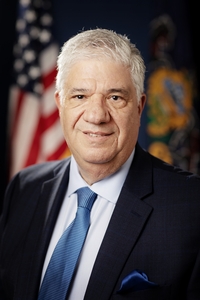
Sen. Wayne Fontana
Sponsored bills
Maddy summarySB 603 requires commercial websites containing over one-third "material harmful to minors" (such as explicit sexual content or content lacking literary value for minors) to implement reasonable age verification before minors can access that content. It directly affects businesses operating such websites, mandating they use third-party verification methods without retaining users' personal data. The law exempts bona fide news organizations and news-gathering activities, and holds commercial entities liable for damages if minors access harmful content or if they improperly retain user data. Internet service providers are not held liable for simply hosting or connecting to such websites.
Maddy summarySB 587 amends Pennsylvania's Tax Reform Code to require that applicants for tax credits or benefits must not have committed "anti-union activity" in the past 10 years. The bill directly affects businesses or individuals seeking state tax credits by adding a new eligibility check. Key provisions define "anti-union activity" to include recent National Labor Relations Board complaints, settlements related to labor violations, or breaches of Pennsylvania's Labor Relations Act. Tax authorities must verify this eligibility before awarding credits, with specific examples provided in the bill. This change takes effect 60 days after enactment.
Maddy summarySB 582 streamlines grant applications for Pennsylvania fire and emergency medical services (EMS) companies. It sets a 45-day annual application window, requires the state to act on applications within 60 days (with unaddressed applications deemed approved), and allows one 15-day extension per company every three years for reporting without needing to prove hardship. The bill directly affects local fire and EMS companies seeking state funding under Title 35. This procedural update simplifies administrative processes but does not change grant eligibility, amounts, or funding levels.
Maddy summaryThis resolution (SR 78) designates May 2025 as "Myositis Awareness Month" in Pennsylvania. It directly affects residents of Pennsylvania living with myositis, a rare autoimmune disease causing muscle inflammation and weakness. The resolution aims to raise public awareness and support for those impacted by this condition, which affects an estimated 75,000 people nationwide. As a ceremonial resolution, it does not create new laws or funding but formally recognizes the disease through a symbolic designation.
Maddy summaryThis resolution recognizes April 13-19, 2025, as "National Public Safety Telecommunications Week" in Pennsylvania. It honors 911 dispatchers, emergency telecommunicators, and staff at public safety communication centers for their critical 24/7 work handling emergency calls and coordinating responses. The resolution acknowledges their role in saving lives, managing high-stress situations, and supporting first responders during crises. It does not create new laws or funding but serves as a symbolic tribute to these workers' service.
Maddy summarySB 577 amends Pennsylvania's Second Class City Firemen Relief Law, which provides pension benefits to firefighters and their families. It updates membership requirements, including a new acceptance form for new hires, and adjusts pension payments: surviving spouses receive 50% of the deceased firefighter's salary (plus workers' compensation) for 500 weeks, while dependent children receive 25% of that amount until age 18 (or indefinitely if disabled). The bill specifies that $1,200 is paid to surviving spouses upon a firefighter's death, and payments to children or parents begin after July 1, 1959. These changes directly affect second-class city firefighters, their spouses, children, and dependent parents.
Maddy summarySB 575 amends Pennsylvania law to expand the definition of hate-based intimidation under Title 18, specifically adding "ethnic" to the list of protected characteristics (alongside race, color, religion, national origin, and disability) for offenses involving assault or property damage. It creates a new civil remedy under Title 42, allowing victims injured by such acts to sue for damages, injunctions, or other relief in court. The bill directly affects individuals who experience hate-motivated crimes and the legal system handling these cases. The changes take effect 60 days after enactment.
Maddy summarySB 579 adds music therapy as a licensed profession under Pennsylvania's existing Social Workers, Marriage and Family Therapists, and Professional Counselors Act. It requires individuals practicing music therapy to obtain a license to use the title "licensed professional music therapist" and defines the scope of practice, including clinical music interventions like improvisation and songwriting for therapeutic goals. The bill directly affects music therapists seeking to legally represent their credentials in Pennsylvania, while excluding students, supervised practitioners, and those not claiming to be licensed therapists. Key provisions clarify what constitutes "practice of music therapy" and establish the State Board of Social Workers, Marriage and Family Therapists, and Professional Music Therapists to oversee licensing. This bill does not change employment requirements for government or nonprofit agencies.
Maddy summarySB 588 establishes a new Prevailing Wage Co-Enforcement Program within Pennsylvania's Department of Labor and Industry. The program authorizes trained volunteers (called "program participants") to monitor public construction projects for violations of the existing Pennsylvania Prevailing Wage Act, which requires contractors to pay local prevailing wages. Key mechanisms include volunteers conducting site visits, interviewing workers, and reporting violations to the Department under strict guidelines (e.g., wearing ID badges, submitting reports within 48 hours, and avoiding union-related activities). This directly affects public construction workers, contractors working on public projects, and the Department of Labor, which oversees the program. The bill does not change prevailing wage rates but creates a new enforcement tool for the Department.