

Maddy summarySB 914 requires scrap processors and recycling facility operators in Pennsylvania to collect specific information when purchasing scrap material, including details about the seller and the material type. It mandates that these businesses use commercial accounts for transactions and prohibits them from buying certain materials, such as those potentially linked to theft. The bill directly affects businesses in the scrap and recycling industry by imposing new record-keeping and transaction rules under state criminal law. The legislation passed its final vote on October 7, 2025, and was referred to the Judiciary committee for further consideration.
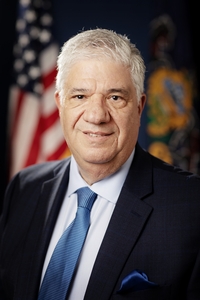
Sen. Wayne Fontana
Sponsored bills
Maddy summarySB 432 amends Pennsylvania's Public School Code to create new educational pathways for foster and adopted children attending state universities and colleges. The bill requires public higher education institutions to develop and implement specific support programs, including academic advising and financial aid coordination, for eligible students who were in foster care or adopted. It directly affects current and future foster youth and adopted children pursuing higher education within Pennsylvania's public university system. Key provisions establish standardized support mechanisms to improve access and retention for this population in state-funded institutions.
Maddy summarySB 766 amends Pennsylvania's Human Services Code to update licensing rules for child care centers, specifically changing eligibility requirements for children to attend these centers. The bill directly affects licensed child care providers and families seeking child care services by modifying who qualifies based on new criteria. Key provisions revise the Department of Human Services' powers regarding center licensing, requiring centers to verify eligibility according to the updated standards. This changes the operational rules for child care centers without altering funding or creating new programs.
Maddy summaryThis bill establishes a uniform $1.65 monthly surcharge for all 911 emergency communication services or prepaid wireless devices, paid by subscribers or consumers. Starting February 1, 2026, the surcharge increases to $2.20 and will adjust annually based on the Consumer Price Index (CPI-U), using June-to-June comparisons. The adjustment rounds to the nearest cent and only increases if the CPI rises; if the CPI declines, the surcharge remains unchanged. The Pennsylvania Department of Health must publish annual adjustments in the Pennsylvania Bulletin. The surcharge is collected separately from existing provider fees for 911 services.
Maddy summaryThis resolution designates October 2025 as "Domestic Violence Awareness Month" in Pennsylvania. It is a procedural resolution, not a bill with policy changes, intended to officially recognize and promote awareness of domestic violence issues during that month. The resolution directly affects Pennsylvanians by encouraging community organizations, schools, and government entities to host events and share resources during October 2025. It has no binding legal effect but serves as a commemorative designation.
Maddy summarySR 171 is a resolution designating October 2025 as "Pregnancy and Infant Loss Awareness Month" in Pennsylvania. It formally recognizes this month to raise public awareness about pregnancy loss and infant death. The resolution does not create new laws or affect any specific individuals or groups; it is purely symbolic. The measure was referred to the Rules & Executive Nominations committee on October 7, 2025.
Maddy summarySB 377 requires Pennsylvania state agencies to purchase information technology devices (like computers or tablets) that meet specific security standards when entering new public works contracts. It mandates that these devices, services, and solutions must be configurable, secure, and maintainable according to National Institute of Standards and Technology (NIST) guidelines or widely adopted industry security practices. The law applies only to contracts signed on or after its effective date (60 days after passage), affecting state agencies buying endpoint devices for public projects. This policy change directly impacts procurement decisions for IT hardware and services across Pennsylvania government operations.
Maddy summarySR 169 is a resolution passed by the legislature on October 6, 2025, condemning an antisemitic firebombing attack that occurred on June 1, 2025, in Boulder, Colorado, targeting peaceful demonstrators. It formally calls on the Commonwealth to take action against the rising threat of antisemitism. As a resolution, it does not create new laws or directly affect individuals, but expresses the legislature's stance on the incident.
Maddy summaryPennsylvania's SB 583 would authorize the state to join the Social Work Licensure Compact, enabling licensed social workers to practice across participating states without obtaining separate licenses in each. This directly affects social workers seeking to provide services in multiple states, including military families and those addressing workforce shortages. The bill establishes a framework for mutual recognition of licenses, reducing duplicate application requirements and disciplinary information sharing between states. Key provisions include allowing "Multistate Authorization to Practice" and requiring states to hold social workers accountable for adhering to the laws of the state where services are delivered. The compact aims to increase access to social work services while maintaining state regulatory authority over licensure.
Maddy summarySB 1025 amends Pennsylvania's sentencing laws to specifically address hate-based intimidation crimes. It requires judges to consider hate motivation as an aggravating factor during sentencing for such offenses and mandates the inclusion of community impact statements. These statements allow community members affected by the crime to share how it impacted their neighborhood or group. The bill directly affects individuals convicted of hate crimes and the communities they harm, changing how courts weigh these factors during sentencing.