

Maddy summarySB 831 modifies Pennsylvania's tax exemption for disabled veterans by expanding a property value reduction program. It provides tiered tax relief: veterans with a 10%+ service-connected disability (verified by the VA) receive $7,500 to $15,000 off their home's taxable value, depending on disability severity (10-29% to 70%+). This applies to veterans who own their primary residence solely, with a spouse, or as tenants by the entirety but do not qualify for the full exemption under existing law. The bill directly affects Pennsylvania veterans with military service-related disabilities who pay real estate taxes on their primary home.
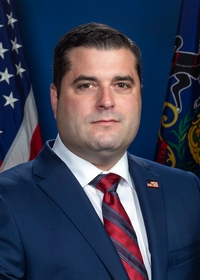
Sen. Devlin Robinson
Sponsored bills
Maddy summarySB 91 amends Pennsylvania's law providing tuition waivers for children of public safety personnel who die in the line of duty. It updates definitions to include rescue squad and ambulance service members as firefighters and clarifies residency requirements for out-of-state police officers. The bill adjusts the retroactive date for the educational benefit to January 1, 2004, making it available for children of those killed since that date, and prohibits institutions from reimbursing tuition or fees paid between 2004 and the bill's effective date. The legislation repeals the previous retroactivity section and removes historical findings from the law.
Maddy summarySB 783 establishes "tourism improvement districts" (TIDs) in Pennsylvania counties, where participating hotels and tourism businesses pay special fees to fund local tourism activities. The bill creates "tourism improvement district management associations" (TIDMAs) to manage funds for marketing, events, destination improvements, and promotional programs that directly benefit these businesses. Counties must hold public hearings, collect fees (capped at 4% administrative cost), and ensure TID funding supplements existing tourism programs without reducing current county tourism spending. Businesses within a proposed TID can collectively object if 40% of total room inventory opposes the district, preventing its formation.
Maddy summarySB 809 amends Pennsylvania's law to clarify that disabled veterans must have been honorably discharged "for service in any war or armed conflict" to qualify for the real estate tax exemption on their principal residence. This change directly affects veterans seeking the existing tax exemption for their primary home, including the land it sits on. The key provision updates the eligibility requirement in Section 8902(a)(1) of Title 51 to specify the discharge reason tied to military service in conflict. The bill does not create new benefits but refines the existing exemption's criteria. It takes effect 60 days after enactment.
Maddy summarySB 758, the "Mechanical Insulation Act," prevents Pennsylvania's Public Utility Commission from rejecting energy efficiency plans submitted by electric distribution companies solely because they include mechanical insulation. The bill requires that such insulation be proven cost-effective using a specific "total resource cost test" approved by the Commission. This directly affects electric companies developing energy conservation plans and the Commission's review process. The law takes effect 60 days after enactment.
Maddy summarySB 759 requires all Pennsylvania public school buildings to install certified point-of-use filters on drinking water outlets by January 1, 2027, replacing older fountains without lead-reducing filters at a rate of at least one per 100 students/staff. It creates the Safe Schools Drinking Water Fund, providing up to $10 million annually for three years to help schools cover installation and replacement costs, with priority for pre-2014 buildings and those serving prekindergarten students. Schools must maintain filter schedules, post lead-risk information online, and report progress to state agencies, while new outlets must meet strict lead-leaching standards. The bill directly affects all public K-12 school entities in Pennsylvania, aiming to reduce lead exposure in drinking water.
Maddy summarySB 760 requires all Pennsylvania public, charter, and private school buildings to test for radon gas starting in the 2026-2027 school year. If radon levels reach or exceed 4 picocuries per liter, schools must implement mitigation (like sealing foundations or installing vents) and retest until levels drop below that threshold. New schools must use radon-resistant construction techniques, and all testing/mitigation must be performed by certified professionals following specific standards. Results must be reported to school boards, parents' groups, teachers' unions, and state agencies within 60 days.
Maddy summarySB 447 requires health insurance policies in Pennsylvania to cover annual prostate cancer screenings with no out-of-pocket costs for men aged 40+ who are high-risk. High-risk status includes genetic factors, family history of prostate cancer (a first-degree relative diagnosed), or physician determination of medical need. The law mandates coverage for screenings like PSA tests and digital rectal exams, applying to policies filed or renewed 180 days after the law takes effect. It directly affects insured men meeting these criteria and insurance companies offering health coverage in Pennsylvania.
Maddy summarySB 741 creates a new criminal offense in Pennsylvania for the unauthorized use of electronic tracking devices. It makes it illegal to install or place an electronic tracking device on another person or their property without their consent to track their location or movement. The bill includes exceptions for situations like parents tracking their minor children, legal guardians tracking incapacitated persons, and law enforcement in official duties or with court orders. Businesses are also exempt when tracking fleet vehicles or if they have obtained informed consent, and penalties range from a second-degree to a first-degree misdemeanor.
Maddy summarySenate Resolution 108 designates May 13, 2025, as "Cancer Action Day" in Pennsylvania. This resolution honors all Pennsylvanians impacted by cancer and those who work to fight the disease, acknowledging efforts by organizations such as the American Cancer Society Cancer Action Network.