

Maddy summaryThis bill allows the Pennsylvania Department of Transportation to create temporary rules for private driver education schools without going through standard regulatory review processes. Under these new rules, instructors must pass a specific exam based on the state driver's manual and have three chances to do so before needing to reapply. The authority to issue these temporary regulations will expire six months after the bill takes effect, after which future rules must follow normal legal procedures.
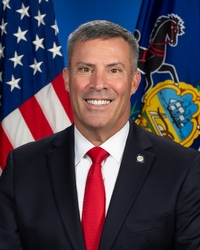
Sen. Greg Rothman
Sponsored bills
Maddy summaryThis bill directs the Pennsylvania Insurance Department to refund a 2009 assessment previously charged to insurance carriers authorized to write workers' compensation insurance. To receive the refund, which includes the original amount plus interest, eligible carriers must submit a specific form within sixty days of a public notice, while carriers that went into liquidation in 2009 are excluded from this process. The legislation also requires the department to report the total refund amounts to various legislative committee chairs once the process is complete.
Maddy summarySB 858 amends the Tax Reform Code of 1971 to update the tax rules for mutual thrift institutions, which are financial cooperatives owned by their members. The bill changes the start date for a specific tax provision from 1984 to calendar year 2024 and adjusts the deadline for reporting and paying the tax from an immediate requirement to 120 days after the due date. These changes directly affect the financial institutions subject to the tax and the state agencies responsible for collecting it. By modifying these dates and timelines, the legislation alters when and how these institutions must calculate and remit their tax payments.
Maddy summaryThis resolution officially designates June 2024 as "Dairy Month" to honor Pennsylvania's dairy industry, which supports over 47,000 jobs and generates billions in economic activity. The measure aims to raise awareness about the state's dairy farmers and their families, who operate more than 468,000 cows and produce roughly 10 billion pounds of milk annually. It encourages the public to recognize the value of local dairy products and promotes the purchase of dairy goods produced within Pennsylvania.
Maddy summaryThis Pennsylvania bill updates state laws regarding video gaming to clarify who counts as a "gaming employee" and sets new staffing rules for casinos and other gaming venues. It requires these establishments to hire at least one trained gaming employee, though that person does not need to be physically present on the premises while games are running. The law also mandates that this employee complete specific training on compulsive and problem gambling and outlines penalties, including fines or license suspension, for venues that fail to meet these requirements.
Maddy summaryThis bill updates the legal definition of a "governmental entity" within Pennsylvania's education retirement statutes to explicitly include various school boards and authorities. It directly affects employees of associations that collect membership dues from public schools, ensuring these workers are covered under the state retirement system if hired after the law takes effect. The legislation also clarifies that such associations will not be treated as nonparticipating employers as long as they maintain active participants in the retirement plan. These changes take effect immediately upon passage.
Maddy summaryThis bill amends the Nurse Aide Resident Abuse Prevention Training Act to update requirements for individuals working in long-term care facilities. It allows students and graduates of nursing programs that meet specific standards to qualify as nurse aides if they pass a competency exam, while also clarifying that training must be established by a facility rather than just enrolled in by an individual. The legislation sets different effective dates for various new sections, with some provisions taking effect in 30 days, others in 60 days, and the remainder in one year.
Maddy summaryThis bill changes how Pennsylvania public schools award academic credit for students who work at congregate care facilities. It lowers the required number of work hours from 350 to 250 and allows schools to use existing programs to manage these credits instead of creating new ones. The law also clarifies that schools must approve each student's application and ensure all requirements are met before granting the credit. Additionally, the bill updates terminology to refer to "school districts" rather than "public schools" in specific sections.
Maddy summaryThis bill, known as the Commonwealth Zero-Based Budgeting Act, requires Pennsylvania state agencies to justify every dollar of their spending rather than simply adjusting previous year's budgets. Under the new rules, the Secretary of the Budget must review all government programs at least once every five years, starting with about one-fifth of the budget annually beginning in 2024. Agencies must submit detailed plans explaining why each program exists, how much it costs to maintain current or minimum service levels, and the potential impact if the program were cut. While most departments are subject to this review, specific educational functions like class sizes, school curricula, and direct classroom services are exempt from the process. The law aims to ensure that public funds are allocated based on clear, defensible purposes rather than historical spending habits.
Maddy summaryThis bill authorizes electric distribution companies in Pennsylvania to create local solar programs that allow customers to purchase electricity generated by nearby solar facilities. Under the new rules, third-party developers must build and maintain these solar projects, which are then sold to residential and small business customers through a competitive selection process. The legislation specifically ensures that low-income customers can participate in these renewable energy programs without losing their existing financial assistance benefits. Additionally, the bill mandates that utility commissions oversee these programs and prohibits companies from charging sign-up fees or passing on costs for unused solar energy to ratepayers.