

Maddy summaryThis law updates the Real Estate Licensing and Registration Act to clarify how sales agreements can be canceled in wholesale real estate deals. It specifically allows brokers and salespeople to cancel these contracts if they are sent electronically, treating digital transmission the same as traditional mail. The changes also refine the definition of "valuable monetary consideration" within the act to ensure consistency across different sections. By adjusting these definitions and procedures, the bill aims to provide clearer rules for real estate professionals handling wholesale transactions.
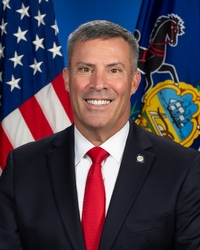
Sen. Greg Rothman
Sponsored bills
Maddy summaryThis bill amends Pennsylvania's insurance laws to require health insurance policies to cover medically necessary telemedicine services provided by participating network providers. It explicitly prohibits insurers from denying coverage or reimbursement solely because a service is delivered remotely via video, audio, or asynchronous methods. The legislation also prevents contracts from conditioning reimbursement on the use of specific proprietary technology or vendors, ensuring providers can use various telemedicine tools. By defining terms like telemedicine and remote patient monitoring, the law standardizes how these services are treated under existing insurance plans and managed care programs.
Maddy summaryThis Pennsylvania bill updates the legal definition of an abandoned vehicle and establishes a new reporting process for private property owners. It clarifies that vehicles left on private property without consent for more than 24 hours are considered abandoned, while also setting specific timeframes for vehicles on salvage yards and wholesale auctions. Under the new rules, property owners and authorized dealers must file a report with local police before removing or processing these vehicles to legally clear titles and sell them. The legislation also outlines how wholesale auctions can handle unclaimed vehicles, including limits on storage fees and procedures for issuing branded titles to indicate the vehicle's history.
Maddy summaryThis bill amends Pennsylvania's Unemployment Compensation Law to require the Department of Labor and Industry to create a State Unemployment Compensation Advisory Council. The council must produce an annual report by March 1st that evaluates the financial health of the unemployment fund and offers recommendations to improve its solvency. The report will include detailed statistics on unemployment rates, job losses, and various categories of workers, such as those discouraged from seeking employment or working part-time due to economic reasons. These findings and recommendations will be submitted to the Governor and the General Assembly and made available on the department's public website. The law takes effect 60 days after passage.
Maddy summaryThis bill expands the Right-to-Know Law to require organizations that receive taxpayer money or are regulated by government agencies to provide public records. Specifically, it mandates that any entity receiving grants, loans, or appropriations, or falling under the jurisdiction of a state or local agency, must comply with existing public record disclosure rules. The amendment clarifies the scope of entities subject to these transparency requirements by adding a new section to the statute. This change ensures that publicly funded and regulated organizations are held to the same open records standards as other public bodies.
Maddy summaryThis Senate resolution asks the U.S. Congress to change federal rules so that drivers aged 18, 19, and 20 with a Commercial Driver's License can legally transport goods across state lines. Currently, federal regulations require interstate drivers to be at least 21, a limit the bill seeks to remove to help address a projected shortage of truck drivers. The proposal emphasizes maintaining high safety standards and performance criteria while expanding the pool of available workers for the trucking industry.
Maddy summaryThis bill updates Pennsylvania's Cosmetology Law to create a new "limited license" specifically for natural hair braiders, allowing them to operate legally without a full cosmetology license. It defines natural hair braiding as techniques that create tension on hair roots, such as twisting or weaving, while explicitly excluding the use of dyes or chemical treatments. Under the new rules, individuals can obtain this specialized license by completing three hundred hours of training or by proving three years of prior practice, and they are permitted to work in licensed salons. The legislation also clarifies that practicing cosmetology without a license remains illegal and establishes specific sanitary and educational requirements for schools and teachers.
Maddy summaryThis bill amends Pennsylvania's military statutes to update the legal description of Fort Indiantown Gap and creates a new fund to support service members, veterans, and their families. The primary mechanism involves revising a specific section of the Department of Military Affairs code to reflect current information about the base. Additionally, the legislation establishes a dedicated financial resource intended to provide assistance to military personnel and their dependents. The bill focuses on administrative updates and the creation of a support fund without detailing specific funding amounts or eligibility criteria in the provided text.
Maddy summaryThis bill, known as the Stand with Israel Act, prohibits Pennsylvania state retirement funds and the State Treasurer from boycotting or divesting from Israel. It also bars state funding for any higher education institution that engages in such boycotts or divestment actions. The law defines these actions as financial penalties against the Israeli government or its commercial activities and applies to direct and indirect investments, while exempting certain individual employee savings plans. Compliance with the law must still follow existing fiduciary duties and prudent investing standards.