

Maddy summarySB 95 amends Pennsylvania's Pharmacy Act to create a 180-day provisional license for pharmacists moving from other states, allowing them to practice without demonstrating competency under Pennsylvania's requirements. It also permits emergency medical services providers to distribute naloxone dose packages for opioid overdose reversal under specific conditions, including a Department of Health standing order and voluntary distribution without liability. Additionally, the bill requires pharmacies to disclose prescription drug prices (brand vs. generic), cost-sharing amounts, and health insurance options upon customer request. These changes aim to improve pharmacist mobility, expand naloxone access, and increase price transparency for consumers.
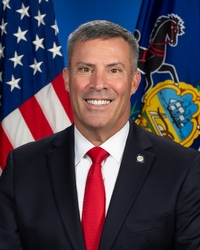
Sen. Greg Rothman
Sponsored bills
Maddy summarySB 90 modifies Pennsylvania's fire service training rules by requiring Firefighter I training programs to offer two testing options: a single cumulative test at program end or module-based tests completed within the same accreditation period. It mandates annual reports tracking firefighter numbers (paid/volunteer), course participation, specific certifications held (like Firefighter I), course summaries, and fund usage. The bill directly affects all Pennsylvania firefighters in the certification system and fire training programs statewide. These changes standardize testing methods and increase transparency in fire service training management.
Maddy summarySB 739 creates new criminal offenses for manufacturing, distributing, selling, transferring, using, or possessing "illicit devices" for motor vehicles. These devices include physical keys adaptable to multiple vehicles or electronic tools that can unlock, start, or emulate vehicle key fobs. The law specifically targets devices that work across multiple vehicles, with penalties ranging from misdemeanors for first offenses to felonies for repeat violations. Legitimate businesses like dealers, locksmiths, rental agencies, manufacturers, and law enforcement are exempt from these restrictions when operating in their normal course of business.
Maddy summarySB 518 requires hunters to report wildlife kills (except raccoons) to a wildlife officer within 24 hours and surrender the entire carcass (except raccoons) to an officer or approved processor. It also makes refusing to answer questions about kills or carcass disposal unlawful, and mandates reporting when killing wildlife to protect oneself. The law directly affects hunters, landowners (including farmers under Pennsylvania’s Right-to-Farm Law), and wildlife officers. Key provisions include standardized reporting methods (phone, online) and clearer rules for carcass handling and investigations.
Maddy summarySB 719 amends Pennsylvania's CPA Law to update licensing requirements for certified public accountants (CPAs) and accounting firms. It raises the required education credits from 120 to 150 semester credits for exam eligibility, revises exam retake rules to use a rolling 30-month window for passing all sections, and creates "automatic mobility" allowing out-of-state CPAs in good standing to practice in Pennsylvania without a new license. The bill also repeals outdated provisions about "substantial equivalency" for out-of-state practice and clarifies disciplinary procedures. This law, signed by the governor on June 30, 2025 (Act No. 27 of 2025), directly affects CPAs, accounting firms, and individuals seeking licensure in Pennsylvania.
Maddy summaryThis bill changes Pennsylvania's fishing license fees for specific veterans and military members. Disabled veterans with a 100% service-connected disability (certified by the VA) receive free resident fishing licenses, while those with 60-99% disability pay $1. Deployed Pennsylvania National Guard members (with proof of 60+ days overseas deployment in the last 24 months) also get a $1 annual license. It repeals a prior section that provided similar $1 licenses to reserve component military members. The law took effect 60 days after the governor signed it on June 30, 2025.
Maddy summarySB 517 modifies Pennsylvania's hunting and wildlife laws to clarify reporting requirements, trespass rules, and create a new agricultural wildlife management program. It requires hunters to report kills within 24 hours and surrender carcasses (except raccoons), adds trespass penalties for unpermitted hunting on private property (including license suspensions), and mandates the Game Commission to create a 2026 program matching landowners with hunters to address crop damage. The bill directly affects hunters, landowners, and the Game Commission, with key changes including standardized reporting methods, clearer trespass definitions, and a new database for agricultural wildlife control. These provisions aim to improve wildlife management coordination while updating enforcement procedures.
Maddy summarySB 780 creates new rules for managing encampments in Pennsylvania. It defines an "unauthorized encampment" as a temporary structure housing three or more unrelated people on property without consent, where conditions like garbage, drug activity, or unsafe sanitation exist (an "indication of nuisance"). Property owners must remove such encampments within 30 days or face civil penalties up to $250 per day, while municipalities can enforce removal after a nuisance determination. This law directly affects property owners, local governments, and individuals living in encampments, focusing on public health and safety without creating new housing programs.
Maddy summarySB 205 creates two new funding streams for Pennsylvania highway maintenance: a $5 million annual appropriation from the Motor License Fund to counties starting in 2025, and a 55-mill tax on liquid fuels. Counties can use these funds specifically for constructing and maintaining bridges owned by municipalities within their counties. The bill directly affects local governments by providing dedicated resources for bridge infrastructure, a key need for many communities. It amends Pennsylvania’s vehicle code to redirect existing transportation revenue toward this purpose without changing overall tax rates.
Maddy summarySB 101 amends Pennsylvania's Workforce Development Act to improve data access and accountability for local workforce boards. It requires these boards to use new hire and unemployment data (from the state's new hire database) when developing local plans, while allowing written exemption requests. The bill mandates a state-developed "data dashboard" displaying workforce data (like job placements and wages) in an accessible format, with free technical assistance provided by the Department of Labor and Industry. These changes directly affect local workforce development boards, the Department of Labor, and agencies using workforce data for program evaluation and reporting. Funding for the dashboard and technical assistance comes exclusively from the state's unemployment compensation reemployment fund.