

Maddy summaryThis bill amends Pennsylvania's Clean Streams Law to allow construction sites disturbing between one and two acres to request a waiver for certain stormwater discharge permits. By referencing existing federal regulations, the legislation provides a formal mechanism for these smaller projects to bypass specific state permitting requirements. The change directly affects developers and landowners managing medium-sized construction projects, streamlining the regulatory process for them. The law takes effect 60 days after being passed.
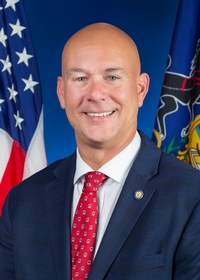
Sen. Pat Stefano
Sponsored bills
Maddy summaryThis bill updates Pennsylvania's juvenile justice laws by expanding the legal definition of a "child" to include individuals up to age 21 who committed offenses or were previously adjudicated dependent before turning 18. It also clarifies that minors and their guardians generally cannot be forced to pay fees for programs or services, with the specific exception of restitution ordered for victims. Under the new provisions, courts can order delinquent children to pay restitution for damages, capped at $50 per victim for specific funds, and may require up to 75% of earnings from community service to be used for victim compensation. The legislation ensures that courts retain jurisdiction over restitution orders until the child turns 21 or fully complies with the payment plan.
Maddy summaryThis Senate Resolution designates April 2026 as "Child Abuse Prevention Month" in Pennsylvania to raise awareness about child safety. The measure does not alter any laws or create new programs but serves as a symbolic gesture to highlight the importance of preventing abuse. It acknowledges the ongoing efforts of parents, educators, and community members to protect children while calling for continued progress in this area.
Maddy summaryThis bill amends Pennsylvania's Tax Reform Code to exclude tips from taxable personal income. It directly affects employees who receive tips, such as restaurant and hospitality workers, by removing these earnings from their taxable income calculations. The legislation defines tips as voluntary customer payments and explicitly excludes employer-mandated fees or service charges from this exclusion. The Department of Revenue will create regulations to implement the change and prevent fraud or misclassification of wages as tips. The law takes effect 60 days after passage and applies to the next fiscal year following that date.
Maddy summaryThis bill amends Pennsylvania's Fiscal Code to allow the state to place liens on private property that was improved or renovated using state grant or loan money if the recipient used the funds without proper authorization. Under the new provisions, state agencies must notify the Department of Revenue and the recipient when misuse is detected, and the state can then recover the unapproved funds through civil action. The lien attaches to the property itself and takes priority over most other debts, except for existing mortgages and real estate taxes, but it cannot be enforced until the property is sold or transferred. The Department of Revenue must record the lien with the county prothonotary and notify the property owner by registered mail.
Maddy summarySB 1211 amends Pennsylvania's Insurance Company Law of 1921 to require casualty insurance policies to cover biomarker testing for medical assistance and Children's Health Insurance Program enrollees. The bill defines medical assistance and CHIP managed care plans as health care plans that use gatekeepers to manage services, explicitly including biomarker testing in this definition. This change ensures that insurance coverage for these specific health services is standardized under state law, subject to necessary federal approval. The legislation takes effect 60 days after passage.
Maddy summarySB 614 amends Pennsylvania's Fiscal Code to establish a state-funded initiative supporting workforce development for Federally Qualified Health Centers (FQHCs), which are community health centers serving rural and underserved areas. The bill directly affects FQHCs by providing funding to recruit and retain primary care staff, addressing documented shortages in these facilities. Key provisions include creating a dedicated funding stream within the state budget specifically for FQHC workforce expansion, with appropriations to cover hiring and training costs. This policy change aims to strengthen primary care access in communities with limited healthcare resources through targeted financial support.
Maddy summarySB 979 would prevent property tax increases for minor home improvements (20% or less of a property’s current assessed value) on primary residences under specific conditions. The bill prohibits assessors from raising taxes if the home has been the owner’s primary residence for at least five years from the improvement date and this is the first time such minor improvements have been made during ownership. It also explicitly excludes normal repairs and painting from triggering tax reassessments. This bill directly affects homeowners in Pennsylvania making small renovations to their primary homes.
Maddy summaryThis Senate resolution encourages the Department of Community and Economic Development to partner with private businesses and tourism groups to establish a "Pennsylvania Sweet and Salty Trail." The trail would promote tourism highlighting the state's confectionery, snack food, food manufacturing, and agricultural industries, which support thousands of jobs and generate significant economic activity. The resolution is non-binding and focuses on raising awareness of these industries' contributions, not creating new laws or funding.
Maddy summaryThis bill amends Pennsylvania's existing Dog Law to create a new Lost and Found Dog Registry managed by the state Department of Agriculture. The registry will collect information about dogs reported as lost or found by residents or visitors to the Commonwealth, accessible through a 24-hour phone line and a free public website. Dog owners or individuals who find dogs can submit reports without fees, and the department will compile and share this information online to help reunite lost pets with their owners. The changes take effect 60 days after the bill is signed into law.