

Maddy summarySB 147 creates a program offering financial incentives to Pennsylvania truck owners and fleets purchasing near-zero emission trucks (diesel models from 2010 or later meeting EPA standards). It provides grants covering either the federal excise tax on new trucks or 6% of the used truck price (up to $5,000) to offset costs, but requires trading in a pre-2010 diesel truck that is titled and registered in Pennsylvania. The program, managed by the Department of Transportation, operates on a first-come, first-served basis with funds from a dedicated state incentive fund. Truck owners must register the new vehicle in Pennsylvania for at least two years to qualify for the grant.
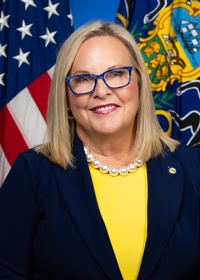
Sen. Judy Ward
Sponsored bills
Maddy summarySB 143 redefines "sexually exploited child" in Pennsylvania law to include minors involved in sex trafficking or prostitution under specific circumstances. It creates a "safe harbor" that prevents prosecution for offenses like prostitution or obstruction if a child is determined to be sexually exploited, instead requiring county agencies to assess the child’s situation and connect them with support services. The bill mandates law enforcement to notify county agencies when a child may be exploited, and courts must pause delinquency proceedings to verify if the child’s actions resulted from exploitation. These changes directly affect minors under 18 involved in sex trafficking or commercial sexual exploitation, shifting responses from criminal penalties to victim support.
Maddy summarySB 59 clarifies Pennsylvania's definition of "community college" to explicitly include programs like career training, college-parallel courses, and credit courses for high school students. It grants the State Board of Education authority to set mandatory standards for community college facilities, curriculum, faculty qualifications, student enrollment, and degree requirements. The bill also requires the State Board to prescribe all types of diplomas and certificates awarded by community colleges and permits them to offer nursing bachelor's degrees to students with associate's in nursing. This directly affects community colleges and their students across Pennsylvania.
Maddy summarySB 104 creates a two-year pilot program to add at least 50% more staff to Pennsylvania's Office of Inspector General (OIG) by January 31, 2025, specifically to investigate fraud, waste, and misconduct claims involving the Department of Human Services and Department of Health. The OIG must hire all new employees within six months of the bill's effective date and submit a detailed report one year later to legislative committees. The report will include investigation statistics (by new/prior staff and time periods), cost savings per employee, incomplete cases, and program expenses. This report will be made publicly available under Pennsylvania's Right-to-Know Law.
Maddy summarySB 108 exempts certain small-scale charitable food operations from Pennsylvania's retail food facility licensing requirements. Specifically, it adds exemptions for: (1) charitable nonprofit-owned facilities operating 12 or fewer days per year, and (2) facilities already covered under another exemption but also operating 12 or fewer days annually. This reduces regulatory burden for very limited, nonprofit food events like seasonal community fundraisers. The law takes effect 60 days after enactment and directly affects small charitable organizations hosting infrequent food sales.
Maddy summarySB 126 requires Pennsylvania universities that host or support antisemitic events to lose state funding for the 2025-2026 school year. If a university received funding before such an event, it must refund the state. The law defines antisemitism broadly to include acts like denying the Holocaust, comparing Israeli policy to Nazis, or spreading conspiracy theories about Jewish people, with the State Board of Education handling violations through 30-day hearings. This applies to all Pennsylvania universities receiving state funding under the Public School Code.
Maddy summarySB 25 amends Pennsylvania's Professional Nursing Law to update regulations for certified registered nurse practitioners (CRNPs). It clarifies definitions, including "Advanced Practice Registered Nurse-Certified Nurse Practitioner" (APRN-CNP), and specifies their scope of practice, including prescribing authority for certain medications. The bill requires CRNPs to collaborate with physicians through written agreements and immediate communication protocols, while transferring oversight of CRNP licensing from the State Board of Medicine to the State Board of Nursing. These changes directly affect nurse practitioners, the State Board of Nursing, and physicians working with CRNPs in Pennsylvania.
Maddy summaryThis bill updates Pennsylvania's Automobile Lemon Law to clarify definitions and strengthen protections for buyers and lessees of defective new vehicles, including motorcycles. It establishes specific time and mileage limits for when manufacturers must repair issues that significantly affect a vehicle's use, value, or safety, and mandates refunds or replacements if these repairs fail after a reasonable number of attempts. The legislation also introduces a presumption that a reasonable number of repair attempts have occurred for motorcycles if manufacturer-sourced parts are used, while excluding off-road vehicles and dual-sport motorcycles from coverage. Additionally, the law sets a maximum deduction of 10 cents per mile or 10% of the purchase price when calculating refunds for the consumer's use of the vehicle before the defect was reported.
Maddy summaryThis bill creates a grant program in Pennsylvania to help owners of older diesel trucks buy newer, cleaner models that meet 2010 or later emission standards. To qualify for funding, applicants must trade in a pre-2010 diesel truck that is currently titled and insured in the state, and the Department of Transportation will distribute grants on a first-come, first-served basis. The financial assistance covers the federal excise tax on new trucks or provides a grant equal to 6% of the sale price for used trucks, with a minimum of $5,000. The program also establishes a dedicated state fund to finance these grants and requires the Department of Transportation to work with the Department of Environmental Protection to ensure traded-in older trucks are not re-registered in Pennsylvania.
Maddy summaryThis Senate resolution officially designates November 14, 2024, as "World Diabetes Day" throughout Pennsylvania. The bill includes a statement encouraging residents to increase awareness of diabetes and the need for related education and services. It does not change any laws, allocate funding, or alter government programs, as its sole function is to recognize an international health observance.