

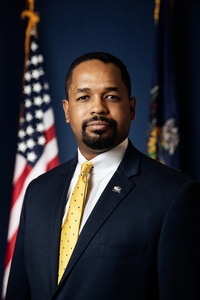
Photo of Sharif Street
D Pennsylvania Senate · District 3

Sen. Sharif Street

Compare
Total votes
5,528
all sessions
Attendance
100%
5 missed
Near the chamber average
With party
97%
of cast votes
Near the chamber average
Bipartisan score
2%
crosses aisle rarely
Near the chamber average
Sponsored
1,845
bills & resolutions
Near the chamber average
Committees
5
assignments
1,845 bills and resolutions

Sponsored bills

Total
1,845
Primary
167
Co-sponsor
1,678
This page
1,845
matching current filters
Co-sponsor SB 13
In committee · Pennsylvania Senate · Co-sponsor
An Act providing for mandatory Statewide employer-paid sick leave for employees and for civil penalties and remedies.

Maddy summaryThis bill requires most Pennsylvania employers to provide paid sick leave to employees, directly affecting workers and their families who need time for medical care, family health needs, or public health emergencies. Employees earn one hour of paid sick leave for every 30 hours worked (max 56 hours/year), with rules on accrual, carryover, and usage. Employers with existing equivalent paid leave policies (covering the same purposes and conditions) are exempt. The bill mandates employers to provide written notice of leave policies and prohibits retaliation against employees using sick leave, with pay calculated at the employee's regular rate or minimum wage.

In committee May 28, 2025 1 co-sponsor
Co-sponsor SB 798
In committee · Pennsylvania Senate · Co-sponsor
An Act amending Title 18 (Crimes and Offenses) of the Pennsylvania Consolidated Statutes, in inchoate crimes, providing for the offense of possession of firearm or other dangerous weapon in municipal building.

Maddy summarySB 798 creates a new misdemeanor offense for knowingly possessing a firearm or dangerous weapon in a municipal building when a local ordinance bans such items. It directly affects individuals entering municipal buildings (like town halls or courthouses) and requires municipalities to post clear notices and provide free, no-cost firearm check facilities within 30 days of adopting a ban. The bill specifies penalties: third-degree misdemeanors for basic possession, first-degree for possession with criminal intent, and summary offenses for certain licensed carriers who fail to check firearms. Exceptions include law enforcement, municipal officials, veterans groups on ceremonial duty, and attorneys with authorized exhibits.

In committee May 28, 2025 1 co-sponsor
Co-sponsor SB 769
In committee · Pennsylvania Senate · Co-sponsor
An Act amending Title 18 (Crimes and Offenses) of the Pennsylvania Consolidated Statutes, in firearms and other dangerous articles, providing for safe storage of firearm when not in use; and imposing penalties.

Maddy summarySB 769 requires firearm owners in Pennsylvania to store guns safely when not in use, directly affecting all gun owners who store firearms outside of immediate personal carry. The bill mandates storage using a lockable device, a built-in firearm lock, or a securely locked container. Violations are minor offenses for first-time violations, misdemeanors for repeat offenses, and felonies if the unsecured firearm is used in a crime causing injury or death. The bill is pending in the Judiciary Committee and has not yet been voted on.

In committee May 22, 2025 1 co-sponsor
Co-sponsor SB 768
In committee · Pennsylvania Senate · Co-sponsor
An Act amending Title 18 (Crimes and Offenses) of the Pennsylvania Consolidated Statutes, in firearms and other dangerous articles, providing for safe storage of firearm when residing with a person not to possess a firearm; and imposing penalties.

Maddy summaryPennsylvania's SB 768 requires firearm owners living with someone who cannot legally possess a firearm (such as a convicted felon or someone under a restraining order) to store their guns securely. This means using a lockable device, built-in firearm lock, or locked container - except when the gun is carried on the person or within immediate reach. Violating this rule is a minor offense for a first violation, a misdemeanor for repeat offenses, and a felony if the improperly stored gun is used in a crime causing injury or death. The law directly affects households with gun owners and prohibited individuals, aiming to prevent unauthorized access. It takes effect 60 days after passage.

In committee May 22, 2025 1 co-sponsor
Co-sponsor SB 771
In committee · Pennsylvania Senate · Co-sponsor
An Act amending Title 18 (Crimes and Offenses) of the Pennsylvania Consolidated Statutes, in general principles of justification, further providing for use of force in self-protection.

Maddy summarySB 771 amends Pennsylvania's self-defense laws to clarify when deadly force is legally justified. It removes the duty to retreat from one's home or workplace before using force (unless the person was the initial aggressor), creating a "stand your ground" provision in those locations. The bill specifies that deadly force is only justified to prevent death, serious injury, kidnapping, or sexual assault, and requires the person using force to believe it was immediately necessary. It also prohibits using deadly force against a police officer acting in their official duties, and exempts the "stand your ground" rule if the attacker has a weapon. This directly affects Pennsylvanians using force in self-defense, particularly in home or workplace settings.

In committee May 22, 2025 1 co-sponsor
Co-sponsor SB 770
In committee · Pennsylvania Senate · Co-sponsor
An Act amending Title 18 (Crimes and Offenses) of the Pennsylvania Consolidated Statutes, in minors, providing for the offense of access to firearms by minors; and imposing penalties.

Maddy summaryThis Pennsylvania bill (SB 770) requires firearm owners to store guns securely on their premises if minors might access them without permission. It makes insecure storage a violation, with penalties ranging from a minor violation (first offense) to a felony (if the firearm is used in a crime causing death or injury). Key defenses include proving the gun was locked securely, the minor accessed it via unlawful entry, or the minor was under adult supervision during lawful activities like hunting. Retailers must post clear notices about these storage rules and penalties.

In committee May 22, 2025 1 co-sponsor
Co-sponsor SB 180
In committee · Pennsylvania Senate · Co-sponsor
An Act amending the act of March 10, 1949 (P.L.30, No.14), known as the Public School Code of 1949, in pupils and attendance, further providing for Nonprofit School Food Program, repealing provisions relating to school lunch and breakfast reimbursement and establishing the Universal School Meal Program and the Universal School Meal Fund; and making an interfund transfer and an appropriation.

Maddy summarySB 180 replaces Pennsylvania's existing school lunch and breakfast reimbursement system with a Universal School Meal Program, requiring all public schools to provide meals to any student who requests one, regardless of their ability to pay or outstanding meal debt. The bill prohibits schools from stigmatizing students (e.g., via wristbands), denying activities or diplomas for unpaid meals, using collections agencies, or imposing penalties like interest or suspensions for meal debt. It also mandates schools to offer assistance with meal program applications to families in debt and directs communications about unpaid meals to parents/guardians instead of students. The program is funded through a new Universal School Meal Fund and an interfund transfer, eliminating the previous reimbursement structure.

In committee May 22, 2025 1 co-sponsor
Co-sponsor SB 754
In committee · Pennsylvania Senate · Co-sponsor
An Act providing for hospital closure procedure requirements, for notice of proposed general hospital closure or significant impact closure, for health equity impact assessments, for closure plans and for enforcement actions.

Maddy summarySB 754 requires hospitals seeking to close major units (like emergency or maternity departments) or the entire facility to obtain approval from Pennsylvania's Department of Health or local health authorities. Before closing, hospitals must submit a detailed closure plan, hold two public hearings in the affected community, and provide a 60-day public comment period. The bill mandates a health equity impact assessment showing how the closure affects access for low-income, minority, senior, and Medicare patients, including nearby hospital options and transit times. This directly affects hospital authorities (parent companies or governing bodies) and communities relying on hospital services, ensuring transparency and community input before closures.

In committee May 22, 2025 1 co-sponsor
Co-sponsor SB 759
In committee · Pennsylvania Senate · Co-sponsor
An Act amending the act of March 10, 1949 (P.L.30, No.14), known as the Public School Code of 1949, in grounds and buildings, providing for certified point-of-use filter required; establishing the Safe Schools Drinking Water Fund; and imposing duties on the Department of Environmental Protection.

Maddy summarySB 759 requires all Pennsylvania public school buildings to install certified point-of-use filters on drinking water outlets by January 1, 2027, replacing older fountains without lead-reducing filters at a rate of at least one per 100 students/staff. It creates the Safe Schools Drinking Water Fund, providing up to $10 million annually for three years to help schools cover installation and replacement costs, with priority for pre-2014 buildings and those serving prekindergarten students. Schools must maintain filter schedules, post lead-risk information online, and report progress to state agencies, while new outlets must meet strict lead-leaching standards. The bill directly affects all public K-12 school entities in Pennsylvania, aiming to reduce lead exposure in drinking water.

In committee May 22, 2025 1 co-sponsor
Co-sponsor SB 322
In committee · Pennsylvania Senate · Co-sponsor
An Act providing for approval from the Department of Health and the Office of Attorney General before certain transactions involving health care entities within this Commonwealth.

Maddy summarySB 322 requires Pennsylvania's Department of Health and Attorney General to approve certain healthcare transactions exceeding $5 million that may harm public interest. It applies to sales, ownership changes, or large capital distributions involving hospitals, clinics, or healthcare providers. The law defines "against public interest" as actions reducing competition, raising costs, limiting access (especially in rural or low-income communities), or lowering care quality. Approval must be secured before such transactions proceed.

In committee May 22, 2025 1 co-sponsor
Showing 221 to 230 of 1,845 bills
Previous 1 … 22 23 24 … 185 Next