

Maddy summaryThis Senate Resolution designates May 8, 2026, as "Provider Appreciation Day" in Pennsylvania to honor child care providers for their contributions to families and communities. The measure does not change laws or create new programs; it simply sets aside a specific date to recognize the work of those who care for young children. By officially naming the day, the resolution aims to highlight the value of the child care workforce and the essential role these providers play in supporting working families and community growth.
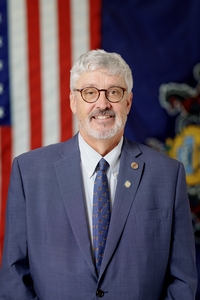
Sen. Tim Kearney
Sponsored bills
Maddy summarySB 1314 amends Pennsylvania's personal income tax law to increase tax rates for taxable years beginning after December 31, 2025. The bill raises the tax rate for residents from 3.7% to 9.7% and for nonresidents earning income from Pennsylvania sources from 3.7% to 9.7%. It also clarifies that income earned by certain trusts is taxable to the grantor rather than the trust itself. These changes directly affect Pennsylvania residents, nonresidents with Pennsylvania income, and individuals who establish or manage trusts.
Maddy summaryThis bill amends Pennsylvania's Tax Reform Code to expand a tax credit for employers who contribute money to employee child care. It directly affects businesses that provide child care funds to their staff by changing how much they can claim as a tax deduction. Under the new rules, employers will receive a 30% tax credit on contributions up to $500 per employee for the 2026 tax year, increasing to a 100% credit on contributions up to $10,000 per employee for years starting in 2027. The total amount of credits available statewide is capped at $10 million per fiscal year, and if demand exceeds this limit, the credits will be reduced proportionally among all eligible applicants.
Maddy summaryThis bill creates the Hospital Security Grant Fund to provide financial assistance to nonprofit hospitals for improving safety and security measures. The fund will be administered by the Pennsylvania Commission on Crime and Delinquency and is initially funded with a $10 million transfer from the General Treasury, with potential for additional appropriations in future years. Eligible projects include purchasing security equipment like surveillance systems and metal detectors, conducting vulnerability assessments, providing staff training, and upgrading physical structures to protect patients, employees, and visitors. Grants will be awarded on a rolling basis after applications are reviewed by the commission in consultation with state homeland security and police officials.
Maddy summarySB 1053 amends Pennsylvania's Workers' Compensation Act to expand the definition of "employe" to include volunteer emergency personnel. It specifically adds coverage for members of volunteer fire departments, ambulance corps, and rescue squads who perform operational support duties (such as fundraising, equipment maintenance, or administrative tasks) on a regular, approved basis - *not* just emergency response. This change ensures these volunteers qualify for workers' compensation if injured during approved activities, while explicitly excluding "social members" who do not perform operational duties. The bill takes effect 60 days after enactment.
Maddy summaryThis bill prevents Pennsylvania local governments from setting rules that limit how many family members can live in a single home. It achieves this by amending state statutes to explicitly ban occupancy restrictions based on familial relationships, which include connections through blood, marriage, adoption, or foster care. While the law removes these specific family-based limits, it allows municipalities to still enforce occupancy rules if they are necessary for health, safety, fire codes, or wastewater standards. The changes become effective 60 days after the bill is passed.
Maddy summaryThis Senate Resolution honors the life and legacy of Reverend Jesse Jackson, a prominent civil rights leader and activist who passed away in February 2026. The document outlines his significant contributions to social justice, including his work with the Southern Christian Leadership Conference, Operation Breadbasket, and Operation PUSH, as well as his role in organizing the Black Political Convention and his two presidential campaigns. The resolution serves as a formal acknowledgment of his impact on movements for racial equality, economic justice, and peace both domestically and internationally.
Maddy summaryThis bill amends Pennsylvania's Unemployment Compensation Law to clarify how the state defines "employment." Specifically, it adds a provision stating that temporary, seasonal labor performed by aliens admitted under specific federal immigration categories does not count as employment for unemployment compensation purposes. The change directly affects the Department of Labor and Industry by updating the rules used to determine eligibility for benefits. The legislation applies to services performed on or after its effective date, which is set to occur 60 days after enactment.
Maddy summaryThis bill requires electric distribution companies in Pennsylvania to submit evidence showing how they plan to use advanced transmission technologies when applying to build new power lines. Under the new rules, proposed projects will only be approved if the commission determines that feasible and cost-effective technologies are used to achieve at least two specific goals, such as avoiding new construction, increasing system capacity, or reducing environmental impacts. The legislation also allows companies to recover any extra costs associated with these upgrades through approved tariffs and defines specific technologies like dynamic line rating and high-performance conductors.
Maddy summaryThis Pennsylvania bill updates the state's Computer Data Center Equipment Incentive Program by adding new eligibility requirements that will take effect on January 1, 2030. To qualify for tax incentives, data centers must purchase 100% of their electricity from renewable sources and demonstrate investments in environmental management and energy efficiency by meeting specific green building standards. The legislation also allows owners to separate facilities into multiple certified units and establishes procedures for notifying the state of compliance and revoking certifications if requirements are not met.