

Maddy summarySB 1079 would establish a regulatory framework for "skill video gaming" (competitive games where skill determines outcomes, distinct from gambling). It requires businesses offering such games to obtain licenses from the Department of Revenue, pay associated fees, and comply with zoning rules restricting where they can operate. The bill also imposes civil penalties for violations and criminal penalties for willful non-compliance. This directly affects gaming businesses seeking to operate legally within the state.
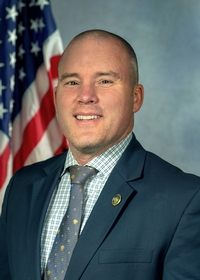
Sen. Marty Flynn
Sponsored bills
Maddy summaryThe context provided does not include specific details about SB 1080's provisions, amendments, or intended effects. While the bill title references amendments to the Fiscal Code regarding the "Budget Stabilization Reserve Fund," no concrete policy changes, affected parties, or mechanisms are described in the given information. Without additional details on what the amendment alters or how it would operate, a substantive summary cannot be created. This appears to be a procedural fiscal code amendment, but the necessary specifics for a factual summary are missing from the context.
Maddy summarySB 1077 creates a legal category for "roadable aircraft" (vehicles that operate as both cars and planes) within Pennsylvania's vehicle laws. It establishes specific registration plates for these vehicles and defines them under vehicle statutes, including provisions for their inspection requirements. The bill directly affects owners and manufacturers of roadable aircraft by setting their regulatory framework under Pennsylvania's transportation laws. It does not change rules for conventional vehicles or aircraft but adds new provisions specifically for this emerging vehicle type.
Maddy summarySB 1049 updates Pennsylvania's vehicle title transfer rules for salvage and scrap processing. It clarifies procedures when vehicles are sold to salvage dealers or scrap metal processors, specifically addressing how ownership transfers occur. The bill also adjusts how security interests (like liens) are handled during these transfers, ensuring clearer processes for dealers, processors, and vehicle owners. This directly affects businesses in the salvage and scrap industries and individuals selling damaged or end-of-life vehicles.
Maddy summarySB 955 creates a new mental health registration plate for Pennsylvania vehicles, featuring the Liberty Bell with a teal and purple ribbon and the phrase "Mental Health Matters." Vehicle owners (motorcycles, passenger cars, trucks under 14,000 pounds, or motor homes) can apply for this plate by paying a $42 fee, with $15 of that fee directed to a new Mental Health Restricted Account. This account, established under the bill, is specifically funded to support the 988 Suicide and Crisis Lifeline or its successor through the Department of Human Services. The bill directly affects vehicle owners seeking to display the plate and ensures dedicated funding for mental health crisis services.
Maddy summarySB 1035 (Ryan's Law) would amend Pennsylvania's Medical Marijuana Act to allow terminally ill patients to use medical marijuana in healthcare facilities under specific conditions. The bill requires facilities to permit use (without smoking/vaping), document it in patient records, and store marijuana in locked containers for safety, while exempting emergency departments. It directly affects terminally ill patients (with a one-year life expectancy prognosis) and healthcare facilities licensed under the Health Care Facilities Act. Key provisions include mandatory facility guidelines for use and allowing suspension of compliance if federal agencies prohibit medical marijuana programs. The bill does not require facilities to recommend marijuana or include it in discharge plans.
Maddy summarySB 1008 amends Pennsylvania's vehicle code (Title 75) to update definitions, modify driver's license examination requirements, and establish regulations for low-speed electric scooters. The bill directly affects drivers (through changes to license exams), pedestrians, and electric scooter operators (by creating new operational rules). Key provisions include revising terminology in vehicle law, altering the process for issuing driver's licenses, and introducing a dedicated category for low-speed electric scooters under special vehicle regulations. The bill was referred to the Transportation committee on September 30, 2025, for further review.
Maddy summarySB 996 amends Pennsylvania's Capital Facilities Debt Enabling Act to change bidding rules for redevelopment projects. It requires at least three written bids for all construction work under $25,000, while projects over $25,000 must pay workers the state's prevailing minimum wage and comply with the Steel Products Procurement Act. The bill also clarifies that all redevelopment projects - regardless of contract structure - are treated as "public works" under Pennsylvania's prevailing wage law. This applies to local governments and developers managing capital projects funded through redevelopment assistance programs. The law takes effect 60 days after enactment.
Maddy summarySB 1006 is a constitutional amendment proposing to expand property tax exemptions for Pennsylvania veterans with service-connected disabilities. It would extend partial tax relief proportional to disability ratings (50%-100%) and full exemption for veterans rated 100% disabled or surviving spouses of service members who died in action, were POWs, or were missing in action. The amendment also clarifies that surviving spouses of eligible veterans retain exemption after the veteran's death. As a constitutional amendment, it requires voter approval after legislative passage. (Bill: SB 1006, 2025 Session)
Maddy summarySB 461 requires health insurance policies in Pennsylvania to cover specific diagnostic tests and treatments for Lyme disease and related tick-borne illnesses. It directly affects all Pennsylvanians with health insurance, particularly those in the state’s high-risk areas (all 67 counties, per the bill’s findings). The key provision mandates insurers cover clinically appropriate diagnostics and antibiotics, including longer-term treatments that some patients require. The bill aims to improve access to care by eliminating coverage barriers, as Pennsylvania has the highest Lyme disease incidence in the U.S. (over 100,000 cases reported in 2018 alone). This is intended to reduce chronic cases and overall disease burden, aligning with the state’s legislative purpose to promote prevention and treatment access.