

Maddy summaryThis bill requires oil and gas well operators in Pennsylvania to obtain a specific drilling permit before drilling wells that target the Utica shale formation or reach depths of 3,800 feet or more. The permit application process will follow existing state regulations for resource development, adding a new layer of administrative review for these specific deep-drilling projects. Directly affecting energy companies and land operators, the law mandates compliance with these permitting rules before any drilling begins in the designated geological horizons. The legislation takes effect 60 days after it is signed into law.
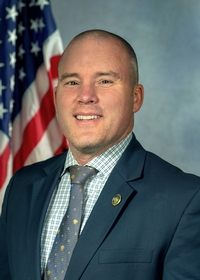
Sen. Marty Flynn
Sponsored bills
Maddy summaryThis bill amends Pennsylvania's tax laws to increase the maximum annual historic preservation tax credit available to a single property owner from $500,000 to $1,500,000. The change directly affects qualified taxpayers who restore or rehabilitate historic buildings, allowing them to claim a larger tax credit against their state taxes. The Department of Community and Economic Development is responsible for reviewing and approving these credit certificates under the new limit. The legislation takes effect 60 days after it is signed into law.
Maddy summaryThis Senate Resolution officially designates June 2026 as LGBTQ+ Pride Month in Pennsylvania to honor the community's contributions and commemorate the 57th anniversary of the Stonewall Inn demonstrations. The measure serves as a symbolic recognition of historical events, such as early civil rights protests in Philadelphia, and acknowledges the state's long-standing support for LGBTQ+ equality. By passing this resolution, the Pennsylvania Senate aims to foster a welcoming atmosphere and celebrate diversity without altering any laws or government policies.
Maddy summaryThis bill creates a new Commission for Career and Technical Education Excellence to oversee programs and report on industry trends, while also establishing a grant program to fund equipment for youth camps and pre-apprenticeship initiatives in community colleges. The new commission will be made up of state officials and representatives from various industry and education groups, who will meet to develop guidelines and submit annual reports to the Governor and legislature. Additionally, the legislation directs community colleges to partner with state agencies to offer annual construction and building trades camps for seventh and eighth-grade students, supported by specific grants for purchasing necessary equipment.
Maddy summaryThis bill amends Pennsylvania's Insurance Company Law to establish a direct billing system for nonnetwork emergency medical services (EMS) agencies. It requires insurers to directly reimburse these agencies for dispatched 911 services at a rate of 350% of the Centers for Medicare and Medicaid Services published rate, rather than billing patients directly. The legislation mandates that insurers pay these agencies within 45 days and prohibits them from forcing EMS agencies to sign contracts to receive this reimbursement. Additionally, the bill creates a public registry to track which EMS agencies are eligible for direct payment and restricts how these agencies can solicit donations related to billing practices.
Maddy summaryThis bill establishes a regulatory framework for large commercial data centers in Pennsylvania, specifically targeting facilities with a peak power demand of 25 megawatts or more. It requires these data centers to procure a specific amount of clean, reliable energy from new sources like wind, solar with storage, and nuclear power, while also mandating backup generation capabilities and strict disclosure rules. To support the program, the legislation creates two new funding accounts: one to enhance assistance for low-income households facing high energy costs and another to promote state energy independence. The Pennsylvania Public Utility Commission will oversee contract reviews and enforcement, with penalties in place for non-compliance.
Maddy summaryPennsylvania Senate Bill 1320 creates a new tax credit to help residents offset costs for youth sports programs. The bill defines eligible expenses as fees, equipment, and travel for non-professional sports activities attended by students from kindergarten through age 21. Parents, guardians, or grandparents can claim a credit against their state income tax if their household income is at or below 300% of the federal poverty level. The maximum credit is $1,500 for individual filers and $3,000 for joint filers, and the credit cannot be refunded or carried over to other tax years.
Maddy summaryThis Pennsylvania bill creates a new tax credit for residents who spend money on physical health improvements, such as gym memberships and in-person exercise classes. To qualify, taxpayers must have a household income at or below 300% of the federal poverty limit, with a maximum credit of $500 for individuals or $1,000 for married couples filing jointly. The credit is non-refundable, meaning it can only reduce tax owed to zero and cannot result in a refund, and it specifically excludes costs for books, virtual training, or personal trainers.
Maddy summarySB 1014 amends Pennsylvania's Public School Code of 1949 to require public schools to adopt a "bell-to-bell phone-free policy" during the entire school day. This policy directly affects all public K-12 schools and students by prohibiting the use of personal electronic devices during instructional time. The key provision mandates that schools establish and enforce this policy, though the bill does not specify exemptions or implementation details. The legislation focuses on reducing distractions in classrooms by limiting student phone access from the start to the end of the school day. It is currently pending in the Education committee.
Maddy summaryThis Senate Resolution designates May 8, 2026, as "Provider Appreciation Day" in Pennsylvania to honor child care providers for their contributions to families and communities. The measure does not change laws or create new programs; it simply sets aside a specific date to recognize the work of those who care for young children. By officially naming the day, the resolution aims to highlight the value of the child care workforce and the essential role these providers play in supporting working families and community growth.