

Maddy summarySB 266 strengthens Pennsylvania's gaming regulations by requiring licensed casinos and online gaming operators to enforce voluntary self-exclusion programs. It prohibits direct marketing (including email, texts, and social media) to self-excluded individuals, mandates real-time updates to exclusion lists every 48 hours, and bans access to rewards, credit, winnings, and promotional benefits for excluded persons. Violations could result in fines up to $1.2 million for gaming entities, with misdemeanor or felony penalties for repeated offenses. The bill directly affects gaming businesses and supports individuals seeking to avoid gambling activities through formal self-exclusion.
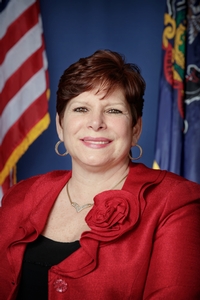
Sen. Tina Tartaglione
Sponsored bills
Maddy summarySB 269 amends Pennsylvania's 1965 Newborn Child Testing Act to add Duchenne muscular dystrophy to the list of conditions screened for in newborns. The bill requires healthcare providers to administer screening tests for this condition as part of the existing newborn screening program. This directly affects newborns in Pennsylvania and the healthcare facilities that conduct these screenings, aiming to identify the condition early to prevent disability or death. The change takes effect 60 days after enactment.
Maddy summaryThis bill requires most health insurance plans in Pennsylvania to cover infertility treatments without out-of-pocket costs (like deductibles or copays). It applies to individuals, spouses, and dependents seeking fertility care, including treatments like IVF, egg/sperm freezing, embryo transfers, and surrogacy costs. The law prohibits excluding coverage for infertility based on preexisting conditions, prior treatments, or arbitrary limits on the number of attempts. It specifically mandates coverage for 22 defined infertility services, including medical procedures and fertility preservation for those undergoing cancer treatment.
Maddy summarySB 259 requires all public and nonpublic schools in Pennsylvania that use fossil fuel-based heating (like gas or oil) or have attached garages to install and maintain safety-approved carbon monoxide alarms in every classroom on the same level as those heat sources. Schools must meet specific safety standards for the alarms, such as being certified to ANSI/UL standards or clearly distinguishing CO alerts from smoke alarms. The bill mandates installation within 18 months of the law’s effective date and requires schools to cover maintenance, battery replacements, or repairs. Failure to comply results in a $50 fine for willful non-compliance.
Maddy summarySB 268 amends Pennsylvania's Insurance Company Law to establish rules for calculating health insurance cost-sharing. It requires insurers and pharmacy benefits managers (PBMs) to include all out-of-pocket payments made by insured individuals (or others on their behalf) when determining cost-sharing amounts like deductibles or copays. The law applies to health insurance policies issued, renewed, or entered into after its effective date, but excludes dental, vision, workers' compensation, and similar coverage types. This change directly affects health insurers, PBMs, and policyholders by standardizing how cost-sharing is calculated under health plans.
Maddy summaryPennsylvania's SB 262 creates a legal process for courts to temporarily remove firearms from individuals who pose a significant risk of harming themselves or others with a firearm. Family members, household members, or law enforcement can petition a court if they reasonably believe a person has firearms and is at risk of violence, requiring specific evidence like recent threats or acts. The court must hold a hearing within 14 days, and if it finds the risk is "more likely than not," it issues a one-year order requiring the person to surrender all firearms. The bill prohibits fees or bonds for petitioners and mandates law enforcement to enforce firearm surrender, with clear procedures for service, notice, and reporting.
Maddy summaryThis resolution designates February 2025 as "Career and Technical Education Month" in Pennsylvania. It formally recognizes the importance of career and technical education programs for students and the workforce, without creating new laws or altering existing policies. The resolution aims to raise public awareness about these programs, which serve over 68,000 students statewide and connect them to in-demand careers.
Maddy summarySB 210 creates a new offense for interfering with public transit operators (like bus drivers or conductors) while they are performing their duties. It prohibits actions that cause serious injury or death to operators (felony first degree), lesser injury (felony third degree), or create fear of harm. The law applies to any public transit vehicle, including buses, trains, and streetcars, and covers both direct harm to operators and harm to passengers caused by the interference. Penalties range from serious felony charges for severe cases to lesser felonies for less severe violations.
Maddy summaryThis resolution formally recognizes February 2025 as "Black History Month" in Pennsylvania. It does not create new laws or affect specific groups directly, but encourages statewide observance of African American contributions to the Commonwealth. The Senate adopted the resolution on February 5, 2025, aligning with the national observance established through historical efforts like Dr. Carter Godwin Woodson's founding of Negro History Week. The resolution acknowledges the annual theme "African Americans and Labor" as designated by the Association for the Study of African American Life and History (ASALH).
Maddy summaryThis resolution (SR 20) is a ceremonial statement honoring the 50th anniversary of the Philip Jaisohn Memorial Foundation on January 15, 2025. It recognizes the foundation’s 50-year work serving Philadelphia’s Korean immigrant community and expanding to support broader Asian American and Pacific Islander (AAPI) communities through health services, senior employment training, advocacy, and cultural programs. The resolution also commemorates Dr. Philip Jaisohn, a pioneering Korean-American who became the first Korean immigrant to gain U.S. citizenship in 1890 and championed Korean independence efforts in the U.S. This is a symbolic gesture with no policy changes or direct impact on legislation.