

Maddy summarySB 542 amends Pennsylvania's vehicle laws to change how speeding offenses are handled. It specifies that drivers using speed timing devices (like radar) won't get license points for speeding less than 10 mph over the limit, except in school zones or work zones. The bill also clarifies rules for police using speed enforcement devices, requiring training for local officers and specific signage, while creating a 15-day license suspension for speeding 11+ mph over limits in active work zones. These changes directly affect drivers receiving speeding tickets and law enforcement agencies using speed timing technology.
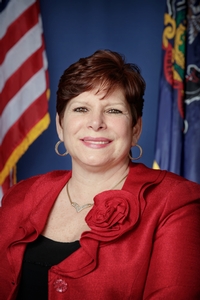
Sen. Tina Tartaglione
Sponsored bills
Maddy summarySB 558 would require public employers (like state and local government offices) to observe Election Day as a legal holiday, meaning they must close on election days. School districts and counties could also choose to observe Election Day as a holiday. Private employers must provide employees with at least two hours of unpaid leave for voting on Election Day, and face a $1,000 civil penalty for violating this requirement. The Department of State would enforce these rules, and the law would take effect 60 days after enactment.
Maddy summarySB 555 amends Pennsylvania's Election Code to update the sworn statements (oaths) required for election workers. It revises the exact wording for judges of election, election inspectors, election clerks, and machine inspectors, adding specific language about ensuring registered voters can cast ballots. The changes clarify clerks' duties to "carefully and truly record votes" and direct eligibility questions to judges of election. This is a technical update to existing oath requirements, not a substantive policy change affecting election procedures or voter rights. The bill focuses solely on standardizing the language these officials must swear to uphold election integrity.
Maddy summarySB 537 would require Pennsylvania's Medicaid program to reimburse providers for custom orthotics (like braces) and prosthetics (like artificial limbs) at rates no lower than the current Medicare fee schedule. This change directly affects Medicaid recipients needing these medical devices and the healthcare providers who supply them. The bill mandates that the state update its reimbursement rates quarterly to match Medicare's current rates for all applicable codes. This policy aligns Pennsylvania's Medicaid payments more closely with federal Medicare standards for these specific medical equipment items.
Maddy summarySB 347 prohibits clinics or establishments from knowingly providing space for individuals to use controlled substances illegally under Pennsylvania law. It creates criminal penalties, including up to 20 years in prison or $500,000 in fines (up to $2 million for non-individuals), and civil penalties of up to $250,000 for violations. The law grants district attorneys and the Attorney General authority to investigate and prosecute these violations, with strict limits on challenging the Attorney General's role. It specifically exempts medical marijuana use under Pennsylvania’s existing Medical Marijuana Act (2016) and lawful prescription practices. The bill amends Pennsylvania’s Controlled Substance Act to clarify these prohibitions and penalties.
Maddy summarySB 538 requires the Joint State Government Commission to study driver income, traffic congestion, safety, and service access for ride-hailing companies (like Uber or Lyft) in Pennsylvania. The study will collect detailed data from companies on ride specifics, driver availability, and earnings, with a report due within 12 months. Based on this report, the Public Utility Commission may later establish minimum payments for drivers and minimum fare rates for rides, excluding taxes and fees. This bill directly affects ride-hailing companies, drivers, and passengers by potentially setting new compensation and pricing standards.
Maddy summaryThis symbolic resolution recognizes April 2025 as "World HIE Awareness Month" in Pennsylvania to promote public education about hypoxic ischemic encephalopathy (HIE), a condition affecting newborns due to oxygen deprivation during birth. It highlights the impact of HIE on infants and families, citing statistics on survival rates and potential developmental challenges. The resolution does not create new laws, allocate funding, or change existing policies - it serves solely as an official state acknowledgment to support awareness efforts led by organizations like Hope for HIE.
Maddy summarySB 539 requires drivers for ride-sharing services (like Uber or Lyft) operating in Pennsylvania to be state residents. It updates background checks to ensure drivers have held a valid license for at least one year, are at least 21, and have no more than three moving violations in the past three years. The bill also prohibits companies from hiring drivers whose limousine or taxi licenses were suspended in the last five years. This directly affects all transportation network company drivers providing rides within Pennsylvania, making residency a mandatory qualification under updated state statutes. The law takes effect 60 days after enactment.
Maddy summaryThis bill expands death benefits for first responders whose deaths are linked to on-duty traumatic stress. It creates a legal presumption that firefighters, police officers, EMTs, and National Guard members who die from diagnosed or undiagnosed mental health conditions (like PTSD) related to traumatic incidents (e.g., crime scenes, mass casualties, or exposure to serious injury) were killed in the line of duty. The law updates definitions to include "traumatic event" and "personal injury sustained in the line of duty" for mental health conditions, applying retroactively to all eligible deaths since January 2019. It takes effect in 60 days.
Maddy summarySR 67 is a symbolic resolution designating April 2025 as "National Fair Housing Month" in Pennsylvania. It does not create new laws or directly affect individuals or policies, but formally recognizes the importance of fair housing principles as outlined in the federal Fair Housing Act (1968) and Pennsylvania's additional protections. The resolution highlights ongoing efforts to address housing discrimination and racial inequities, emphasizing that access to fair housing supports broader community well-being. This is a ceremonial measure with no binding effect on state or local actions.