

Maddy summarySB 197 amends Pennsylvania's Physical Therapy Practice Act to create a "certificate of authorization" allowing licensed physical therapists to practice without a doctor's referral. To qualify, therapists must pass an exam on evaluative procedures, have two years of continuous practice, and maintain $1 million in professional liability insurance. This applies only to therapists meeting these specific requirements, not all physical therapists. The bill also updates continuing education rules, requiring 30 hours every two years (excluding office management courses) for license renewal.
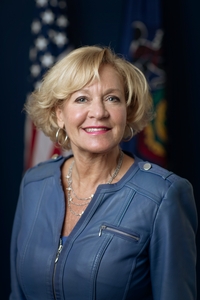
Sen. Lisa Boscola
Sponsored bills
Maddy summaryThis bill bans health insurers in Pennsylvania from setting annual or lifetime dollar limits on essential medical services (like hospital care, surgery, and emergency treatment), affecting both in-network and out-of-network providers. It applies to individual and group health insurance policies, directly protecting enrollees from coverage caps on core benefits. Insurers must comply with these limits, with enforcement including fines up to $5,000 per violation. The law takes effect for policies filed with the Insurance Department after its effective date.
Maddy summarySB 51, the Health Insurance Core Benefits Coverage Act, requires Pennsylvania health insurance companies to cover specific core health benefits in both individual and group plans. It mandates coverage for 10 essential categories, including emergency services, mental health care, prescription drugs, hospitalization, preventive care, and pediatric services (like dental/vision for children). The law ensures plans are at least as comprehensive as those offered in 2018, with the Insurance Department allowed to adjust requirements through regulations. This directly affects insurers and policyholders by standardizing minimum coverage across the state.
Maddy summarySB 50, the Health Insurance Access Protection Act, prohibits Pennsylvania insurers from denying coverage, charging higher premiums, or excluding benefits based on pre-existing conditions or health factors for individuals and small groups (2-50 people). It limits premium variations to age (max 3:1 ratio), location, family size, and tobacco use (max 1.5:1 ratio), requiring insurers to pool all enrollees in the individual and small group markets. The law also mandates that insurers cannot use health status to set rates or deny coverage, directly protecting people with chronic illnesses or past medical issues.
Maddy summarySB 147 creates a program offering financial incentives to Pennsylvania truck owners and fleets purchasing near-zero emission trucks (diesel models from 2010 or later meeting EPA standards). It provides grants covering either the federal excise tax on new trucks or 6% of the used truck price (up to $5,000) to offset costs, but requires trading in a pre-2010 diesel truck that is titled and registered in Pennsylvania. The program, managed by the Department of Transportation, operates on a first-come, first-served basis with funds from a dedicated state incentive fund. Truck owners must register the new vehicle in Pennsylvania for at least two years to qualify for the grant.
Maddy summarySB 25 amends Pennsylvania's Professional Nursing Law to update regulations for certified registered nurse practitioners (CRNPs). It clarifies definitions, including "Advanced Practice Registered Nurse-Certified Nurse Practitioner" (APRN-CNP), and specifies their scope of practice, including prescribing authority for certain medications. The bill requires CRNPs to collaborate with physicians through written agreements and immediate communication protocols, while transferring oversight of CRNP licensing from the State Board of Medicine to the State Board of Nursing. These changes directly affect nurse practitioners, the State Board of Nursing, and physicians working with CRNPs in Pennsylvania.
Maddy summaryThis bill creates a property tax freeze program for Pennsylvania seniors. It allows residents aged 65+ who have lived in Pennsylvania for at least five years to freeze their property taxes at the "base year" amount if they meet income requirements ($65,000 annual household income or taxes exceeding 10% of income). The freeze applies only to primary residences and must be renewed annually with proof of continued eligibility. Local governments implement the program, and the state department tracks participation and savings through annual reports.
Maddy summaryThis bill proposes a constitutional amendment to exempt certain veterans and their surviving spouses from Pennsylvania property taxes on their primary residences. It applies to veterans who served honorably and have specific service-connected disabilities (such as blindness, paralysis, amputation, or a 100% VA-rated disability), as well as surviving spouses of veterans killed in action or with service-connected deaths. The exemption requires the State Veterans' Commission to verify the applicant’s financial need and does not consider disability compensation when determining eligibility. The amendment must be approved by the General Assembly and voters before taking effect.
Maddy summaryThis bill creates a grant program in Pennsylvania to help owners of older diesel trucks buy newer, cleaner models that meet 2010 or later emission standards. To qualify for funding, applicants must trade in a pre-2010 diesel truck that is currently titled and insured in the state, and the Department of Transportation will distribute grants on a first-come, first-served basis. The financial assistance covers the federal excise tax on new trucks or provides a grant equal to 6% of the sale price for used trucks, with a minimum of $5,000. The program also establishes a dedicated state fund to finance these grants and requires the Department of Transportation to work with the Department of Environmental Protection to ensure traded-in older trucks are not re-registered in Pennsylvania.
Maddy summaryThis law updates Pennsylvania's Public School Code to broaden the definition of "school district" to include various types of schools, such as charter schools and cyber charters. It specifically changes how schools handle tick-borne disease testing results by requiring them to provide original reports to parents while prohibiting the creation of copies or inclusion of these results in student medical records. Additionally, the bill allows schools to record disease types in a separate, anonymous log to track health trends on school property without linking the data to individual students.