

Maddy summaryHB 368 clarifies Pennsylvania's vehicle registration law to allow owners of antique, classic, vintage, collectible, or historic military vehicle plates to operate these vehicles for transporting people or property, or towing another vehicle, to permitted events (like car shows or club gatherings) without violating non-commercial use rules. This directly affects Pennsylvania residents who hold these special vehicle registration plates. The bill explicitly states that such transportation or towing is permitted only if the owner receives no payment or compensation for the service. The amendment takes immediate effect upon passage and does not change existing requirements for non-commercial use of these vehicles.
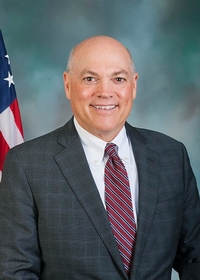
Rep. Steve Mentzer
Sponsored bills
Maddy summaryHB 319 modifies Pennsylvania's hunting license rules to simplify access for active-duty military personnel. It removes two previous requirements: military members no longer need to be assigned to a facility outside Pennsylvania or on temporary leave in the state to qualify for resident hunting licenses. The bill now allows any Pennsylvania resident serving full-time in the U.S. Armed Forces to obtain a resident hunting license by meeting only two criteria: residency and active duty status. This change directly affects active-duty military members stationed within Pennsylvania, streamlining their license process without altering fees or adding new restrictions.
Maddy summaryHB 299 designates March 4 as Charter Day, June 14 as Flag Day, and September 17 as Constitution Day for annual observance in Pennsylvania. The bill explains these dates commemorate historical events: William Penn's 1681 charter, the 1777 adoption of the U.S. flag, and the 1787 signing of the U.S. Constitution. Crucially, the bill clarifies that these designations do not require employers to treat the days as official holidays or provide paid leave. This is a commemorative measure with no new legal obligations for businesses or government entities.
Maddy summaryThis House Resolution (HR 17) designates March 15, 2026, as "Legislative Branch Day" in Pennsylvania. It commemorates the historical significance of Pennsylvania's General Assembly, including its founding in 1682 and role in shaping U.S. governance. The resolution has no legal effect or policy changes - it serves only as a symbolic observance to honor the legislature's legacy. It does not affect any individuals, organizations, or existing laws.
Maddy summaryThis resolution designates February 2025 as "Career and Technical Education Month" in Pennsylvania. It does not create new laws or funding but formally recognizes the importance of career and technical education (CTE) programs through a state-wide observance. The resolution highlights CTE's role in providing students with skills, credentials, and pathways to stable careers, noting that approximately 68,576 students (12% of high school grades) participated in CTE programs in 2024. It directly affects Pennsylvanians by raising public awareness of CTE's value to students, businesses, and the state's economy.
Maddy summaryHB 302 amends Pennsylvania's Taxpayer Relief Act to provide school districts with additional funds to reduce property taxes for homeowners with farmstead or homestead properties. School districts receive $1,000 for each qualifying property (farmstead or homestead) within their boundaries, which they must use to lower the real estate tax bill for each such property by up to $1,000 or 50% of the tax due, whichever is less. Property owners with farmstead or homestead status directly benefit from this tax reduction, while school districts must report qualifying property counts and tax reduction amounts to the Department of Education for verification. This bill creates a new funding mechanism to provide targeted property tax relief without changing existing tax rates or eligibility rules.
Maddy summaryHB 286 allows Pennsylvania seniors meeting specific criteria to lock their property tax payments at the "base year" amount. To qualify, applicants must be at least 65 years old (or meet widow/widower/disabled criteria), live in their home for 10+ years, and have household income under $45,000 annually. Political subdivisions would implement the program through annual applications requiring proof of ownership, tax payment history, and income eligibility. The Department of Revenue would track participation and submit a legislative report by 2030.
Maddy summaryHB 234 amends Pennsylvania's Second Class Township Code to establish a fee structure for storm water management facilities, systems, and plans. Townships may charge reasonable, property-based fees that cannot exceed costs required by federal and state storm water regulations. The bill requires townships to offer exemptions or credits for properties with approved storm water facilities or for agricultural operations using USDA-approved best management practices. This change directly affects townships and property owners by creating a standardized approach to funding storm water infrastructure.
Maddy summaryHB 235 amends Pennsylvania law to allow municipal stormwater authorities to establish rates based on property characteristics, such as the installation and maintenance of approved stormwater management practices. The bill specifically permits authorities to set rates considering features like land use, while requiring practices to be approved and inspected by the authority. It also includes an exception for agricultural operations, allowing rates to be based on USDA or state-approved conservation practices. This change gives local governments more flexibility in funding stormwater management programs through targeted rate structures.
Maddy summaryHB 258 proposes a constitutional amendment requiring all Pennsylvania elections to be conducted by in-person ballot at polling places, including early voting as permitted by law, while preserving voting secrecy. It would amend the state constitution to replace current language allowing for "other voting methods" with a specific mandate for in-person voting. The amendment must be approved by both chambers of the Pennsylvania General Assembly and then ratified by voters in the next qualifying election. If adopted, it would fundamentally change Pennsylvania’s election method by standardizing in-person voting as the primary process.