

Maddy summaryHouse Resolution 103 designates April 2025 as "National Volunteer Month" in Pennsylvania. The resolution encourages all residents to engage in volunteer activities, highlighting community benefits such as building social connections, supporting local resilience, and providing personal fulfillment as outlined in the resolution's preamble. It does not create new laws or require specific actions, serving as a symbolic recognition of volunteerism's value.
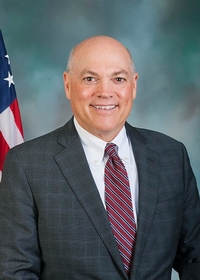
Rep. Steve Mentzer
Sponsored bills
Maddy summaryHouse Resolution 98 designates March 2025 as "National Athletic Training Month" in Pennsylvania. It recognizes the work of athletic trainers who provide specialized health care services - including injury prevention, emergency care, and rehabilitation - and acknowledges their role in settings like schools, hospitals, and sports organizations. The resolution urges Pennsylvania residents to learn more about athletic training as a health care profession, though it does not create new laws or requirements.
Maddy summaryHB 744 amends Pennsylvania's ethics laws to restrict gifts to public officials. It prohibits public officials, employees, nominees, or candidates from accepting cash gifts or non-cash gifts exceeding $50 in value from a single source in a year (Section 1103.1). Key exceptions include gifts from family members (excluding cash for candidates), lobbyists for major life events like weddings, and election contributions made under state law (Section 1103.2). The bill aims to prevent undue influence by clarifying what constitutes a prohibited gift under the state's financial disclosure framework.
Maddy summaryHB 702 amends the definition of "claimant" in Pennsylvania's Taxpayer Relief Act to clarify eligibility for senior citizens' property tax and rent rebate assistance. The bill specifies three qualifying categories: individuals aged 65 or older (or with a spouse aged 65+), widows or widowers aged 50 or older, and permanently disabled persons aged 18 or older during the tax year. This change directly affects seniors, widows/widowers, and disabled residents applying for the rebate program by providing clearer eligibility standards. The amendment updates existing definitions without creating new benefits or altering funding. The bill takes effect 60 days after enactment.
Maddy summaryHB 701 amends a Pennsylvania law that gives the Governor authority over U.S. flag displays on public grounds and buildings. The bill requires that any U.S. flag displayed under this law must be manufactured in the United States. This affects public institutions, schools, and certain other organizations that display the flag on their property. The change adds a sourcing requirement to existing flag display regulations without altering the Governor's regulatory role.
Maddy summaryHB 677 amends Pennsylvania's Apprenticeship and Training Act to establish new supervisor-to-apprentice ratio requirements based on occupational hazard levels. It requires that for high-hazard occupations (with fatality rates ≥9 per 100,000 workers), no more than three supervisors may be required per apprentice; for medium-hazard occupations (2-9 fatalities per 100,000), no more than two supervisors; and for low-hazard occupations (≤2 fatalities per 100,000), no more than one supervisor. These ratios are determined annually using U.S. Department of Labor fatality data, with updates published in the Pennsylvania Bulletin and implemented July 1 each year. The bill directly affects all registered apprenticeship programs in Pennsylvania, particularly those in construction, manufacturing, and other high-risk industries.
Maddy summaryHB 530 modifies Pennsylvania's criminal codes to adjust penalties for property damage crimes and create a new process for removing trespassers. It reclassifies criminal mischief as a felony if financial damage exceeds $1,000 (for building entry) or $5,000 (for public services), and as a misdemeanor for smaller losses. The bill also establishes a formal procedure allowing property owners to request law enforcement to remove trespassers by submitting a signed affidavit proving the person isn't a tenant, has been asked to leave, and lawful eviction occurred if applicable. This directly affects property owners seeking to remove unauthorized occupants, tenants facing potential unlawful removal, and law enforcement officers handling such requests. The law requires officers to provide individuals removed a chance to prove lawful occupancy and prohibits violations of Pennsylvania's Landlord and Tenant Act.
Maddy summaryHB 527 requires Pennsylvania's Department of Health and Department of Human Services to share information about abuse allegations involving adults or older adults with the appropriate local agencies. Specifically, if abuse is reported in a facility (like nursing homes or assisted living), the receiving department must refer the case to local aging agencies for older adults (60+) or adult protective services for adults (18-59), while sharing all relevant details to aid investigations. The bill establishes ongoing communication between the departments to streamline this process but does not change existing mandatory reporting laws. It directly affects state agencies, local protective services providers, and residents in long-term care facilities.
Maddy summaryHB 544, the Health Care Practitioner Credentialing Act, requires all health insurers in Pennsylvania to accept the CAQH credentialing application (or a nationally recognized alternative) for health care practitioners seeking to join insurer networks. It sets clear timelines: insurers must notify practitioners within 10 business days if an application is incomplete, and make a final credentialing decision within 45 business days of receiving a complete application. The bill also mandates automatic credentialing for practitioners with multi-location practices and imposes penalties on insurers that fail to use CAQH or delay the process. It does not guarantee network access but standardizes the application and review process for practitioners and insurers.
Maddy summaryThis resolution recognizes January 27, 2025, as "International Holocaust Remembrance Day" in Pennsylvania. It symbolically aligns Pennsylvania with the United Nations' 2005 designation of January 27 as a day to honor Holocaust victims, educate about genocide prevention, and condemn hate based on ethnicity or religion. The resolution has no binding effect or policy changes - it is a formal statement of recognition. It directly affects Pennsylvania by designating this date for state-level commemoration.