

Maddy summaryHB 674 establishes a new grant program to provide operating assistance for public transportation in Pennsylvania counties experiencing growth in either population or employment. Eligible applicants include public transit entities already receiving certain existing transportation grants (under Sections 1513 or 1516) that serve counties meeting specific growth criteria based on five-year data. Funding is split equally between counties growing in employment (using Labor Department data) and population (using Census Bureau data), with each county’s grant amount determined by its percentage growth over that period. This program operates in addition to existing transportation funding and cannot require a higher local match than current rules.
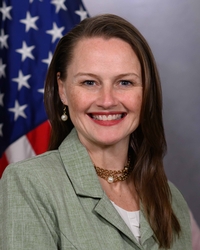
Rep. Nikki Rivera
Sponsored bills
Maddy summaryHB 654 amends Pennsylvania's State Lottery Law to expand access to the Pharmaceutical Assistance Contract for the Elderly Needs Enhancement Tier (PACENET). It raises the income eligibility thresholds for seniors: single individuals with annual incomes between $14,500 and $45,000, and married couples with combined incomes between $17,700 and $55,000, will now qualify. The bill also allows applicants to round income amounts to the nearest whole dollar when reporting. This change directly affects Pennsylvania seniors who rely on PACENET for subsidized prescription drugs by making the program available to more low-to-moderate-income elderly residents.
Maddy summaryHR 75 amends House Rule 66(a) to clarify procedures for members voting by designation or remotely. It allows members absent from the House floor or committee meetings to designate a Whip or committee chair to cast their vote, requiring written attestation to the Chief Clerk or committee chair. Remote voting for committee meetings is permitted with identity verification and video conferencing technology, with all designated or remote votes counting toward quorum. The resolution directly affects Pennsylvania House members who cannot attend sessions in person.
Maddy summaryHB 570 requires developers of new residential projects with 30 or more units to include affordable housing units. Specifically, projects must reserve 5% of units for very-low-income households (earning 50% or less of the area median income), 10% for low-income households (up to 80% of median income), and 10% for middle-income households (80-120% of median income). Developers must meet phased completion targets as market-rate units are finished - such as 10% affordable units when 25% of market units are complete - and municipalities may withhold certificates of occupancy if requirements aren’t met. The bill directly affects developers of qualifying new residential projects in Pennsylvania, aiming to increase housing options for lower-income residents.
Maddy summaryThis bill adds music therapy to Pennsylvania's existing licensing framework for mental health professionals. It creates a new "licensed professional music therapist" category and defines "practice of music therapy" to include clinically proven techniques like music improvisation, songwriting, and music-based assessments. The State Board of Social Workers, Marriage and Family Therapists, Professional Counselors, and Professional Music Therapists will regulate this new license. It directly affects individuals who provide music therapy services independently, requiring them to hold this specific license while clarifying that existing healthcare providers (like hospitals or schools) aren't required to obtain it for their employment.
Maddy summaryThis Pennsylvania House Resolution (HR 39) is a symbolic tribute honoring former President Jimmy Carter following his death on December 29, 2024, at age 100. It commemorates his life, presidency, and humanitarian work - including the Camp David Accords, founding The Carter Center, and efforts to eradicate Guinea worm disease - through a series of historical "whereas" statements. As a commemorative resolution, it does not create new laws, allocate funds, or directly affect any individuals or policies. The resolution serves only to formally extend the Pennsylvania General Assembly's condolences and recognize Carter's legacy. It is purely ceremonial, with no legislative or policy impact.
Maddy summaryHB 480 allows Pennsylvania school districts to offer full-time cyber education programs directly to students. If a student enrolls in their district's cyber program, they pay no extra fees beyond standard district charges. However, if they choose a cyber charter school instead, parents must pay monthly tuition (based on state funding formulas), and the student won't count toward their district's enrollment for funding purposes. This bill directly affects students and families in districts that provide these cyber programs, clarifying cost responsibilities and funding impacts.
Maddy summaryHB 477 requires candidates for school district office in Pennsylvania to undergo background checks before appearing on ballots. Specifically, candidates must submit Pennsylvania criminal history reports (limited to certain offenses), Department of Human Services certification regarding child abuse investigations, and federal criminal history records with fingerprints. Candidates are deemed ineligible if they have recent convictions for violent crimes (like assault or kidnapping), sex offenses (including rape or child sexual abuse), felony drug offenses, or appear on sex offender registries. This bill directly affects individuals running for school board positions in Pennsylvania, applying to all such elections held 180 days after the law takes effect.
Maddy summaryHB 443 modifies Pennsylvania's sentencing for second-degree murder convictions, including murder of an unborn child or a law enforcement officer. It reduces maximum sentences: for adults, from life imprisonment to 50 years; for offenders under 18, it sets a maximum of 40 years for those 15+ at the time of crime and 30 years for those under 15. The bill also establishes new parole timelines - 25 years for standard life sentences under this section, 20 years for those under 18 aged 15+, and 15 years for those under 15 - requiring the parole board to prioritize public safety, victim safety, and consider the offender's culpability before granting parole. Additionally, it mandates that victims be notified and given a chance to be heard before parole decisions for these cases.
Maddy summaryHB 432 establishes Pennsylvania's Maternal Care Access Program under the Department of Health to address gaps in maternal healthcare. The bill identifies counties as "maternal care access zones" using the Maternal Vulnerability Index (based on social factors like poverty, education, and healthcare access) and the Social Vulnerability Index. It requires the Department to develop regulations for improving access to obstetric care, birth centers, and providers in areas classified as "maternity care deserts" (regions lacking hospitals, birth centers, or specialized providers within 25 miles). The program directly affects underserved communities and the Department of Health, focusing on concrete policy changes to expand maternal health resources.