

Maddy summaryHB 1650 establishes Pennsylvania's Home Preservation Grant Program, administered by the Department of Community and Economic Development. It provides grants to local governments (counties, cities, townships) to fund repairs and improvements on existing owner-occupied homes, targeting households earning 80-120% of the area median income. Grants can cover up to $50,000 per unit for habitability fixes, energy/water efficiency upgrades, or accessibility modifications, with local governments allowed to use up to 10% of funds for administration. Applications must demonstrate experience in housing rehabilitation and include plans for using funds per the bill's requirements, with priority given to projects leveraging additional funding sources.
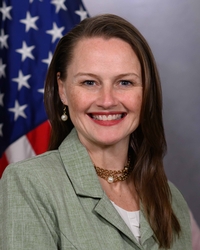
Rep. Nikki Rivera
Sponsored bills
Maddy summaryThis resolution designates September 19, 2025, as "Aortic Disease Awareness Day" within Pennsylvania. It is a symbolic measure to raise public awareness about aortic diseases, directly affecting Pennsylvanians through state-level recognition of this health issue. The resolution does not create new laws, allocate funding, or impose obligations. It was referred to the Health committee but was later laid on the table (stalled) under House Rule 71.
Maddy summaryHB 1672 creates a $2,500 annual tax credit against individual income tax for active paid or volunteer firefighters and emergency medical service (EMS) providers in Pennsylvania. It directly affects qualifying professionals working in fire or EMS roles as defined by state law, including career responders and volunteers. The credit reduces tax owed on wages earned, applies for up to three years (the year they become qualified plus the next two), and requires proof of eligibility to the Department of Revenue. The credit expires for new applicants after 2028 and ends entirely by December 31, 2031.
Maddy summaryHR 173 is a non-binding resolution urging Congress to establish a National Infrastructure Bank. It does not create new laws or funding but formally requests Congress take action to create this bank, which would provide financing for infrastructure projects. The resolution directly affects Congress itself, as it calls on the legislative body to initiate this specific action. This is a procedural measure with no immediate policy impact, as it only expresses a recommendation.
Maddy summaryHB 1564 amends the Human Services Code to change how copayments are calculated for subsidized child care programs. It directly affects low-income families who rely on state-funded child care assistance. The bill modifies the existing copayment structure but does not specify whether amounts increase, decrease, or change based on income tiers. This is a policy change to the public assistance system governing child care subsidies. (Note: The provided context does not detail the specific copayment changes, only the bill's purpose and referral history.)
Maddy summaryThis bill is a symbolic resolution designating June 2025 as "Italian-American Heritage Month" in Pennsylvania. It officially recognizes Pennsylvania's Italian-American community - home to approximately 1.4 million residents with Italian ancestry - and highlights their historical contributions to the state and nation. The resolution does not create new laws or funding but formally designates the month for commemoration, referencing cultural milestones like Filippo Mazzei's influence on the Declaration of Independence and Philadelphia's large Italian-American population. The measure was adopted by the Pennsylvania House of Representatives on June 25, 2025.
Maddy summaryHR 182 is a symbolic resolution recognizing June 2025 as "Scleroderma Awareness Month" and June 29, 2025, as "World Scleroderma Day" in Pennsylvania. It does not create new laws or policies but formally acknowledges scleroderma - a rare autoimmune disease affecting skin and internal organs - as part of a broader effort to raise public awareness. The resolution cites statistics about scleroderma's impact (e.g., affecting ~300,000 U.S. residents, with higher prevalence in women and African Americans) and highlights ongoing research in Pennsylvania. As a ceremonial resolution, it has no direct effect on healthcare access, funding, or legislation.
Maddy summaryHR 230 is a symbolic resolution designating September 15-21, 2025, as "Diaper Need Awareness Week" in Pennsylvania. It directly affects low-income families, infants, toddlers, and incontinent adults who face challenges affording diapers, as highlighted by statistics showing 46% of affected families cut food or utility spending to cover costs. The resolution recognizes Pennsylvania’s 10 active diaper banks and the National Diaper Bank Network, while encouraging public support through community donations and diaper drives. It does not create new funding or regulations but aims to raise awareness about the lack of access to diapers, which impacts health, childcare participation, and economic stability.
Maddy summaryHB 1445 requires health insurers in Pennsylvania to cover medically necessary health services provided in schools - such as mental health care, behavioral health services, and speech therapy - without denying coverage solely because the service occurs in a school setting. It prohibits insurers from excluding coverage based on location (e.g., through "school setting" or "place of service" exclusions), applying to public, charter, cyber charter, and private schools. Exceptions allow denials if services are provided by unlicensed individuals, are not medically necessary per insurer policies, or conflict with existing legal obligations (like IEPs). This law directly affects students receiving school-based care, insurers, and school entities, ensuring coverage parity for services delivered on school premises.
Maddy summaryHB 1347 establishes a framework for creating tourism improvement districts (TIDs) in local areas. These districts can collect special fees from participating businesses to fund tourism promotion, infrastructure, and marketing projects. The bill requires each TID to form a management association to oversee funds and operations, with mandatory annual financial audits. This directly affects local governments, tourism businesses within designated districts, and residents who may see changes to tourism-related services and facilities.